

The Transgressions of the Nations
God indeed came roaring out from Zion (Amos 1:2). The nations around Judah and Israel would also experience His judgment. The Israelites would have no difficulty accepting Amos’ messages condemning the transgressions of the nations.
The Book of Amos represents the collection of the prophetic messages given by Amos, a Judahite shepherd and keeper of sycamore trees from Tekoa south of Jerusalem, before the Israelites of the Northern Kingdom of Israel (Amos 1:1, 7:14-15). Amos prophesied to Israel around 762 BCE in the days of Uzziah king of Judah and Jeroboam (II) king of Israel (Amos 1:1). Because the editor spoke of Amos as receiving these messages “two years before the earthquake,” we believe all of Amos’ messages came to him in a single year. We cannot know whether Amos delivered these messages all at one time or according to a series of episodes. To this end, Amos 1:2-2:16 has all the markings of at least one of these preaching episodes, representing YHWH’s judgment on the nations (Amos 1:2-2:3) and a similar message of judgment for Judah and Israel (Amos 2:4-16), all according to the same format: because of three, but really four transgressions or crimes, God would not revoke the judgment for the lands or people mentioned.
Therefore, as far as we can tell, Amos’ prophetic messages began with YHWH’s judgments regarding the transgressions of the nations around Judah and Israel in Amos 1:3-2:3. At this time, both Israel and Judah were enjoying a remarkable period of stability and renewal, and they were two among many kingdoms which spread across the Levant and eastern Anatolia, as they had for a couple of hundred years. These kingdoms would fight against one another or ally with one another against either another such kingdom or in the face of a more significant threat like Assyria. If they enjoyed a period of prosperity and military success, they would imagine their god(s) were happy with them and blessing them. If they experienced distress and military reversal, then they imagined their god(s) were unhappy with them and cursing them. They would also recognize the god(s) of the other nations around them as the gods of those nations. Thus they would all recognize, and confess, YHWH as the God of Israel and Judah. But they would likewise recognize and confess Chemosh as the god of the Moabites, Dagon the god of the Philistines, Milcom the god of the Ammonites, etc. In this environment, Amos stood up somewhere in Israel, very possibly in the temple at Bethel (cf. Amos 7:10), and pronounced YHWH’s judgment on Damascus (Aram), Gaza (Philistia), Tyre, Edom, Ammon, and Moab (Amos 1:3-2:3).
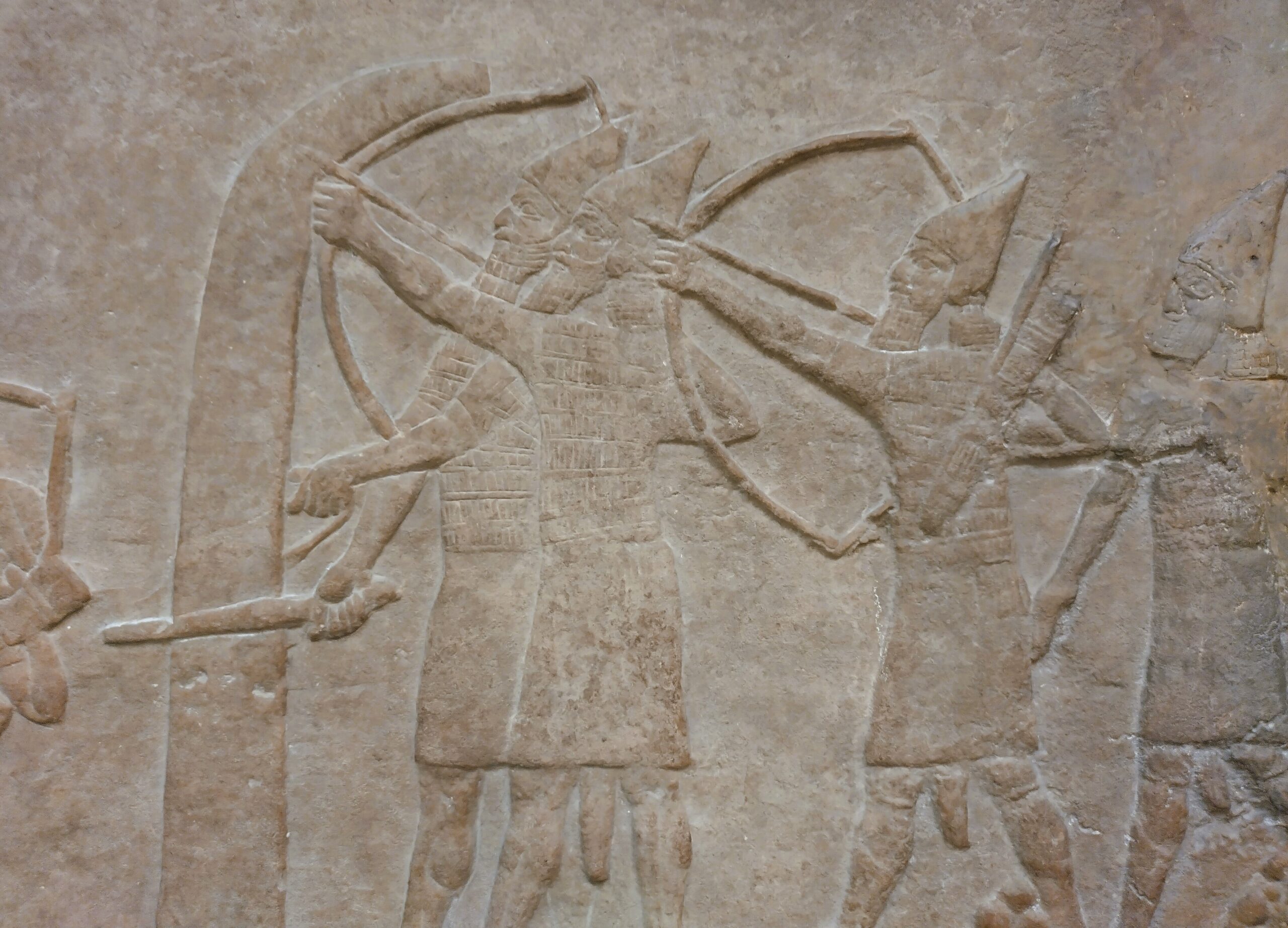
The Aramean kingdom based in Damascus had been the most recent terror of the Levantine kingdoms. Hazael, servant of Hadadezer, usurped the throne and led a series of successful military campaigns throughout the region, repelling the Assyrians, taking over the Transjordan parts of Israel, humiliating Judah, and besieged and destroyed Gath of the Philistines (cf. 2 Kings 8:8-15, 28-29, 9:14-15, 10:32, 12:17-18, 13:3, 22, 24). Hazael had died around 796 BCE, and Aramean hegemony over the Levant died with him. Under Ben-hadad (III) Israel would re-conquer their Transjordan lands and reassert their influence in Damascus (cf. 2 Kings 13:3, 24-25). Amos’ prophesy against Aram understandably came at the beginning of the judgments of the nations, and within it YHWH indicted Aram for their war crimes against the Gileadites, and promised the destruction of the house of Hazael and Ben-hadad (Amos 1:3-4). As the Arameans had come out of Kir long ago, so God would deport them back to Kir again (Amos 1:5, 9:7).
The Philistines never seemed to coalesce into one kingdom, but throughout the Early Iron Age persisted as the “Philistine Pentapolis” of Ashdod, Ashkelon, Ekron, Gath, and Gaza as their primary city-states. The Philistines were likely “Sea Peoples” originally from all over Mycenaean Greece who settled in the southwestern corner of the Levant after their battles with Ramses III of Egypt around 1187 BCE. For over one hundred and fifty years, the Philistines dominated the southern Levant and oppressed at least the Israelites if not many other people in the territory (cf. Judges, 1 Samuel). David thoroughly defeated the Philistines and accepted their submission (cf. 2 Samuel); they would continue to inhabit the southwestern area of the Levant, but did not seem to threaten as an oppressive power again. Amos rendered YHWH’s judgment against Gaza, Ashdod, Ashkelon, and Ashdod: they had deported a community and sold them to Edom, and so YHWH would destroy Gaza, remove kings from Ashdod and Ashkelon, strike Ekron, and condemned all the Philistines (Amos 1:6-8). Amos’ omission of Gath has been often noted: some suggest it may have become associated with the Judahites at this time, but it remains possible Gath remained barely populated after its destruction by Hazael and therefore did not warrant mentioning.
By 760 Tyre had become by far the most prominent of the Phoenician city-states along the Mediterranean Sea, and such is why it is the only one Amos explicitly mentioned in Amos 1:9-10. We may call them “Phoenician” according to what the Greeks called them, but by origin and ethnicity they were Canaanites, the only ones not overrun by Arameans, Israelites, or Philistines during the end of the second millennium BCE. Amos and other prophets would have messages of condemnation for the Phoenicians, and Ahab’s wife Jezebel was infamously the daughter of Ethbaal, king of Sidon (cf. 1 Kings 16:31, Ezekiel 27:1-28:24). Nevertheless, the Phoenicians were more often than not portrayed positively in the Hebrew Bible, probably because they were generally allies of Israel and Judah maintaining a mutually beneficial relationship: the Phoenicians provided and supplied trade goods from around the Mediterranean, and the Israelites and Judahites would provide grain and foodstuffs (cf. 1 Kings 5:1, etc.). Amos condemned Tyre for not maintaining a treaty of brotherhood and selling a community to Edom, and because of it Tyre would be destroyed (Amos 1:9-10). Perhaps the Tyrians were associating with the Philistines in this matter; we have no record of what they might have done, but Edom’s copper mines always demanded more slaves, so we have no reason to cast aspersions on Amos’ indictments.
Amos then turned toward the three Transjordan kingdoms, beginning with Edom (Amos 1:11-12). The Edomites dwelled in the lands south of the Dead Sea since the days of their namesake Esau in the early second millennium BCE (cf. Genesis 36:1-43). David had reduced Edom to a vassal of Israel, and it would remain a vassal of Judah until the days of Jehoram around 850 BCE (cf. 1 Kings 11:15, 2 Kings 8:20-22). Amos condemned Edom for attacking his brother and destroying his brother’s allies, and promised destruction for Teman and Bozrah (Amos 1:11-12). The “brother” in question would certainly be Israel, and therefore Amos condemned the Edomites for having recently allied with Israel’s and Judah’s enemies to cause them harm.
The Ammonites, descendants of Lot, dwelt in the lands north of Moab, south of the Damascene Arameans, and east of Gilead, and were frequently in conflict with some or all of these groups. David had humiliated them, and the Ammonites would frequently have to pay tribute to the Israelite and Judahite kings (cf. 2 Samuel 10:1-19, 2 Chronicles 26:8). But whenever the Ammonites had the opportunity, they would attempt to oppress or take over Israel’s Transjordan territories, often described as Gilead (cf. Judges 10:6-11:40). Hazael’s campaign against Israel had provided the Ammonites with such an opportunity, and Amos denounced them for having allied with Aram and participating with Aram in their war crimes against the Gileadites (Amos 1:13). Rabbah would be destroyed and its people exiled (Amos 1:14-15).
The Moabites were a brother nation to the Ammonites and lived south of them on the eastern coast of the Dead Sea. They had oppressed Israel in the days of the judges, but were laid low by David and remained vassals of Israel until the days of Jehoram of Israel around 840 BCE (cf. Judges 3:12-30, 2 Samuel 8:11-12, 2 Kings 3:1-17). The king of Moab had burned the bones of a former king of Edom to lime, and this kind of disrespect would not be tolerated by YHWH: Moab would be burned with fire and would perish (Amos 2:1-3).
We can imagine how many Israelites would have heard Amos proclaiming this message before them. They might chafe a bit with a Judahite telling them YHWH was roaring from Zion/Jerusalem, but messages of judgment against the Arameans, Philistines, Phoenicians, Edomites, Ammonites, and Moabites would have been quite acceptable to them. They may have been attracted to what Amos was saying because it promised judgment against their enemies, but they would soon experience the same kind of message directed against themselves.
Judgment would indeed come against all of these nations. Aram would be completely overwhelmed and destroyed by Tiglath-pileser III of Assyria in 732 BCE. The Philistines would be conquered by the Babylonians and exiled to Babylon along with the Judahites in the sixth century BCE. Phoenicia would become vassals of Assyria, Babylon, and Persia, and Tyre would be destroyed by Alexander of Macedon. The Edomites would encroach upon Judahite lands but would eventually be compelled to convert to Judaism under John Hyrcanus around 125 BCE. Ammon and Moab would be overwhelmed by the Kedarite Arab invasions which had displaced the Edomites, and their lands would become part of the Nabatean kingdom.
While Amos’ messages would not have been delivered to or received by the nearby Levantine kingdoms, YHWH’s condemnation of them through him remains important testimony. They may not have been the people of YHWH, but YHWH was still God, and would judge many of them for how they treated the people of God. Yet YHWH would also judge them for how they treated one another. YHWH could presume to stand in judgment of all these nations because He was not merely the God of Israel and Judah, but the One True God of all. The world in which Amos spoke to Israel would prove unrecognizable within a few generations, yet YHWH remains God. We do well to serve YHWH as God as made known in Christ through the Spirit, serve Him only, and obtain the resurrection in Him!
Ethan R. Longhenry

Leave a Reply