Jesus in Samaria and Galilee | The Voice 16.41: October 11, 2026

posted in: The Voice | 0

The Voice

Jesus in Samaria and Galilee

The “disciple whom Jesus loved,” known as John, either John ben Zebedee, the Apostle, or John the Elder, was writing his recollections of his experiences with Jesus so that those who hear or read would believe Jesus is the Christ, the Son of God, and would find eternal life in His name (cf. John 20:31). He began by speaking of the Word of God, the Creator, the life and light of men, who took on flesh and dwelt among us as Jesus of Nazareth (John 1:1-18). He then described the calling of the first disciples, Jesus’ first sign at the wedding in Cana, and the events which took place while Jesus was present at the Passover in Jerusalem (John 1:19-4:3).

The Passover and the Feast of the Unleavened Bread had concluded and so it was about time to return to Galilee. Yet Jesus and His disciples travel by means of an unexpected itinerary: they did not cross the Jordan and swing through the Decapolis, but traveled directly north through Samaria (John 4:4). They came to Sychar, a Samaritan town which featured a well Jacob the patriarch had dug (John 4:5).

In former times Samaria had been the capital of the northern Kingdom of Israel. After the Assyrians conquered Samaria, they exiled the Israelites to Assyria and introduced people from other parts of the Neo-Assyrian Empire into the land of Israel which would heretofore be known as Samaria, and its people Samaritans (cf. 2 Kings 17:6, 24-41). The Samaritans would not deny some such heritage but also claimed to be descendants of the ten tribes of Israel; the Jewish people held the Samaritans in contempt and did not consider them Israelites at all, thus animating the power of Jesus’ parable of the good Samaritan; John the Evangelist understated the situation when he said Jewish people have no dealings with Samaritans (John 4:9). Jesus, however, traveled through Samaria and engaged with Samaritans; as we consider Jesus in Samaria, we should do so while remembering the prophetic hope of the restoration of Israel.

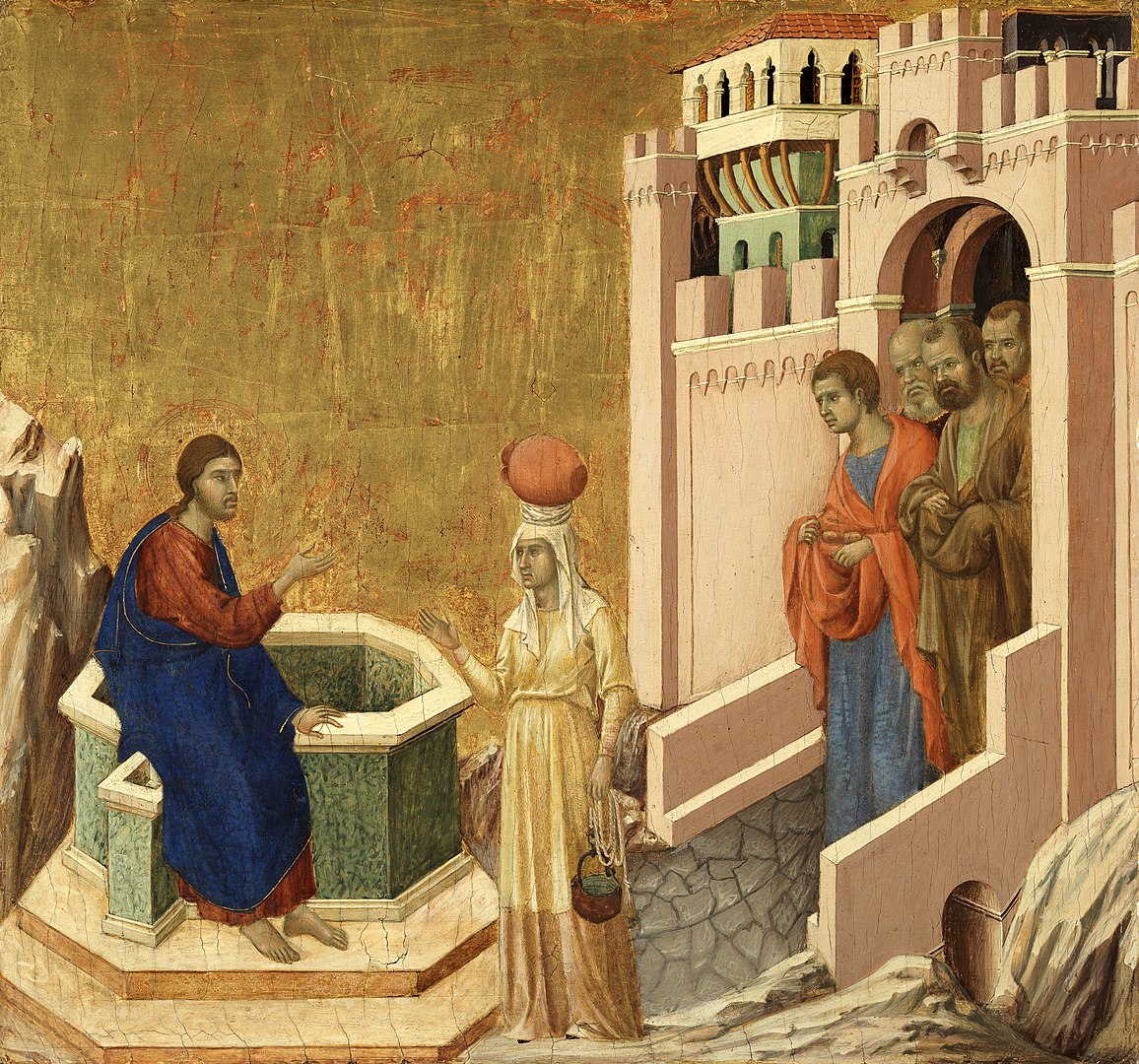
Jesus sat at the well at Sychar while His disciples went to buy food; a Samaritan woman came to draw water in the middle of the day and He engaged her in conversation (John 4:6-26). As in John 3:3-7 with “again” or “from above,” so in John 4:7-15 and “living water”: most of the time “living water” was understood as running water, as the Samaritan woman understood Jesus, but He was speaking of the Spirit and the gift of eternal life which He could provide. Jesus demonstrated His prophetic standing and knowledge by ascertaining how many times she had been married and how she was now cohabiting with a man (John 4:16-18); it proves easy to castigate her for her situation, but we do well to wonder whether she was more exploited and oppressed than scandalously libidinous. She perceived Jesus was some kind of prophet, and so she asked Him about one of the controversies between the Jewish people and the Samaritans: should they go to prostrate before God on the mountain on which they stood or in Jerusalem (John 4:19-20)? Jesus did maintain an ethnic boundary: the Samaritans are ignorant of the One whom they serve, but salvation is of the Jews; nevertheless, Jesus was overall less interested in settling Jewish vs. Samaritan disputes and appealed to the radical transformation which would soon take place. Jesus was God in the flesh; thus the “place” to bow down before God was not going to be on a mountain somewhere, but wherever Jesus was. The Father was seeking people to prostrate before Him in spirit and in truth (John 4:21-24). The woman expected the Messiah; Jesus confessed to her how He was the Messiah (John 4:25).

The disciples returned and were not a little scandalized. They did not dare ask Jesus what He was doing (John 4:27). In her astonishment and wonder the woman left her water jar and ran into Sychar, telling everyone to come out to see and hear Jesus, a Man who had told her all she had ever done (John 4:28-29). The disciples wanted Jesus to eat, but He told them He had food regarding which they did not understand (John 4:30-32). The disciples wondered who had brought Jesus food; Jesus explained how His food was to do the work of the Father who had sent Him (John 4:33-34). Jesus again drew associations between the natural world and the work of God: they perceived how the harvest for crops would be in four months, but in terms of the work of God, the fields were white for harvest, and they would go out and reap where they had not sown and would rejoice (John 4:35-39).

Meanwhile, the inhabitants of Sychar heeded the words of the woman, came out to Jesus, and invited Him to stay, which He did for two days (John 4:39-40). They confessed they had also come to believe in Jesus as the Christ, not merely based on her testimony, but based on what they saw and heard (John 4:41-42).

Jesus then returned to Galilee (John 4:43). John the Evangelist first provided commentary on how Jesus testified how a prophet has no honor in His home country, but then recognized how the Galileans had welcomed Jesus because they had gone down to the Passover feast and had seen His work there (John 4:44-45). Perhaps John hinted at what was made more explicit in the Synoptic Gospels, how Jesus was better received in other parts of Galilee but not in Nazareth itself (e.g. Luke 4:16-30). Yet perhaps we do better to understand John as making a contrast between the Samaritans who so readily believed and these Galileans who would ultimately prove more recalcitrant: a galling comparison indeed for any Israelite!

As always, we do well to remember how John himself would confess all the books of the world could not contain all the things which Jesus had done (John 21:25): John has selected seven miraculous signs upon which to focus, of which the second took place in Cana in Galilee in John 4:46-54. The son of a royal official in Capernaum was sick; his father would have been some kind of official for Herod Antipas (John 4:46). The royal official went to Cana and begged Jesus to heal his son; Jesus responded by declaring how the people would not believe unless they saw signs and wonders (John 4:47-48). The official kept begging Jesus to come with him; Jesus did not go with him but told him to go home, for his child would live (John 4:49-50). He went home and discovered his son had recovered; he inquired and ascertained that the fever broke the moment Jesus had declared he would live; he and his household believed in Jesus (John 4:51-54).

Thus Jesus continued His ministry in His return from Jerusalem through Samaria to Galilee. Salvation might be of the Jewish people, but in Jesus it would spread well beyond the Jewish people. Jesus may have been dishonored among His own people, but many others have come in humble faith confessing Him as Lord and Christ. May we come to Jesus and through Him obtain living water to go out into the harvest and ultimately share in the resurrection of life!

Ethan R. Longhenry
Working and Eating | The Voice 16.40: October 04, 2026

posted in: The Voice | 0

The Voice

Working and Eating

Paul thought very highly of the Thessalonian Christians and commended them for their faith. Yet an issue had developed which required immediate and sharp redress: at least a few of them had quit their jobs and had ceased to work (2 Thessalonians 3:11).

Paul did not go into any detail about the situation; it would have been sufficiently well known enough both to him and to the Thessalonian Christians to whom he wrote. Paul had written much regarding eschatological matters: when and how the Lord would return and how the dead in Christ would rise first (cf. 1 Thessalonians 4:13-5:11, 2 Thessalonians 1:5-10, 2:1-12). From this we deduce a significant interest in these “end times” matters among at least some of the Thessalonian Christians, or, at least, among some of those who came and preached among them.

As we well know even from our own time, eschatological fervor in expectations can easily run amok. The Lord Jesus, after all, could return at any moment (cf. Matthew 25:14-46, Acts 17:30-31, 1 Thessalonians 5:2). Today might be our last day on earth! The setup is made for a compelling message: if you knew today was going to be your last day on earth, how would you spend it? Then, as now, “go to work” would probably not be high on the list of things anyone would want to do in such a situation. Thus, these Thessalonian Christians might have convinced themselves the Lord Jesus would return very, very soon, and therefore going to work and making a basic living was unimportant.

We have tried to give these particular Christians the benefit of the doubt, and have tried to understand their motives charitably. We presume they were able to continue to survive thanks to the benevolence and charity of their fellow Christians. But the situation was not good: these non-working Christians proved restless. They started to meddle in the affairs of others and proved to be busybodies (2 Thessalonians 3:11).

Paul determined to address this situation very powerfully and sharply. He commanded the Thessalonian Christians to stay away from and withdraw themselves from these non-working Christians, whom Paul chastised as “walking disorderly” and not according to the tradition they received from him (2 Thessalonians 3:6). Paul would go on to describe this tradition, embodied in himself, at length: even though he could have lived off their beneficence, he and his associates instead worked in order to make money for basic necessities while preaching the Lord Jesus and ministering in their midst (2 Thessalonians 3:7-9). He did this so he would not be a burden to them, but also to give them an example (2 Thessalonians 3:9): if anyone understood how the Lord Jesus might return at any moment, it was the Apostle Paul who proclaimed such things. And yet he still labored to make money in order to provide for himself.

But it was not as if the Thessalonian Christians were ignorant of these matters. Paul reiterated an adage he had taught while he had been with them in person: if a person was not willing to work, neither should that person eat (2 Thessalonians 3:10).

Paul would go on to command these non-working Christians in Thessalonica to work quietly and provide food for themselves (2 Thessalonians 3:12). The Lord Jesus would indeed return one day, perhaps very soon; they were to be prepared for His return, but they also needed to continue to carry on with daily life in healthy and productive ways. At the same time, Paul also commanded all the Christians of Thessalonica to not prove weary in doing good (2 Thessalonians 3:13): they should continue to love one another as Jesus had loved them and also should provide for one another in need. Yet they also should maintain no company with any “Christian” among them who would not respect what Paul had to say in his letter so the wayward might become ashamed of themselves: they should not treat them as enemies but should warn them as fellow brothers and sisters in Christ (2 Thessalonians 3:14-15).

We can only hope the wayward, non-working Christians in Thessalonica repented and went back to work. But we can tell similar concerns would continue to exist among the early Christians, as can be seen from the witness of the anonymous author of the Didache toward the end of the first century:

But let every one that comes in the name of the Lord be received, and afterward you shall prove and know him; for you shall have understanding right and left. If he who comes is a wayfarer, assist him as far as you are able; but he shall not remain with you, except for two or three days, if need be. But if he wills to abide with you, being an artisan, let him work and eat; but if he has no trade, according to your understanding see to it that, as a Christian, he shall not live with you idle. But if he wills not to do, he is a Christ-monger. Watch that you keep aloof from such (Didache 12:1-5).

The concern proves understandable: early Christians did very well at providing for those who were in need. They would likely err on the side of giving. This situation provided opportunities for the indolent and lazy to take advantage of this benevolent disposition by staying with Christians and subsisting on their hospitality for quite some time. Christians needed to prove as shrewd as serpents while remaining as innocent as doves; if a Christian remained among them, and could work but would not do so, such was a problem requiring chastisement and rebuke.

We go in depth to explain the situation in which Paul set forth 2 Thessalonians 3:10, and the further historical witness of the Didache 12:1-5, in order to properly contextualize Paul’s adage. We feel compelled to do so since these days “if a person is not willing to work, neither should they eat” has easily been made into a slogan and often cited and used to justify reductions in provisions for the disabled, poor, and indigent.

What Paul said in 2 Thessalonians 3:10 should remain true for Christians: if a Christian is not willing to work, then that Christian should not eat. We should remember how Paul was speaking to Christians about fellow Christians. He did not want the love and hospitality shared among Christians to facilitate the indolence, laziness, and meddling which was taking place among the Thessalonian Christians. He would later echo similar concerns about younger widows to Timothy in 1 Timothy 5:11-15.

We can understand an application of what Paul said about Christians to people in the world in general. We can affirm that those who can work, should work, so they might be able to make a living. While our work has been cursed with futility thanks to sin (cf. Genesis 3:17-19, Romans 8:19-21), the concept of work itself is not inherently cursed. God commissioned Adam to keep and tend the Garden of Eden before sin entered the world (Genesis 2:15). The Preacher rightly commended participating in one’s work with all one’s might while one is able to do so and enjoy it as the portion God has given us in this life under the sun (Ecclesiastes 9:10). “Idle hands are the devil’s workshop” is an old adage for a reason, and therefore we do well to encourage people to work and make a living.

At the same time, Christians must be careful lest they go well beyond what Paul wrote or intended with what he said, and become cruel and inhumane in ways which would prove just as disobedient to the ways of the Lord Jesus as those who prove lazy and indolent in not working. We must insist upon how Paul’s concern was with those who had capacity but not volition: he condemned those who were not willing to work to not eat in 2 Thessalonians 3:10. Paul therefore did not have in mind in any, way, shape, or form those who did not have the capacity to work, whether because of age or disability. Similarly, Paul did not reduce the situation to “if anyone does not have a job, they should not eat”: his rebuke came to those who were not willing to work, not simply those who did not have a job. Many prove willing to work but have challenges finding gainful employment for a whole host of reasons.

Paul, therefore, chastised and rebuked a very particular situation: those who were fully capable of working, but deliberately chose not to do so, living off the benevolence and hospitality of their fellow Christians. Paul was not giving any justification for refusing support for Christians with chronic illnesses, disabilities, temporary unemployment, or who were very young or rather old. Paul, as well as the anonymous author of the Didache, wanted to make sure Christian benevolence and hospitality were not being abused. It might well horrify them to imagine their words being used to justify not providing any assistance to those who desperately needed it.

If Christians are going to insist upon those who are not willing to work should not eat, then Christians should prove just as eager, if not more so, to insist upon the ability of those who are willing to work and do so to be able to eat. Throughout the New Testament, it was understood the daily wage for a laborer was a Roman denarius or its equivalence (e.g. Matthew 20:1-16). As far as we could tell, a single denarius could purchase enough bread, wine, and oil for a small family, with perhaps a little left over. It would seem a family could be supported and maintained in a small apartment with life’s basics on a denarius a day. Paul could therefore well expect a Christian to find a job as a day laborer and to be able to make enough for basic provisions. For many reasons, a lot of jobs today do not provide sufficient payment, on their own, to provide for the basic needs of one person, let alone an entire family. Christians should find this situation as outrageous and as much a travesty as they do those who prove indolent and lazy and yet make a living on the government’s dime. Sure, indeed; if a person is not willing to work, they should not eat. But if a person is not only willing to work, but also is actually working a full-time job, then they should eat: the wages from that employment, no matter how base, should be sufficient to provide for the basic necessities of life without additional assistance. And if those wages are insufficient in and of themselves, Christians have no business or right condemning or refusing the additional assistance which might be given to those poor workers.

Thus, indeed, Paul sharply and strongly both commanded faithful, working Christians to have little association with and withdraw from those wayward, non-working Christians, and exhorted those wayward, non-working Christians to follow the example Paul set for them and to work quietly so they might be able to provide for themselves. We do well to continue to exhort Christians who can work to do so, and to have little to do with Christians who could work but do not. We must be careful lest Paul’s dictate about working and eating becomes used as a cudgel with which to beat down and further oppress the poor and downtrodden. May we all seek to work quietly and provide for ourselves, may work pay sufficient wages to facilitate that provision, and may we continue to seek to do good to all people, especially to those in the household of faith, and all to the glory of God in Christ through the Spirit!

Ethan R. Longhenry

Sexuality as Identity | The Voice 16.39: September 27, 2026

posted in: The Voice | 0

The Voice

Counterfeit Sexuality: Sexuality as Identity

Sexuality remains one of the most sensitive and yet “hot-button” issues within our culture and among Christians today. Such a controversial issue features a lot of passion and debate regarding the surface level issues of proper and improper forms of sexuality, and in such an environment, digging deeper and finding a Biblically centered and balanced perspective can be challenging. Nevertheless, the Scriptures do provide such a view and a robust theology of sexuality: human sexuality is the physical shadow of the spiritual reality which we are to seek in communion with God in Christ (Genesis 1:26-27, 2:24, John 17:20-24, Ephesians 5:31-32). Sex is part of God’s good creation, and therefore it can be good (Genesis 1:31).

While God made the creation good, sin has since entered the world. Humans have been corrupted by sin in their thoughts, feelings, and actions, and the creation is now subject to futility (Genesis 3:1-15, Romans 5:12-18, 8:19-23). People reject their Creator and find ways of bowing down to the creation, taking pleasure in counterfeit gods rather than serving the One True God (Romans 1:18-25). As it has happened in general with the creation, so it is with sexuality as well: consciously or unconsciously, people have rejected holy, fulfilling sexuality and have instead set up counterfeit forms of sexuality after which they seek fulfillment. Such forms of sexuality are “counterfeit” because they prove fraudulent, claiming to represent true sexuality but without the wholeness, holiness, and appreciation of true intimacy in mind, body, and soul which comes with the type of sexuality God established and provided for mankind. These counterfeit forms of sexuality represent the distortion of human sexuality into the various types of perversions (in every sense of the word) which we see peddled in modern society. The main forms of counterfeit sexuality include sexuality as identity, sexuality as reduced to animal impulse, and sexuality as god; for our purposes at this time, let us consider how establishing sexuality as a principal marker of identity leads to a counterfeit sexuality.

Identity remains a complex phenomenon. Each one of us has many identity markers, including gender, race, ethnicity, nationality, class, language, religion, generation, point of geographical origin and/or present geographical location, profession, hobbies, professional/sports/etc. affiliations, as well as sexual predilections. While all such identity markers are equally true of us, we nevertheless privilege certain markers over others when we consider who we are in relation to other people. Each person, whether consciously or unconsciously, prioritizes the relative “importance” of the different identity markers which makes up his or her existence. While many factors may influence this prioritization, it remains a free-will choice. We choose whether we will consider our gender identity over our national identity, our class identity over our linguistic identity, and so on and so forth. We tend to understand our place, our efforts, and our context in terms of the identity markers we have deemed most important in our lives, less so those we have chosen to consider less important. That narrative will change based on which aspects are deemed more important than others; this is how two people who share many identity markers may nevertheless see themselves very differently.

There is no doubt that we are all shaped by our identity, but we are the ones who decide what really defines who we are as human beings. In theory, we could take any physical aspect of our bodies, any work we do, any practice in which we participate, anything we believe is true, and center our identity around it. This is why Jesus constantly exhorts Christians to prioritize their relationship with God as primary: if our primary identity marker is that of being a servant of God, the proper attitudes regarding ourselves and our conduct as well as how we treat other people will naturally follow (Matthew 6:33, Galatians 2:20, etc.). If the primary aspect in our existence is our faith in God, all things will flow from our faith; if the primary aspect of our existence is another identity marker, all things will flow from it.

Therefore, it is possible to define ourselves in terms of our sexuality. We can understand all things we feel, think, say, and do in terms of our sexual impulses. Yet is this a good idea? What do the Scriptures teach?

First and foremost, we must note that the Scriptures never define anyone by their sexuality. No one in the Bible is called a heterosexual, homosexual, or asexual (in 1 Corinthians 6:9, the term sometimes translated “homosexual” is the Greek arsenokoitai, defined as “one who lies with a man as with a woman,” reinforcing our premise). In the Bible, no one is their sexuality. Instead, people have sexual impulses, desires, and urges, and decide whether and how they will act upon them. Therefore, in the Bible, sexuality is never reckoned as a form of identity; sex involves the behavior of individuals, however appropriate or inappropriate.

This is not some strange concept; for most of human history, people have understood how sexuality involves practice and is not a form of identity. Ancient Greek men engaged in sexual behavior with young boys as well as women, and held men who only had sex with men in contempt; they would never define themselves as “homosexual” because at times they participated in homosexual behaviors. This type of behavior, while sinful, was not unknown in many societies. It is only in the Victorian era when people start thinking of sex as not just behavior in which they participate but as an expression of their identity. The gap between sex as “something I do” and “something I am” may seem slight but its consequences are many and significant.

When the modern understanding of sexuality as identity is paired with the equally modern obsession with sex as an idol, one’s sexual identity easily becomes either the primary or one of the primary identity marker(s). Sexual identity becomes a toxic primary identity marker, because everything then becomes sexualized. A person for whom their sexual identity is one of their primary forms of identity defines their lives by how well their sexual life is going. Such a one will view others primarily in terms of their sexual desirability and availability. It is easy for sex to run their lives, reducing their humanity (and everyone else’s humanity) down to the animalistic sexual lust, enslaved to lasciviousness at least and sexually deviant behavior at worst (cf. Galatians 5:19). This is no way to live!

For that matter, sexuality will be privileged as a form of identity only by a society obsessed by sexuality. This is evident in the common response to anyone who might actually decide to live asexually. Those who choose to live asexually are most often considered freakish by both “heterosexuals” and “homosexuals,” (sadly) by many professing Christianity as well as those who reject Christianity. The common expectation is that every adult of the age of consent should be actively participating in some form of sexuality, and if they are not, their lives are somehow not complete or fulfilled. In such an environment, nothing seems more foolish than both Jesus’ and Paul’s commendations of the asexual life devoted to God and His purposes (Matthew 19:12, 1 Corinthians 7:6-7, 25-38). The existence of such people exposes the limitation of the paradigm of sexuality as identity since they are not practicing any form of sexuality. This is not a problem limited to the world: even within the church, those who are single often find themselves under constant pressure by fellow Christians to get married, and not a few of the errant doctrines regarding divorce and remarriage stem from wholesale acceptance of the premise that we “are” our sexuality and it is therefore “unjust” to expect such sexuality to not be expressed.

This leads us to one of the major conflicts in the “culture war”: homosexuality. Those advancing the cause of acceptance of homosexual behavior have done well at convincing everyone that since sexuality is a form of identity, to do anything to discourage people with homosexual desires to not act on those desires is unjust, immoral, and highly discriminatory. The claim that acceptance of homosexual behavior is a civil rights issue, akin to equal rights for African-Americans or women can only be legitimized in an environment in which sexuality is accepted as a form of identity. This premise may be more pernicious than many think. A lot of young people experience different desires as their developing brains are going through puberty; they may have a fleeting time in their lives when they might feel attracted to members of their own gender. In an environment where sexuality is understood in terms of behavior, involving desires which we choose to act upon or not, such may either lead to (proper) rejection of such desires and a refusal to act upon them or it may lead to (improper and immoral) “experimentation,” but of the sort that goes no further, and the person will later behave according to a proper channeling of desire (cf. Matthew 19:4-6). But in an environment declaring that sexuality is identity, such a young person may believe that they are now “homosexual” because they have experienced some of those desires and might begin shaping their identity around that premise and thus, by all accounts, “become” homosexual. How many people who practice homosexuality in America do so because they have bought into the premise that one “is” their sexual behavior?

We do well to understand how sexuality is not identity. Think about it: do we want to think of an infant or a small child as being “heterosexual,” “homosexual,” “bisexual,” or any other kind of “-sexual”? How can deviant forms of “heterosexual” behavior, like adultery and polygamy, be considered as forms of identity? And what about those who practice pedophilia, necrophilia, bestiality, or other sexual practices which are (at the time of this writing) still generally confessed to be deviant? How is their sexuality any more or less a part of their identity than anyone else’s? And why should any of us define ourselves by our sexual behavior or the lack thereof? There is much more to life than sex, and the value of a person’s contributions to society should not be inherently measured by their sexual predilections.

We do well to recognize that sexuality involves the sexual desires, urges, and impulses and how we choose whether and how we will express them. Sex is behavior just like every other form of behavior: we are under no more or less compulsion to express sexual desire than we are to express any other desire we may have. Sexual desire is just like all other desires: there are proper ways to express the desire, and there are improper ways to do so as well (cf. Romans 1:18-32, James 1:12-15). Sexual behavior does have consequences; our lives are shaped in many ways by our sexual behavior and how that sexual behavior either connects us with that one special person of the opposite sex, allowing for that intimacy which is a shadow of the spiritual reality of the communion we are to share with God, or it is disfigured by improper usage, the sinning against the body, denigrating that which was made in the image of God down to the mere satisfaction of a physical impulse (Genesis 2:24, Romans 1:18-32, 1 Corinthians 6:12-20, Ephesians 5:32-33). But just because our sexual behavior affects who we are does not mean that we somehow “become” our sexual behavior, or that we should see ourselves in terms of our sexual behavior. If we believe in God and Jesus His Son, we “are” to be Christians, primarily identifying ourselves as His followers, defining ourselves in terms of the image of Jesus, privileging our relationship in Christ above all others (Matthew 6:33, Romans 8:29, Galatians 2:20). Sexuality as identity is a counterfeit form of sexuality, tempting in principle, but reducing all of us to be defined not in terms of our contributions to society and well-being but by what we do (or don’t do) in the bedroom. Let us affirm God’s view and understanding of sexuality and reject all counterfeit forms of sexuality peddled in the world!

Ethan R. Longhenry

Farm Zion, Ruined Jerusalem | The Voice 16.38: September 20, 2026

posted in: The Voice | 0

The Voice

Zion the Farm, Jerusalem in Ruins

Micah of Moresheth had words for the physical and spiritual leaders of Judah. They would not want to hear it. They would scoff at the prospect of any real danger. Some of their descendants, however, would walk away with a very different perspective on his words.

The Word of YHWH came to Micah of Moresheth in the days of Jotham, Ahaz, and Hezekiah, kings of Judah (ca. 742-680 BCE; cf. Micah 1:1). The Word of YHWH which Micah saw regarding Samaria pronounced its imminent doom (Micah 1:2-9). Moresheth was a village in southwestern Judah where the Shephelah met the Philistine coastal plains, and Micah had messages of warning for his fellow inhabitants in the Shephelah regarding the destruction and devastation which would soon come despite all the preparations the state had made (Micah 1:10-16). Micah had words for the elite and wealthy who developed schemes to dispossess poorer Judahites out of their ancestral lands, and it would not go well for them (Micah 2:1-5). Such people demeaned Micah and his message, presuming such things would never happen; Micah all the more denounced them and condemned them for their crimes (Micah 2:6-13). In Micah 3:1-12, Micah would continue with the same kind of sharp denunciation of oppression, specifically addressing the leadership of the nation.

Micah’s first indictment was directed at the “leaders of Jacob,” the “rulers of the nation of Israel”: even though they should now what is just, they hate what is good and love what is evil (Micah 3:1-2a). Micah described the behavior of these leaders in a provocative, shocking, and visceral image: they clean the bodies of their people like they would the carcass of a deer, and chop them up like flesh for a pot (Micah 3:2b-3). Micah warned them sharply: they would need to cry to YHWH for help in the future, but He would not hear or answer them; His face would be hidden from them because of their wicked deeds (Micah 3:4).

One might be tempted at first to wonder if Micah were returning to some kind of exhortation to the leaders of the northern Kingdom of Israel. Nevertheless, in Micah 3:9, he will use the exact same language in his indictment, and then specifies concern regarding Zion and Jerusalem. Micah of Moresheth therefore specifically has the leadership of the Kingdom of Judah in mind. Perhaps his use of the broader terms of “Jacob” and “Israel” suggest this message was delivered after the end of the Kingdom of Israel as a going concern in 722, and therefore addressed to the rulers of Judah in the days of Hezekiah (cf. 2 Kings 18:1-12).

Micah’s indictments shock and discomfit, and were so composed for that very purpose. The likelihood Judahite leaders were participating in actual cannibalism during the second half of the eighth century BCE remains very low. In ancient Israel, the metaphor of consuming a person was associated with exploiting and oppressing them (cf. Psalm 14:4, 27:2, Proverbs 30:14). By referring to the “heads” of Jacob, denouncing them for theoretically knowing what is just, Micah most likely has the Judahite judiciary specifically in mind regarding this indictment. By means of the laws established and executed, Judahites with wealth and privilege have been able to dispossess poorer Judahites of the little they have. By seizing their lands and what little they have, these wealthier Judahites basically steal the life away from the poorer ones. The judiciary should be standing against such things; instead, they are facilitating it, and likely benefitting and participating in it themselves. Micah rightly expects a time to come when an even greater and more oppressive force would come to bear upon these authorities, and their prayers to God will go unheeded because of their sinfulness.

Micah then turned to denounce the prophets who misled the people of Judah: anyone who comes to them with food will receive an oracle of peace, but anyone who does not come with food have war declared upon them (Micah 3:5). On account of this injustice, darkness will come upon these prophets, and they will no longer receive omens or divine oracles (Micah 3:6-7). Micah of Moresheth, however, testified regarding the strength he was given by the Spirit of YHWH: he remained committed to justice, which compelled him to indict the Israelites of their sins (Micah 3:8).

We should sympathize strongly with Micah’s consternation: if the quality of the message given is dependent on the benefit received for delivering it, then the message has very little integrity. Yet the most terrifying future awaits such false prophets: they who make their living but also live according to receiving the Word of YHWH will hear it no longer, and they will begin starving in every sense of the word. Not so with Micah of Moresheth, however: he has told the Word of YHWH straight and will continue to do so come what may.

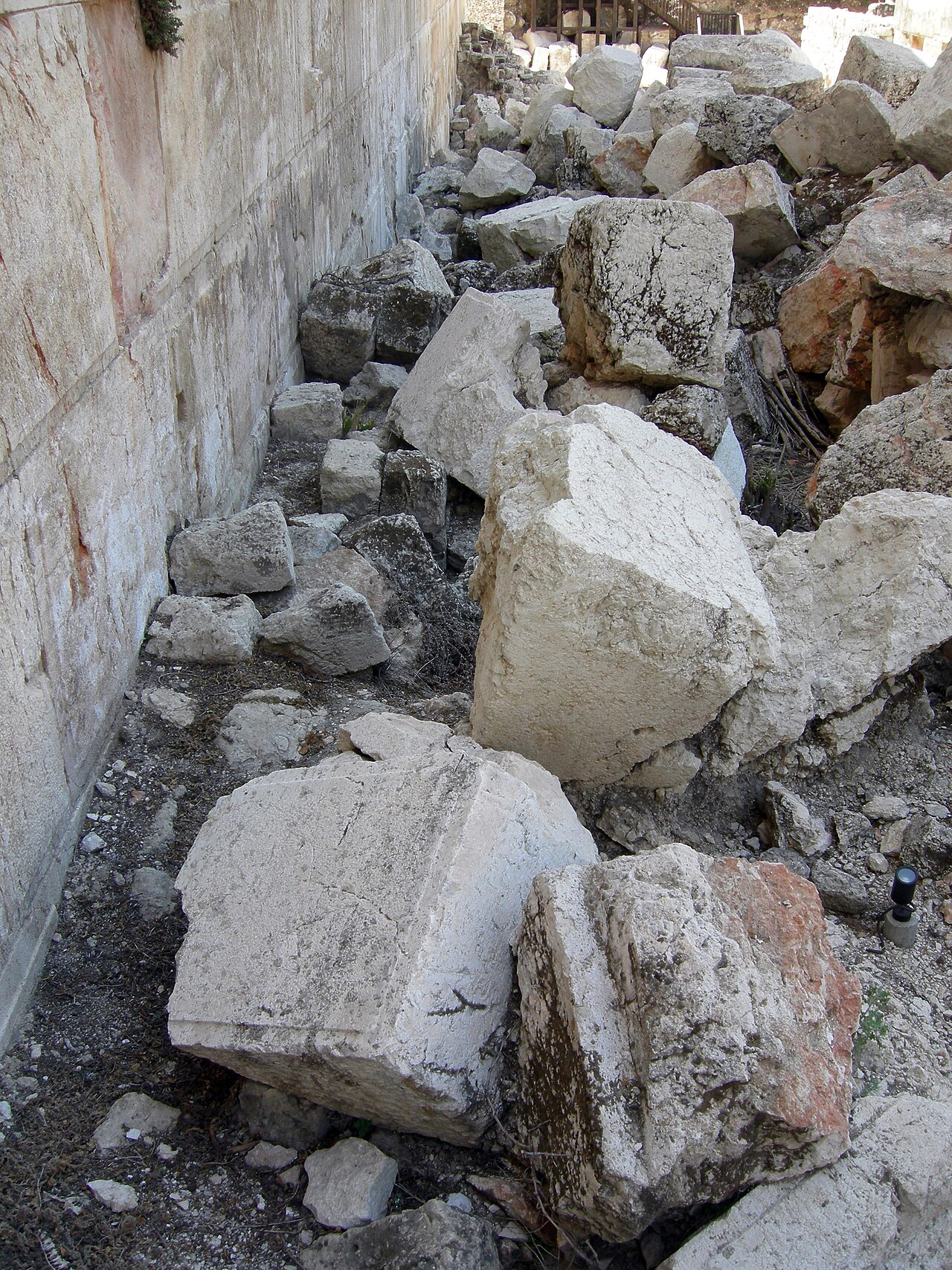
Micah set forth a third oracle bringing all of these themes together in Micah 3:9-12. He indicted the heads of the house of Jacob and rulers of the house of Israel as abhorring justice and perverting equity, building up Zion with blood and Jerusalem with iniquity (Micah 3:9-10). Judges took bribes, priests made determinations for profit, and prophets would give omens for pay; all of them would claim to trust how YHWH was in their midst and remained confident disaster would not overtake them (Micah 3:11). Micah of Moresheth then pronounced his dire warning which would ring in the ears of successive generations of Judahites: because of these authorities Zion would be plowed like a field, Jerusalem would become a heap of ruins, and the Temple Mount would become an overgrown hill (Micah 3:12).

Jerusalem was the City of David, the holy city; the Temple Mount, Mount Zion, featured the Temple of YHWH built by Solomon, where YHWH made His name to dwell by means of the Cloud of His Presence. The Temple, especially, was to be most holy. Micah of Moresheth, however, said it was built through blood and unjust violence. Perhaps there were some particularly galling forms of iniquity going on in Jerusalem at this time involving building projects enabled, facilitated, or even accomplished by means of extortion, oppression, and even bloodshed. Perhaps Micah has the long-term history of Jerusalem in mind with all the violence it had already experienced by the latter portion of the eighth century BCE. But everyone in places of authority were certainly in it for the money; Micah leaves us without any doubt about that. People who should be serving are extorting instead; they do not think twice about it, because YHWH is the God of Abraham, Isaac, and Jacob, YHWH delivered their ancestors from Egyptian slavery, YHWH gave them the land in which they dwell as an inheritance, and YHWH continues to dwells in Zion. They remained completely confident in the status quo: no disaster would overtake them.

The vast majority of Judahites would soon experience the kind of disaster Micah of Moresheth warned about when Sennacherib king of Assyria overran Judah in his campaign of 701 BCE. Micah’s homeland in the Shephelah would be thoroughly ravaged; its people would be killed or enslaved. Later Judahites believed Micah’s message in Micah 3:12 was a warning about this very destruction, with the expectation the Assyrians would make Jerusalem a heap of ruins and Zion a plowed field (cf. Jeremiah 26:18-19). At that time, Hezekiah cried out to YHWH in distress, and YHWH did not destroy them.

One might think someone would have learned a lesson from that close encounter with complete disaster. And, in fact, a “lesson” was learned, or taken from it: YHWH did not allow the Assyrians to destroy Jerusalem or Zion, and therefore YHWH would not allow anyone to destroy Jerusalem or Zion. Jeremiah, among many other prophets, would warn the Judahites against such a deadly and devastating distortion of the truth of the matter. Yet, in the end, it was all for nothing; the Babylonians besieged Jerusalem in 586 BCE, and YHWH did allow them to turn Jerusalem into a heap of ruins (cf. 2 Kings 25:1-21). For a couple of generations, at least, Judah and Jerusalem were profoundly depopulated. It might well have been possible to plow some land and grow some crops right in the middle of where the Temple once stood. If any vagabond Israelite did so, it would have provided an appropriate fulfillment of Micah of Moresheth’s prophecy.

The Word of YHWH through Micah of Moresheth in Micah 3:1-12 remains as relevant as ever. We may not be Israelites living in the Kingdom of Judah in the middle of the Iron Age, but we can see abundant evidence of rulers perverting what is true and right for unjust gain. We still have plenty of elites who manipulate the laws and systems in order to protect their wealth and enhance it at the expense of those who have far less than they. These very elites are often celebrated and honored by some who claim to proclaim the Gospel of Christ, and they hurl their invective against the constructed or perceived “other” in order to justify and perpetuate the systems which have enriched the wealthy and themselves. Almost everything built in our lands, from glittering skyscrapers to idyllic farms, are built upon land stolen from its original inhabitants and justified and upheld by a lot of violence and greed. Those who maintain the privilege and enjoy the benefits of these societal systems will claim their blessings are from God and presume no disaster will come upon them.

Only fools presume to know exactly what God will do, or allow to be done, in the future. As the people of God, however, we might do well take seriously the position of the elders of Jerusalem in the days of Jehoiakim king of Judah, remembering Micah’s message from Micah 3:12, and concerned they were about to bring great disaster upon themselves (Jeremiah 26:18-19). We would do well to consider ourselves, our conduct, and our words. Do we actually prove to hate what is good and revel in what is evil because it makes us good money and keeps us from poverty and loss? Do we benefit because of the exploitation and oppression of others? If so, our sin will find us out; some other group will come and do to us that which we have done to others, or we will have an uncomfortable time before the judgment seat of Christ.

Or will we be like Micah of Moresheth, confident in the witness God has provided in Christ through the Spirit, and maintain a strong commitment to justice and righteousness, and therefore prove willing to call out the injustice and sin pervasive around us, perhaps even among God’s people? It might not make us many friends, but that’s exactly what Jesus warned us about. May we stand firm for truth and righteousness and glorify God in Christ!

Ethan R. Longhenry

First Passover | The Voice 16.37: September 13, 2026

posted in: The Voice | 0

The Voice

The First Passover

The “disciple whom Jesus loved,” known as John, either John ben Zebedee, the Apostle, or John the Elder, was writing his recollections of his experiences with Jesus so that those who hear or read would believe Jesus is the Christ, the Son of God, and would find eternal life in His name (cf. John 20:31). He began by speaking of the Word of God, the Creator, the life and light of men, who took on flesh and dwelt among us as Jesus of Nazareth (John 1:1-18). He then described the calling of the first disciples and Jesus’ first sign at the wedding in Cana (John 1:19-2:12). John the Evangelist would continue by chronicling some of the events which took place while Jesus attended the Passover in Jerusalem (John 2:13-4:3).

As would be expected during the Passover festival, Jesus entered the Temple complex. John related how Jesus was greatly distressed at how the Temple had become a marketplace; He made a whip of cords and drove the merchants of animals and money changers out of the Temple (John 2:13-16). We do well to note how John never suggested Jesus actually used the whip of cords to hit any animal or person.

What, exactly, is Jesus up to in the Temple cleansing of John 2:13-16? Throughout its existence the Second Temple was never only the place to go in order to serve YHWH; it had always been a place with many administrative and mercantile functions. The merchants were not in the holy place but in a court farther away, and their services did prove necessary. A traveler from Galilee or parts beyond would not want to bring an animal for sacrifice across that distance, and travelers would be carrying Roman money which would need exchanging for the Temple shekel. In the Synoptic Gospel accounts Jesus cleanses the Temple during His final week and evokes Jeremiah 7:11, calling it a den of robbers, and thus rendering judgment on the Second Temple as YHWH did the First Temple in the days of Jeremiah (cf. Matthew 21:12-17); yet John placed the event toward the beginning of Jesus’ ministry and without the overt political connotations. Many imagine Jesus was enraged at the oppressive costs of the animals or the exchange rate, yet such is completely speculative. The only hint John provided is what the disciples remembered: the prophecy of Psalm 69:9, how zeal for YHWH’s house would consume Him (John 2:17). We do best to understand Jesus’ cleansing of the Temple as a ritual sign act which demonstrated the close association between the Father and the Son.

The Jewish leaders recognized what Jesus was doing and why and thus asked Him for a sign which would bear witness to His authority (John 2:18). Jesus challenged them to tear down this temple and He would raise it again in three days (John 2:19). The Jewish leaders were incredulous: Herod the Great had begun his great renovation of the Second Temple in around 19 BCE. By the present moment in 27 CE it had been under construction for forty-six years; it would only be finished in 63, and would be destroyed seven years later (cf. John 2:20). No doubt this kind of statement would become the basis of the false accusations against Jesus at His trial (cf. Mark 14:58). But Jesus did not refer to the Second Temple; He spoke of the temple of His body, and His disciples remembered this when He arose from the dead and they believed (John 2:21-22).

A temple is the place in which it is believed a deity dwells or maintains its presence. YHWH demonstrated His presence among His people in former times by the Cloud of Presence in the Tabernacle and in the First Temple (cf. Exodus 40:34-35, 1 Kings 8:10-11). In a vision Ezekiel saw YHWH’s Presence depart from the First Temple, and it was destroyed soon afterward (cf. Ezekiel 10:1-22). Yet the Cloud of Presence, also known as the shekinah, did not return when the Second Temple was built; the Most Holy Place of the Temple was infamously completely empty. We cannot but keep this in mind when considering John’s testimony about Jesus in the Temple, for in Jesus the Presence of YHWH had returned and had testified against Jewish practices in the Temple.

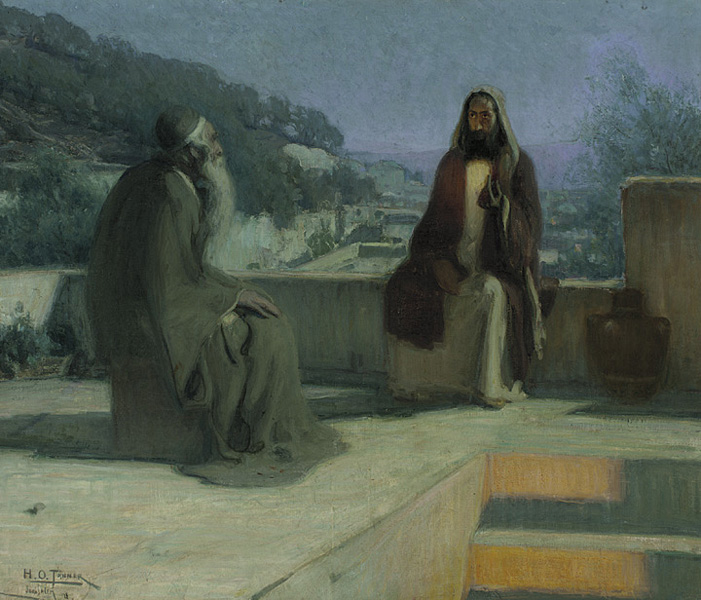
According to John the Evangelist, many believed in Jesus during that Passover, but He would not entrust Himself to the people, because He knew what people were all about (John 2:23-25). One such, perhaps, is a Pharisee of the Sanhedrin named Nicodemus, who comes to visit Jesus at night (John 3:1). He seemed to come at night to speak to Jesus without as much fear of retaliation from other Jewish authorities and likely to gain further instruction. Nicodemus proved more fair-minded than many of the religious authorities like him: he recognized God was with Jesus because no one could do the things Jesus was doing if God were not with Him (John 3:2). In contrast, fellow Pharisees would blaspheme the Spirit of God by suggesting Jesus did miracles by the power of Satan (cf. Matthew 12:22-32).

Jesus would then attempt to teach Nicodemus, yet the conversation ends up in a farce. Jesus warned Nicodemus: only by being born anothen could anyone see the Kingdom, or Reign, of God (John 3:3). Anothen, in Greek, can mean “again” or “from above”; Jesus has both in mind when speaking with Nicodemus. Thus Jesus would testify regarding the “second birth,” the need for belief and baptism which attends it in order to share in the coming Reign of God, and a more spiritually and less physically understood allegiance and association; Nicodemus could not understand it (John 3:3-12). Jesus, the Son of Man, could testify about spiritual things from above, since He had descended from above, and would ascend again one day; as Moses lifted up the serpent to provide healing for Israel in Numbers 21:5-9, so the Son of Man would need to be lifted up so those who believe in Him might share in life eternal (John 3:13-15).

“Son of Man” is a Hebrew idiom to describe a human being (cf. Psalm 8:4); yet a Pharisee like Nicodemus, who would know his Prophets and Writings well, would understand Jesus as speaking of the “one like a son of man” who would stand before the Ancient of Days to receive a Kingdom without end (cf. Daniel 7:13-14). Thus Jesus would have to be lifted up in His ascension to receive the Kingdom from His Father; but to be able to ascend Jesus would have to be lifted up in His resurrection from the dead; and His death would come from having been lifted up on the cross: and so Jesus thus evoked all He would undergo by making reference to Moses and the serpent in the Wilderness. Jesus thus testified regarding who He was, what He was about, and the basis on which He could thus speak to Nicodemus about what God was accomplishing through Him.

In John 3:16-21 John the Evangelist provided no contextual break, and so it is quite possible John was relating Jesus’ direct speech to Nicodemus; but it is also possible John has begun making his own commentary as he did in John 1:1-18. God has loved the world by giving of His only beloved Son so all who believe in Him might have eternal life (John 3:16). Jesus did not come into the world to condemn it but to save it (John 3:17); if God wanted to condemn everyone, He would have not needed any further justification, for we have all sinned and fallen short of His glory. Far too many people imagine God in Christ watches in wait to catch people in their sin to condemn them; it is Satan who does that. In Christ God is doing all He can to save people! Those who entrust themselves to Jesus are not condemned; those who deny Him are already condemned in their unbelief, having turned away from the light in Christ because it exposed the wickedness of what they did (John 3:18-20). But those who practice truth are drawn to the light of God in Christ to demonstrate their deeds are done in God (John 3:21).

According to John the Evangelist, Jesus then left Jerusalem for the Judean wilderness near the Jordan River, and was baptizing people (John 3:22). John the Baptist was across the Jordan at Aenon near Salim and was baptizing there, having not yet been imprisoned by Herod Antipas (John 3:23). The Baptist’s disciples informed him of how Jesus was also baptizing, and many had come to Him for baptism; John the Baptist then spoke of Jesus as the Bridegroom and himself as the friend of the Bridegroom, and he took great joy in how Jesus was becoming greater and he comparatively lesser (John 3:24-30).

As with John 3:16-21, so with John 3:31-36: perhaps John the Baptist continued his response, or perhaps John has taken over and provided commentary. The One who came from heaven, Jesus, maintains superior testimony to those who are of the earth and can provide only earthly testimony (John 3:31). None may accept His testimony, but He will speak God’s words since God sent Him to do so; the Father loved the Son and gave Him authority over all things (John 3:32-35). The one who entrusts him or herself to Jesus the Son has eternal life, but those who reject the Son have God’s wrath upon them (John 3:36).

The Pharisees would learn of Jesus’ great success at the Jordan River and how His disciples were baptizing more people than John the Baptist and his associates; thus Jesus departed from Judea to return to Galilee (John 4:1-3). John the Evangelist thus recorded the first Passover of Jesus’ ministry, and in so doing set forth, in word and deed, the purposes of God in Christ. YHWH was fulfilling His promises and had returned to His people. Those who entrusted themselves to God in Christ could be born again in Him to obtain eternal life. But those who rejected God in Christ would be judged, condemned, and experience the wrath of God. May we be born again from above in God in Christ through the Spirit and obtain eternal life in Him!

Ethan R. Longhenry

Sharing | The Voice 16.36: September 06, 2026

posted in: The Voice | 0

The Voice

Sharing

So the crowds were asking him, “What then should we do?”
John answered them, “The person who has two tunics must share with the person who has none, and the person who has food must do likewise” (Luke 3:10-11).

Isaiah and Malachi had told Israel to look for the one who would come and prepare the way of YHWH, the Elijah who would tell Israel how to be reconciled to God and to one another before He would return. He had finally come (Isaiah 40:2-4, Malachi 3:1-5, Luke 3:4-6). And he came with a warning and an exhortation.

John lived in the desert wastes of the Jordan River valley around the year 27 CE (Luke 3:1-2). He preached a baptism of repentance, exhorting Israelites to be ritually immersed in water to demonstrate how they were no longer going to walk in the ways of their ancestors but would change their hearts and minds to dedicate themselves to YHWH and His purposes in light of the coming Messiah (Luke 3:3).

When the crowds went out to be baptized by him, John did not mince words. He called them all a brood of vipers and asked who warned them to flee from the wrath that was coming (Luke 3:7)! He was less concerned about ingratiating himself with his audience than with the sincerity of their repentance. They should not assume their standing before God was assured by their genealogical relationship with Abraham (Luke 3:8). John solemnly warned the Israelites: if YHWH was coming, that meant the day of YHWH, or a time of judgment, was at hand, which John explained by stating the ax was laid at the root of the tree, and every tree that did not produce good fruit would become firewood (Luke 3:9). The Israelites should repent and bear good fruit if they would be preserved; otherwise they would be cut down like so many of their ancestors!

The crowds heard John and accepted his warning; they wanted to know what they should do (Luke 3:10). How were they supposed to bear the good fruit of repentance? What would be John’s primary message for the Israelites so they would escape YHWH’s condemnation and be prepared to welcome Him when He came?

John told Israel to share. A person who had two tunics must share with the one who has none, and the person who had food must share with those who did not have food (Luke 3:11).

Yes, John would go on to give specific exhortations to specific groups who asked. Tax collectors should collect nothing beyond what was required; soldiers should not take money by violence or false testimony and should be content with their pay (Luke 3:12-14). Such would well demonstrate the repentance of members of those groups.

Luke would go on to speak about John’s confession he was not the Christ, but the Christ was coming and would be the Judge; Jesus was baptized by John; John was imprisoned, and at a later time, would be executed, by Herod Antipas (Luke 3:13-23, 9:7-9). Luke 3:7-14, therefore, represents what we know of the preaching of John the Baptist as he prophesied and exhorted Israel to repentance before the great and terrible day of YHWH would arrive.

And John the Baptist, whom Jesus confessed as the Elijah to come, the greatest among those who had been born of human parentage at the time, and literally the ultimate messenger of the Law and the Prophets (cf. Matthew 11:11-14), told Israel to share.

The people of God throughout time have been tempted to complicate the faith and the relationship with God and with one another they ought to have. It is tempting to make religion all about various ideas and perspectives divorced from real life experience. It is tempting to focus on defining who has standing before God and who does not. It is tempting to try to answer all the possible questions and objections and dig deeply into various scenarios and possibilities.

Yet John’s message to the people of his time was simple: YHWH was coming. That meant judgment was coming. Those who did not change would be condemned. Thus, God’s people needed to change. They couldn’t trust in their ancestry for their standing. They needed to act as if God was coming soon. And to do that they needed to share what they had.

When they shared what they had, they demonstrated they trusted in God to provide for their necessities. They demonstrated their obedience to His command and directive. They displayed love for one another in providing for what they needed. In sharing they confessed their light hold on the things of this world and the higher priority of one another than in material comfort.

Jesus also confessed, however, that the least in the Kingdom of God was greater than John (Matthew 11:11). All John had promised came to pass: YHWH came to His people as Jesus, dwelt among them, prophetically declared judgment, died, was raised in power, ascended to heaven, was made Lord and Christ, and rendered judgment against Judah and Jerusalem.

But John’s prophetic message endures. Jesus will return again soon (Acts 17:30-31). We must live in repentance lest we find ourselves condemned on that day, for God will not show partiality (Romans 2:5-11, 2 Thessalonians 1:6-11). And how can we display the fruit of repentance? By sharing what we have with our fellow people with God and with everyone. Jesus framed the whole judgment scene according to whether or not we do so in Matthew 25:31-46. James asked how a Christian could tell someone in need to be warmed and filled without giving what was necessary and then think their faith without works could save them (James 2:14-26). John wondered how Christians could really say they loved one another and would even die for one another if they did not prove willing to provide material goods to one another in need (1 John 3:16-18, 4:7-21). Paul continually exhorted Christians to give to those in need, especially to those of the household of faith; the Hebrews author affirmed the same (Galatians 2:10, 6:10, Hebrews 13:16).

As then, so now: it is not just about the act of sharing. We share because we trust that God provides our necessities and we confess our light hold on the possessions and material wealth we have, recognizing all of it comes from God, it cannot be taken with us, and it is always better used to assist others in the present than in the vain hope of future yield. When we share, we prioritize people over comfort.

Our faith in Christ, therefore, ought to be manifest in sharing. Let us consider well John’s prophetic message of sharing and embody it fully to the glory of God in Christ!

Ethan R. Longhenry

Jude and the Assumption of Moses | The Voice 16.35: August 30, 2026

posted in: The Voice | 0

The Voice

Jude and the Ascension / Assumption / Testament of Moses

But even when Michael the archangel was arguing with the devil and debating with him concerning Moses’ body, he did not dare to bring a slanderous judgment, but said, “May the Lord rebuke you!” (Jude 1:9)

Jude the Lord’s brother denounced the tendency of false teachers in his day to insult or rail against the “glorious ones,” likely angelic beings, in Jude 1:8; he then contrasted this attitude in the next verse with that of the archangel Michael. When debating Satan about the body of Moses, Michael would not render judgment on his own; instead, he spoke of how God would rebuke Satan (Jude 1:9). If the Archangel Michael himself would not prove willing to rail against Satan, then who do Jude’s opponents think they are when they insult angelic beings?

Jude’s argument would have proven compelling to those who accepted and recognized the legitimacy of his reference to the story of the Archangel Michael and Satan regarding Moses’ body in Jude 1:9. But where does this story come from?

According to Deuteronomy 34:1-7, Moses died in the land of Moab on Mount Nebo when he was 120 years old. The author would give the impression YHWH Himself buried Moses somewhere in the land of Moab near Beth Peor, but no one knew exactly where he was buried.

We find no other mention of anything regarding the burial of Moses’ body in the Hebrew Bible or the New Testament; at no point in any of these books do we find a description of the archangel Michael contending with Satan over the body of Moses. We do find an angel of YHWH standing near Joshua the high priest and declaring “May YHWH rebuke you!” to Satan in Zechariah 3:2; the angel is left unnamed, so the possibility exists it was Michael, but it could equally have been another angel.

Jude’s argument in Jude 1:9 would have been served quite well by appealing to the vision of Zechariah 3:2, since the angel there rebuked Satan in the name of YHWH. But Jude did not cite this example; he appealed to another example, we presume, with which he expected his audience to be familiar, yet remains unattested in the Hebrew Bible and the New Testament.

But how would his audience know about it? According to the early Christians Origen and the author of the Anonymous Church History (misattributed to Gelasius of Cyzicus), Jude was making reference to a narrative preserved in the text they knew as the Ascension, or Assumption, of Moses (De Principiis 3.1.2, Anonymous Church History 2.21.7).

In the middle of the nineteenth century, Antonio Ceriani came upon a sixth century Latin manuscript in the Biblioteca Ambrosiana in Milan, Italy. The text of the manuscript was incomplete, preserving only its first eleven chapters and part of the twelfth. On its own, this text seemed to be the Testament of Moses, the very first words of the text, an apt description of most of its preserved contents, and a text which was known to early Christians. And yet one of the verses in the first chapter of this text matches a quote found in the Anonymous Church History attributed to the Ascension/Assumption of Moses!

An English translation of this text can be found at https://www.pseudepigrapha.com/pseudepigrapha/assumptionofmoses.html. In chapter one of the text, Moses commissioned Joshua and gave him books which should be stored away until the end of days. In chapters two through six of the text, Moses would foretell aspects of what Israel would experience from the conquest of Canaan until the destruction of the Temple in 70, with a heavy emphasis on the Second Temple Period. The seventh chapter has not been well preserved but seems to reflect some eschatological expectations. The eighth chapter described a persecution of Israelites; whether it should be reckoned as historical or eschatological remains disputed. The ninth chapter would commend Taxo the Levite in that day, who retreated to a cave rather than transgress the commands of God (that is, to give into Hellenistic influences). The tenth chapter presents a kind of eschatological poem in which God would redeem the Israelites and condemn the Gentiles, ending with a commendation for Joshua to preserve the message. Chapter eleven featured Joshua’s response, refusing to be comforted, asking how he could lead the Israelites. What remains of chapter twelve began Moses’ response to Joshua, comforting him in terms of God’s foreknowledge of all things and ultimate vindication.

Early Christians bore witness to some of the details in the text they called the Ascension or Assumption of Moses. As indicated, the Anonymous Church History quoted from chapter one and verse fourteen of the text above. Its author, along with Origen and some other early Christians, spoke of how there was a dispute between the archangel Michael and Satan. Joshua (and Seth and some other witnesses) watched certain events take place, after which Michael took Moses’ body away. Seth would give chase, but as he did so, Michael disappeared with the body of Moses.

We can maintain a decent amount of confidence in the witness of these early Christians about what was contained in the Ascension or Assumption of Moses: they tend to be generally reliable witnesses regarding which texts say what. They had far better access to these texts than we do, and we do well to generally trust their testimony. Therefore, we can reasonably conclude Jude did indeed make an allusion to a pseudepigraphal work known as the Ascension or Assumption of Moses.

But is the text Ceriani found in the middle of the nineteenth century an incomplete edition of the Ascension or Assumption of Moses? The text has been associated with this name because of the quote from the Anonymous Church Historian. Others have argued for it to be associated better with another text known as the Testament of Moses, since at least the part which has been preserved does indeed represent the testament genre, very common and popular in the waning days of the Second Temple Period and immediately afterward. It has also been suggested the Testament of Moses and the Ascension / Assumption of Moses started off as two separate texts which were then conflated, and what Ceriani discovered was the beginning of such a conflated text. Such is why the text Ceriani discovered has been associated with the Ascension / Assumption of Moses and the Testament of Moses.

Since the text is incomplete and we have not discovered any other manuscripts of the text, we will not be able to come to any definitive conclusion. It is possible the work is a conflation, although we should note the Anonymous Church Historian associates a quote from the first chapter with the Ascension / Assumption of Moses and not the Testament of Moses. Since the first chapter is very strongly associated with the “testament” genre, it should at least give significant pause before considering this work as the Testament of Moses. Even if it is a conflation, it is apparent it is better known as the Assumption of Moses rather than the Testament of Moses. It of course remains entirely possible the Testament of Moses was a completely different work which has been lost and not yet re-discovered.

Based on all the evidence which has been preserved, we would not be out of line to suggest the Ascension / Assumption of Moses began as preserved in the Latin text discovered by Ceriani, and the stories of Michael’s and Satan’s dispute and the ultimate fate of Moses’ body, as testified to by early Christians, would have come later in the portion now lost to us.

Ceriani’s Latin text dates from the sixth century. It seems to be a translation of a Greek text which itself was a translation of a Hebrew or Aramaic original. But it would be very difficult to associate the text we have with the historical Moses, or, for that matter, with any author in the days of the Hebrew Bible: this text quickly passes over the “Biblical” period to focus on the Second Temple Period. The witness regarding Taxo and his sons might well reflect an actual family from the latter portion of the Second Temple Period, but it seems a bit too convenient for Moses to have spoken of them in detail over a thousand years before, while not speaking of all sorts of other events or experiences of Israel during that period and before. Instead, we do better to understand this text as pseudepigraphal: it is written as if Moses spoke all of it, but it actually represents testimony from a far later period, probably the first century CE, especially since the author seems very familiar with Herod the Great.

This would mean the Ascension / Assumption of Moses, as a whole, would be a first century document, and as pseudepigraphal, certainly not inspired by the Holy Spirit. So how can we make sense of Jude making reference to such a document?

In Jude 1:19, Jude did not say he was explicitly quoting from the Ascension / Assumption of Moses. He simply related details of the story of Michael rebuking Satan over Moses’ body. Jude certainly believed those particular events happened. He probably was using the Ascension / Assumption of Moses as his source; but where did the author of the Ascension / Assumption of Moses get the story he told? Some might presume it was of his own imagination; but what if the story, or something like it, had circulated among Israelites for some time beforehand?

We know far, far less than we would like about Jude’s reference to the story of the archangel Michael contending with Satan over Moses’ body in Jude 1:9 as well as the Ascension / Assumption of Moses, the Testament of Moses, and the Latin text discovered by Ceriani. We certainly do not have a lot of ground on which to make dogmatic assertions with any confidence. We can maintain reasonable confidence in early Christian witness that Jude’s reference in Jude 1:9 had some ground or basis in the Ascension / Assumption of Moses. While associations of Ceriani’s text with the Testament of Moses are understandable, the preponderance of evidence we do have would better suggest it as the beginning of the Ascension / Assumption of Moses. It would prove incredibly challenging indeed to associate much of anything of the Ascension / Assumption of Moses we have with Moses himself or those who came immediately after him; the consensus remains that the text is pseudepigraphal and from the Second Temple Period. Therefore, we would not be wise to suggest Jude’s witness is true because it is attested in the Ascension / Assumption of Moses. We therefore do better to understand Jude and the Ascension / Assumption of Moses are both making reference to a tradition older than both of them regarding what happened to Moses’ body after his death, and the Holy Spirit through Jude is confirming at least part of that tradition in what is written in Jude 1:9.

An unknown Israelite, or a series of unknown Israelites, wrote to give encouragement to their fellow Israelites in the first century to observe the commandments of Moses and to resist Hellenization, and did so as if Moses was speaking to them across the generations. One of these Israelites testified to a tradition about the archangel Michael disputing with Satan over Moses’ body; in telling this story, he related how Michael declared to Satan how the Lord would rebuke him. The story likely had many other details, but they have been mostly lost to us because the full text has not been preserved. Jude, brother of the Lord Jesus, would make appeal to the way Michael would not directly rebuke Satan, but said the Lord would rebuke him, and expected this appeal would be accepted as legitimate by those who would read and hear his letter in Jude 1:9. He did so in contrast to how his opponents would rail against angelic beings as further evidence of their depravity. We are not Jude’s immediate audience, and we may have a lot of questions about Jude’s reference. But we can trust in the integrity of his witness while understanding the challenges which attend to the source to which it is connected. May we learn from what Jude said, be careful about rendering slanderous judgment, seek to follow the Lord Jesus in all things, and share in the resurrection of life in Him!

Ethan R. Longhenry

Works Consulted

Assumption of Moses (accessed 2026/08/26).

Communion | The Voice 16.34: August 23, 2026

posted in: The Voice | 0

The Voice

Communion

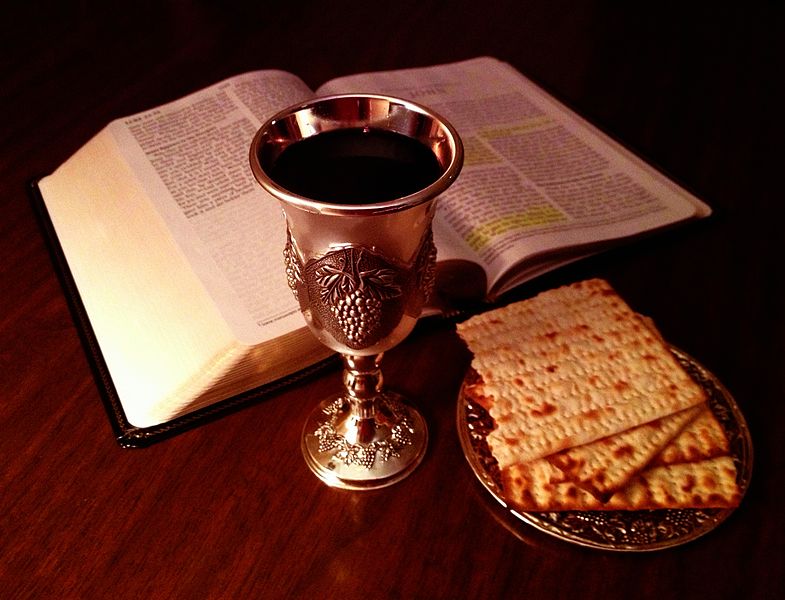
The cup of blessing which we bless, is it not a communion of the blood of Christ? The bread which we break, is it not a communion of the body of Christ? seeing that we, who are many, are one bread, one body: for we are all partake of the one bread (1 Corinthians 10:16-17).

As we come together on the first day of the week to break bread (Acts 20:7), we emphasize that the Lord’s Supper represents the memorial of our Lord’s death (1 Corinthians 11:23-26). This is, indeed, the primary purpose of the Supper. It is good and right for us to gather together on a weekly basis to consider what the Lord suffered so that we could be redeemed and added to His Kingdom (cf. Romans 5:6-11, Titus 3:3-8, Colossians 1:13).

Yet the Lord’s Supper is more than just the memorial of our Lord’s death; it also represents the communion of all the saints, both with the Lord and with each other. The communal aspect of the Lord’s Supper is often neglected but is quite powerful and necessary in its own right.

The Lord’s Supper represents the communion of the saints with their Lord. The church is considered the “body of Christ” (Ephesians 4:4-5; 5:22-33, Colossians 1:18). When Christians partake of the Lord’s Supper, they are to discern the body and blood of Christ in the bread and the fruit of the vine (1 Corinthians 11:29). Thus, it can be said in a figure that the body of Christ partakes of the body of Christ: the church coming together to partake of the Supper. As Jesus says,

Jesus therefore said unto them, “Verily, verily, I say unto you, Except ye eat the flesh of the Son of man and drink his blood, ye have not life in yourselves. He that eateth my flesh and drinketh my blood hath eternal life: and I will raise him up at the last day. For my flesh is meat indeed, and my blood is drink indeed. He that eateth my flesh and drinketh my blood abideth in me, and I in him” (John 6:53-56).

Much violence has been done to this text and many others in gross literalization of the ideas involved. This abuse of what Jesus is trying to say does not, however, mitigate the powerful message that Jesus is sending: we have to consume the Word of God in order to live. This consumption is not physical as much as it is spiritual– learning of God’s word and the practice thereof in life (1 Corinthians 9:24-27, Hebrews 5:12-6:4). Yet, in the Lord’s Supper, we have a reminder of our dependence on God and the basis of our association with Him: the body and blood of His Son, discerned in the bread and the fruit of the vine. The Lord’s Supper represents a physical representation of the communion we enjoy with God in His Son.

The Lord’s Supper also represents the communion that saints share with each other as demonstrated in 1 Corinthians 10:16-17. As 1 Corinthians 11:23-33 indicates, the Lord’s Supper is an individual action done collectively: we each must purpose to assemble to partake of the Supper and we each must individually examine ourselves before we partake. And, as Paul indicates in 1 Corinthians 10:16-17, it is the shared partaking that is such a powerful demonstration of the unity of the faith.

Understanding of the nature of our communion has also suffered because of gross literalization and extremism. Our communion is not dependent on eating the exact same piece of bread, nor is it dependent on eating the bread simultaneously. In 1 Corinthians 10:17, Paul says that “we” who are many are “one bread” because “we” partake of the “one bread,” and he can say this even though he is physically in Ephesus and his audience is in Corinth (cf. 1 Corinthians 16:8).

The unity of our communion, therefore, is realized mostly in our shared practice of coming together on the first day of the week and participating in the Lord’s Supper. This wonderful unity begins while we are engaged in Saturday evening activities when our brethren in Australia and Japan come together to remember the Lord. As we rest during the evening, our brethren in India, Africa, and Europe come together to partake of the one bread. While we are getting ready in the morning, brethren in Brazil do so. After we partake and go about our Sunday afternoon, brethren to our west come together and remember the Lord. As brethren often come back together later on the first day of the week, other saints participate in this communion.

We all may speak different languages, wear different clothing, have different cultures and perspectives on things, but we all come together to partake of the one bread. We all spend some time on the first day of the week focusing on the Lord’s death. It does not matter how wealthy or poor we are, what race or culture we belong to, or any other difference: we are the one bread. We are the People of the Bread and the Fruit of the Vine, according to 1 Corinthians 10:16-17.

We may not always think about these things, but they take place on a weekly basis around the world. It ought to provide us great comfort and encouragement. We are one with brethren throughout the world; we may not know them, and they may not know us, but we have joint participation in the Kingdom through the blood of Christ (1 John 1:7). We demonstrate this by coming together on the first day of the week to partake of the bread and the fruit of the vine.

While 1 Corinthians 10:16-17 shows that our communion is shared with all of our brethren around the world, there is a reason why we partake of the Lord’s Supper as a local congregation of God’s people. The abstract unity of all believers in the faith throughout the world is most concretely realized in the functioning of each local congregation of God’s people, where most of our effort is expended (Romans 12:3-8, 1 Corinthians 12:12-28).

It would be quite difficult to imagine the unity of all the believers in communion if we partook alone and in isolation! In a very concrete way, we demonstrate our shared participation in God’s Kingdom in the local church by coming together and sharing the Lord’s Supper with one another. In so doing, we proclaim our unity. In any given local congregation there are people of different classes, socioeconomic backgrounds, ages, and talents. Yet, in the Lord’s Supper, all partake of the “one bread” and the “cup of the Lord.” This is why, ideally, all the saints will come together on the first day of the week to break bread– to remember the Lord’s death and proclaim His victory, but also to demonstrate our shared unitary faith. As we are one bread, let us partake of the one bread!

Ethan R. Longhenry

Right Preacher For This People | The Voice 16.33: August 16, 2026

posted in: The Voice | 0

The Voice

The Right Preacher For These People

Micah of Moresheth was almost certainly not the kind of prophet or preacher the Judahites wanted. Yet he was called by YHWH to give warning to the people. Whether they would heed the warning or not would be up to them.

The Word of YHWH came to Micah of Moresheth in the days of Jotham, Ahaz, and Hezekiah, kings of Judah (ca. 742-680 BCE; cf. Micah 1:1). The Word of YHWH which Micah saw regarding Samaria pronounced its imminent doom (Micah 1:2-9). Moresheth was a village in southwestern Judah where the Shephelah met the Philistine coastal plains, and Micah had messages of warning for his fellow inhabitants in the Shephelah regarding the destruction and devastation which would soon come despite all the preparations the state had made (Micah 1:10-16).

Yet YHWH, through Micah, did not want the Judahites to be confused at all regarding the reasons why such devastation would come. He pronounced a woe upon those wicked schemers among the wealthy and well-established who would devise calamity while they rested, carrying out their plans in the morning since they had complete power to do so (Micah 2:1). As a result, ancestral inherited lands and property held by the people soon became the property of the most connected and elite among the nobility, and all done through “legal” means which they established to accomplish their purposes (Micah 2:2). On account of these things YHWH was planning disaster against Judah, and they would not be able to escape it (Micah 2:3). Micah imagined the mocking lament raised in taunt against them: they are completely destroyed, and their lands have been sold off to their conquerors (Micah 2:4). They may have gained all kinds of land now, but the day would come on which they would no longer have any descendants to inherit land among YHWH’s people (Micah 2:5; cf. Joshua 15:1-21:45).

At least some of those who heard Micah of Moresheth’s message of denunciation seem to have been less than pleased by it. Micah recorded some level of reaction to him: he should not prophesy in such ways, for they remained confident they would not be overtaken by such humiliation (Micah 2:6). The Masoretic Text in Micah 2:7-10 presents us with many challenges, but it would seem the first portion continues the same theme, suggesting Israelites are saying YHWH’s patience with them would not be exhausted, and He would never allow His people to experience such degradation (Micah 2:7). It would then seem Micah would respond to these Judahites: those who obey YHWH’s commands would find rewards, but they were doing the opposite: they resisted the people of Judah as if enemies by stealing clothing from people, casting out women and children from their homes, and defrauding people of their inheritances (Micah 2:7-9). They would be forced to leave the land, for it was not as secure as they imagined; sin would lead to such devastation (Micah 2:10). Micah then presented his coup de grâce: if a man led by the wind/a spirit would come speaking of wine and beer, he would be the kind of prophet or preacher this people would want to hear (Micah 2:11)!

Micah’s woe and its response can give us a lot of insight into the situation at hand. It remains possible the majority of the people wanted to speak against what Micah was talking about, but more likely he was receiving resistance from the very people doing the kinds of things he was condemning. Those who were on the receiving end of the oppression might well have appreciated what Micah was saying. We can somewhat reconstruct the theology of Micah’s opponents: they maintained great confidence in YHWH as the God of Israel, and expected YHWH as the God of Israel to continue to preserve His people against their enemies and to maintain their standing in the land as they had enjoyed it for innumerable generations to that point. It was inconceivable to them for YHWH to so thoroughly degrade and humiliate His own people: what kind of god would willingly do that? They wanted to find their justification and rationalization for continuing the status quo which was working very much in their favor even if it caused great distress and grief to many others.

Micah 2:11 remains justly famous: the people would love to hear of a man with a certain kind of spirit and who would preach about them. Yes, many would want to hear about wine and beer. But Micah probably has in mind well more than just wine and beer: the “good life,” in which one is able to enjoy wine, beer, probably women, and other luxuries. All those things sound good, fantastic, and fun, but Micah of Moresheth knows what they cost. They enjoy their wine, beer, and other luxuries at the expense of the many they have disinherited in order to build and grow their wealth. Such was not according to the will or purpose of YHWH. Yes, for a moment, they might enjoy all their property they have accumulated. But the time would soon come when an enemy would arise and would dispossess the dispossessors. They had caused grief and ruin; grief and ruin would come upon them. And their enemies, no doubt, would celebrate; their enemies would want to hear a man prophesy of wine and beer. It would be the last thing they would want to hear about on that day.

But this would not be the final word or the end of the situation. YHWH would gather all of the Israelites would remain after these days, and would gather them like a shepherd and multiply them greatly (Micah 2:12). Micah imagined YHWH leading His people, with their king advancing before them, with one having broken them out of the city in which they were held captive (Micah 2:13).

It would all come to pass just as Micah of Moresheth prophesied. The Assyrians would devastate the land, and many of its landholders, in 701 BCE; in 586 BCE, the Babylonians would destroy Jerusalem and the Temple and exile most of its inhabitants. Jesus of Nazareth would suffer, die, and be raised so the people of God could be broken out of their captivity to sin and death. And yet the message of Micah resonates to this day. In almost every land there are the wealthy and well-connected who continue to get the laws made to their advantage so they can obtain the ancestral land and wealth of those less fortunate than they. Many people still would rather hear a lying deceiver of wine and beer rather than a preacher who speak frank, uncomfortable truths of God. Such people might prosper in the moment, but YHWH of Hosts has noticed, and it will be done unto them or their descendants as they did unto others at some point. We all do better to seek the ways of God in Christ through the Spirit, to uphold His justice and righteousness, and obtain salvation in Him!

Ethan R. Longhenry

Bethany to Cana | The Voice 16.32: August 09, 2026

posted in: The Voice | 0

The Voice

From Bethany to Cana

The “disciple whom Jesus loved,” known as John, either John ben Zebedee, the Apostle, or John the Elder, was writing his recollections of his experiences with Jesus so that those who hear or read would believe Jesus is the Christ, the Son of God, and would find eternal life in His name (cf. John 20:31). He began by speaking of the Word of God, the Creator, the life and light of men, who took on flesh and dwelt among us as Jesus of Nazareth (John 1:1-18).

John the Evangelist had spoken of John the Baptist as one sent by God to testify regarding the light and the One who was greater than he (cf. John 1:6-8, 15). John the Evangelist then set forth John the Baptist’s testimony (John 1:19-28). In Bethany beyond the Jordan, where John the Baptist was doing his baptizing, the Jewish leaders asked John whether he was the Christ, Elijah, or the prophet; John denied it all; instead, John would only affirm himself as the voice shouting in the wilderness to prepare the way of the Lord, the fulfillment of Isaiah 40:3 (John 1:19-24). Jesus Himself would later consider John to be the Elijah to come, just as the angel Gabriel had predicted John would come as the Elijah to fulfill the word of YHWH in Malachi 4:5-6 (Matthew 11:7-15, Luke 1:11-18). Jesus’ and Gabriel’s testimony are enough to prove the case; perhaps it was not revealed to John that he was Elijah.

The Jewish religious leaders wanted to understand why John was baptizing if he was not the Christ, Elijah, or the prophet, and it was a good question. Jewish people of the Second Temple Period valued ritual washings highly; the places for such ritual washings, known as mikva’ot, can be found in all kinds of dwellings of this period. A baptism of repentance, however, was not something commanded or even spoken of as part of the Law of Moses or a ritual in Judaism. John baptized because God told him to do so; it would symbolically represent repentance, a changing of the hearts and minds of the people; he looked forward to One coming of whom he was unworthy to even untie His sandal (John 1:25-28).

The next day John the Baptist saw Jesus walking toward him; John then testified to Jesus as the Lamb of God who would take away the sin of the world (John 1:29). Lambs were not the standard offering as sin offerings, but the lamb was the offering made for the Passover which led to the liberation of the Israelites from Egyptian bondage (Exodus 12:1-27). It was revealed to John how Jesus would thus be sacrificed to liberate the creation from its bondage of sin. John testified regarding how he had come believe Jesus was the Chosen One of God: God had told him the One whom he baptized upon whom the Spirit would descend like a dove would be the One who would baptize with the Holy Spirit; lo and behold, when John baptized Jesus, the Spirit descended upon Him (John 1:30-34). Thus John the Evangelist did not directly narrate the story of Jesus’ baptism, but provided John’s testimony regarding that baptism. Furthermore, according to John, Jesus was baptized by the will of God as a sign to John to confirm who He was.

The day after that John the Baptist was standing with two of his disciples, and Jesus again walked by him. John again spoke of Jesus as the Lamb of God, and those two disciples began following Jesus (John 1:35-37). John the Evangelist would then narrate the call of some of the disciples in a whimsical way. One of the disciples was Andrew, brother of Simon; the other disciple is left unmentioned, but since we are reading this story as part of the witness of John the Evangelist, we have reason to assume he is that other disciple. They ask where Jesus is staying, and He said they would see; they stayed with Him for a while, and Andrew then went out to find his brother Simon and told him they had found the Messiah of God (John 1:36-41). Andrew brought Simon to Jesus, and Jesus named him Peter (John 1:42).

The next day Jesus intended to go to Galilee. He saw Philip and called him to follow. Philip found his friend Nathanael and told him how he had found the One whom Moses and the prophets had written: Jesus of Nazareth (John 1:43-45). Nazareth was a very small village in rural Galilee; Nathanael thus asked if any good thing could come out of Nazareth, and Philip told him to come and see (John 1:46). When Jesus saw Nathanael approaching, He spoke of him as an Israelite in whom there was no guile: that is, he has no filter, and said what he thought (John 1:47). Nathanael wondered how Jesus could know who he is; Jesus said he saw Nathanael under the fig tree before Philip called him (and thus, ostensibly, gave indication He knew exactly what Nathanael had said; John 1:48). Nathanael immediately confessed Jesus as the Son of God, the King of Israel; Jesus responded he would see greater things than these, and then evoked Jacob’s ladder, saying they would see heaven opened up and angels ascending and descending on the Son of Man, thus foretelling His death, resurrection, and ascension (John 1:49-51).

“On the third day,” an idiom indicating a few days later, Jesus and His disciples had made it to Galilee and attending a wedding to which they were invited (John 2:1-2). Jewish weddings were extravagant affairs hosted by the groom’s family and which would last for many days. The host family, however, experienced a scandal: the wine had run out. While we might experience such a situation as embarrassing because of poor planning, the host family would be experiencing it as a shameful demonstration of poverty. Jesus’ mother Mary was at the wedding, and sufficiently well-known to the host family to be able to give commands to the slaves; she told Jesus they were out of wine (John 2:3). Jesus asked her what she wanted from Him, for His time had not yet come; she knew who was His Father and what He could do, but He had not yet begun His active ministry (John 2:4). Mary knew her Son would honor her subliminal request, and told the slaves to do whatever Jesus told them to do (John 2:5). Jesus told them to fill to the brink with water six stone jars of purification: they would be ritually clean, and by virtue of their purpose, would have only held water (John 2:6-8). When the head steward of the wedding tasted the wine, he summoned the host family: for understandable reasons hosts begin feasts with the best wine and reserve wine of lower quality for later after everyone’s taste buds had been dulled; yet the host family had kept the best wine until later (John 2:9-10)! John the Evangelist identified Jesus’ turning the water to wine as His first miraculous sign, and His disciples thus believed in Him (John 2:11). Jesus spent some time with His mother and disciples in Capernaum (John 2:12).

Jesus’ first miraculous sign at the wedding in Cana has caused a lot of difficulties for many who profess to follow Jesus. They have a hard time understanding how Jesus could have done such a thing and enabled people getting drunk. They thus imagine to themselves Jesus would have not really turned the water into wine but alcohol-free grape juice. Such represents a complete misunderstanding of ancient practice and Jesus’ purposes. Greek oinos means alcoholic wine by default; there are some uses of the term to describe grape juice in the process of becoming wine, but such a context is explicitly identified when speaking of oinos in that way. Both Jewish and Greco-Roman people consumed wine in prodigious amounts; it was the standard beverage of the time. They would have consumed wine cut with water; to consume wine uncut was considered barbaric.

No one at the wedding in Cana would have understood Jesus’ behavior as enabling drunkenness or dissipation. Instead, they understood what was at stake. If there was no more wine, there was no more wedding feast. The host family would be shamed and the marriage of the young couple would begin under inauspicious circumstances. By turning the water into wine, Jesus allowed the party to continue. Jesus made much of celebration and festival. When the Pharisees asked Jesus’ disciples why they did not fast, Jesus told them they could not fast while the Bridegroom was present (cf. Matthew 9:14-15). Jesus spoke of His return as the Bridegroom entering the wedding feast (Matthew 25:1-13). One of the seven blessings in Revelation come to those invited to the wedding banquet of the Lamb, which, as we can see from John 1:29, 36, is Jesus (Revelation 19:7, 9). Many in cold, dour, and sterile contexts imagine Jesus to be cold, dour, and without much joy; such is entirely inconsistent with the portrayal of Jesus in the Scriptures. Jesus is the Life of the party. Jesus’ first miracle in John’s Gospel kept the party going. There are indeed circumstances which call for lamentation, mourning, and bitterness; but there are also circumstances which call for excitement, joy, and celebration. Jesus well navigated both; but we do well to never forget Jesus lived, died, was raised, reigns, and will return in order to throw a huge party, and understand Him appropriately.

Thus John the Evangelist narrated how Jesus had gone from Bethany to Cana and the beginning of His active ministry in Israel. May we follow Jesus so we might be able to celebrate with Him for all eternity!

Ethan R. Longhenry