Right Preacher For This People | The Voice 16.33: August 16, 2026

posted in: The Voice | 0

The Voice

The Right Preacher For These People

Micah of Moresheth was almost certainly not the kind of prophet or preacher the Judahites wanted. Yet he was called by YHWH to give warning to the people. Whether they would heed the warning or not would be up to them.

The Word of YHWH came to Micah of Moresheth in the days of Jotham, Ahaz, and Hezekiah, kings of Judah (ca. 742-680 BCE; cf. Micah 1:1). The Word of YHWH which Micah saw regarding Samaria pronounced its imminent doom (Micah 1:2-9). Moresheth was a village in southwestern Judah where the Shephelah met the Philistine coastal plains, and Micah had messages of warning for his fellow inhabitants in the Shephelah regarding the destruction and devastation which would soon come despite all the preparations the state had made (Micah 1:10-16).

Yet YHWH, through Micah, did not want the Judahites to be confused at all regarding the reasons why such devastation would come. He pronounced a woe upon those wicked schemers among the wealthy and well-established who would devise calamity while they rested, carrying out their plans in the morning since they had complete power to do so (Micah 2:1). As a result, ancestral inherited lands and property held by the people soon became the property of the most connected and elite among the nobility, and all done through “legal” means which they established to accomplish their purposes (Micah 2:2). On account of these things YHWH was planning disaster against Judah, and they would not be able to escape it (Micah 2:3). Micah imagined the mocking lament raised in taunt against them: they are completely destroyed, and their lands have been sold off to their conquerors (Micah 2:4). They may have gained all kinds of land now, but the day would come on which they would no longer have any descendants to inherit land among YHWH’s people (Micah 2:5; cf. Joshua 15:1-21:45).

At least some of those who heard Micah of Moresheth’s message of denunciation seem to have been less than pleased by it. Micah recorded some level of reaction to him: he should not prophesy in such ways, for they remained confident they would not be overtaken by such humiliation (Micah 2:6). The Masoretic Text in Micah 2:7-10 presents us with many challenges, but it would seem the first portion continues the same theme, suggesting Israelites are saying YHWH’s patience with them would not be exhausted, and He would never allow His people to experience such degradation (Micah 2:7). It would then seem Micah would respond to these Judahites: those who obey YHWH’s commands would find rewards, but they were doing the opposite: they resisted the people of Judah as if enemies by stealing clothing from people, casting out women and children from their homes, and defrauding people of their inheritances (Micah 2:7-9). They would be forced to leave the land, for it was not as secure as they imagined; sin would lead to such devastation (Micah 2:10). Micah then presented his coup de grâce: if a man led by the wind/a spirit would come speaking of wine and beer, he would be the kind of prophet or preacher this people would want to hear (Micah 2:11)!

Micah’s woe and its response can give us a lot of insight into the situation at hand. It remains possible the majority of the people wanted to speak against what Micah was talking about, but more likely he was receiving resistance from the very people doing the kinds of things he was condemning. Those who were on the receiving end of the oppression might well have appreciated what Micah was saying. We can somewhat reconstruct the theology of Micah’s opponents: they maintained great confidence in YHWH as the God of Israel, and expected YHWH as the God of Israel to continue to preserve His people against their enemies and to maintain their standing in the land as they had enjoyed it for innumerable generations to that point. It was inconceivable to them for YHWH to so thoroughly degrade and humiliate His own people: what kind of god would willingly do that? They wanted to find their justification and rationalization for continuing the status quo which was working very much in their favor even if it caused great distress and grief to many others.

Micah 2:11 remains justly famous: the people would love to hear of a man with a certain kind of spirit and who would preach about them. Yes, many would want to hear about wine and beer. But Micah probably has in mind well more than just wine and beer: the “good life,” in which one is able to enjoy wine, beer, probably women, and other luxuries. All those things sound good, fantastic, and fun, but Micah of Moresheth knows what they cost. They enjoy their wine, beer, and other luxuries at the expense of the many they have disinherited in order to build and grow their wealth. Such was not according to the will or purpose of YHWH. Yes, for a moment, they might enjoy all their property they have accumulated. But the time would soon come when an enemy would arise and would dispossess the dispossessors. They had caused grief and ruin; grief and ruin would come upon them. And their enemies, no doubt, would celebrate; their enemies would want to hear a man prophesy of wine and beer. It would be the last thing they would want to hear about on that day.

But this would not be the final word or the end of the situation. YHWH would gather all of the Israelites would remain after these days, and would gather them like a shepherd and multiply them greatly (Micah 2:12). Micah imagined YHWH leading His people, with their king advancing before them, with one having broken them out of the city in which they were held captive (Micah 2:13).

It would all come to pass just as Micah of Moresheth prophesied. The Assyrians would devastate the land, and many of its landholders, in 701 BCE; in 586 BCE, the Babylonians would destroy Jerusalem and the Temple and exile most of its inhabitants. Jesus of Nazareth would suffer, die, and be raised so the people of God could be broken out of their captivity to sin and death. And yet the message of Micah resonates to this day. In almost every land there are the wealthy and well-connected who continue to get the laws made to their advantage so they can obtain the ancestral land and wealth of those less fortunate than they. Many people still would rather hear a lying deceiver of wine and beer rather than a preacher who speak frank, uncomfortable truths of God. Such people might prosper in the moment, but YHWH of Hosts has noticed, and it will be done unto them or their descendants as they did unto others at some point. We all do better to seek the ways of God in Christ through the Spirit, to uphold His justice and righteousness, and obtain salvation in Him!

Ethan R. Longhenry

Bethany to Cana | The Voice 16.32: August 09, 2026

posted in: The Voice | 0

The Voice

From Bethany to Cana

The “disciple whom Jesus loved,” known as John, either John ben Zebedee, the Apostle, or John the Elder, was writing his recollections of his experiences with Jesus so that those who hear or read would believe Jesus is the Christ, the Son of God, and would find eternal life in His name (cf. John 20:31). He began by speaking of the Word of God, the Creator, the life and light of men, who took on flesh and dwelt among us as Jesus of Nazareth (John 1:1-18).

John the Evangelist had spoken of John the Baptist as one sent by God to testify regarding the light and the One who was greater than he (cf. John 1:6-8, 15). John the Evangelist then set forth John the Baptist’s testimony (John 1:19-28). In Bethany beyond the Jordan, where John the Baptist was doing his baptizing, the Jewish leaders asked John whether he was the Christ, Elijah, or the prophet; John denied it all; instead, John would only affirm himself as the voice shouting in the wilderness to prepare the way of the Lord, the fulfillment of Isaiah 40:3 (John 1:19-24). Jesus Himself would later consider John to be the Elijah to come, just as the angel Gabriel had predicted John would come as the Elijah to fulfill the word of YHWH in Malachi 4:5-6 (Matthew 11:7-15, Luke 1:11-18). Jesus’ and Gabriel’s testimony are enough to prove the case; perhaps it was not revealed to John that he was Elijah.

The Jewish religious leaders wanted to understand why John was baptizing if he was not the Christ, Elijah, or the prophet, and it was a good question. Jewish people of the Second Temple Period valued ritual washings highly; the places for such ritual washings, known as mikva’ot, can be found in all kinds of dwellings of this period. A baptism of repentance, however, was not something commanded or even spoken of as part of the Law of Moses or a ritual in Judaism. John baptized because God told him to do so; it would symbolically represent repentance, a changing of the hearts and minds of the people; he looked forward to One coming of whom he was unworthy to even untie His sandal (John 1:25-28).

The next day John the Baptist saw Jesus walking toward him; John then testified to Jesus as the Lamb of God who would take away the sin of the world (John 1:29). Lambs were not the standard offering as sin offerings, but the lamb was the offering made for the Passover which led to the liberation of the Israelites from Egyptian bondage (Exodus 12:1-27). It was revealed to John how Jesus would thus be sacrificed to liberate the creation from its bondage of sin. John testified regarding how he had come believe Jesus was the Chosen One of God: God had told him the One whom he baptized upon whom the Spirit would descend like a dove would be the One who would baptize with the Holy Spirit; lo and behold, when John baptized Jesus, the Spirit descended upon Him (John 1:30-34). Thus John the Evangelist did not directly narrate the story of Jesus’ baptism, but provided John’s testimony regarding that baptism. Furthermore, according to John, Jesus was baptized by the will of God as a sign to John to confirm who He was.

The day after that John the Baptist was standing with two of his disciples, and Jesus again walked by him. John again spoke of Jesus as the Lamb of God, and those two disciples began following Jesus (John 1:35-37). John the Evangelist would then narrate the call of some of the disciples in a whimsical way. One of the disciples was Andrew, brother of Simon; the other disciple is left unmentioned, but since we are reading this story as part of the witness of John the Evangelist, we have reason to assume he is that other disciple. They ask where Jesus is staying, and He said they would see; they stayed with Him for a while, and Andrew then went out to find his brother Simon and told him they had found the Messiah of God (John 1:36-41). Andrew brought Simon to Jesus, and Jesus named him Peter (John 1:42).

The next day Jesus intended to go to Galilee. He saw Philip and called him to follow. Philip found his friend Nathanael and told him how he had found the One whom Moses and the prophets had written: Jesus of Nazareth (John 1:43-45). Nazareth was a very small village in rural Galilee; Nathanael thus asked if any good thing could come out of Nazareth, and Philip told him to come and see (John 1:46). When Jesus saw Nathanael approaching, He spoke of him as an Israelite in whom there was no guile: that is, he has no filter, and said what he thought (John 1:47). Nathanael wondered how Jesus could know who he is; Jesus said he saw Nathanael under the fig tree before Philip called him (and thus, ostensibly, gave indication He knew exactly what Nathanael had said; John 1:48). Nathanael immediately confessed Jesus as the Son of God, the King of Israel; Jesus responded he would see greater things than these, and then evoked Jacob’s ladder, saying they would see heaven opened up and angels ascending and descending on the Son of Man, thus foretelling His death, resurrection, and ascension (John 1:49-51).

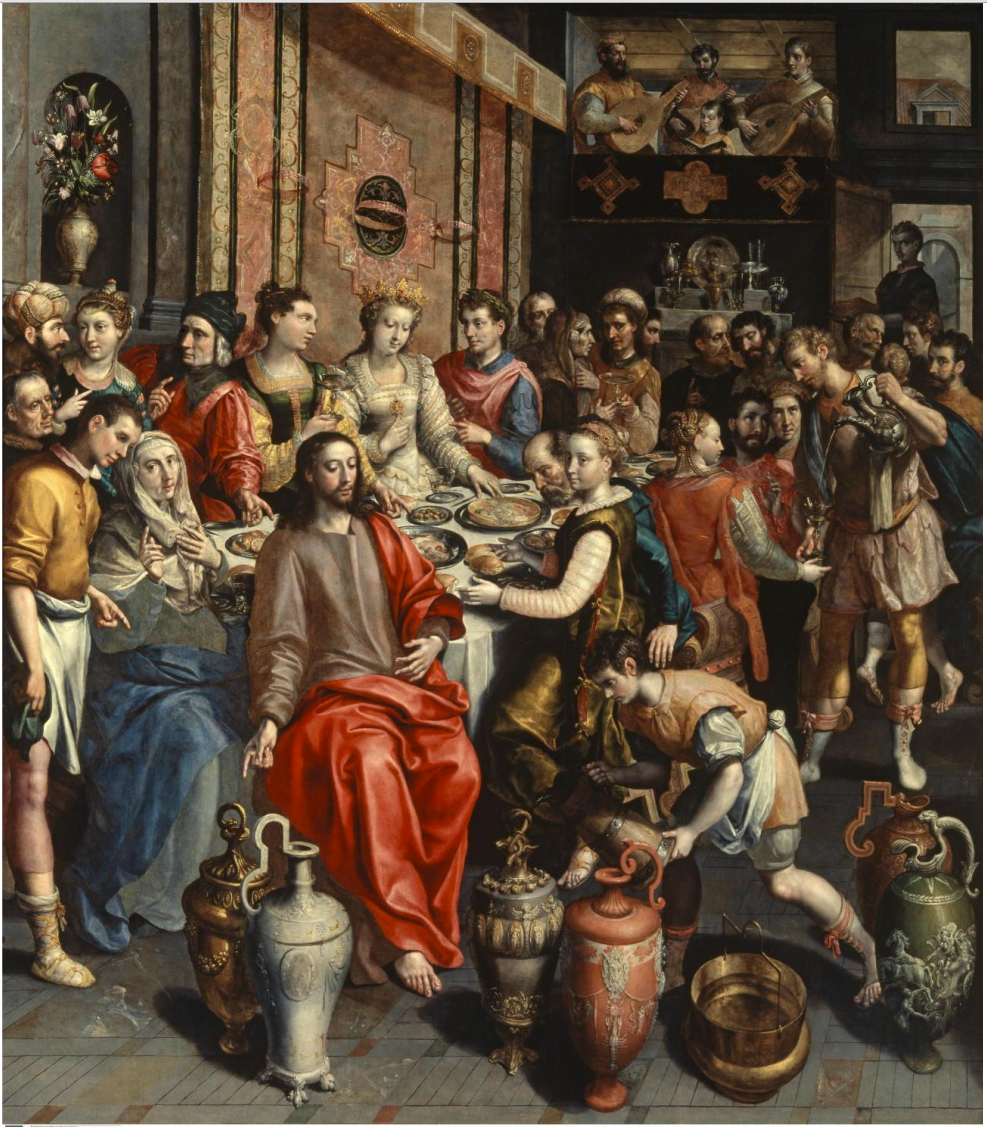
“On the third day,” an idiom indicating a few days later, Jesus and His disciples had made it to Galilee and attending a wedding to which they were invited (John 2:1-2). Jewish weddings were extravagant affairs hosted by the groom’s family and which would last for many days. The host family, however, experienced a scandal: the wine had run out. While we might experience such a situation as embarrassing because of poor planning, the host family would be experiencing it as a shameful demonstration of poverty. Jesus’ mother Mary was at the wedding, and sufficiently well-known to the host family to be able to give commands to the slaves; she told Jesus they were out of wine (John 2:3). Jesus asked her what she wanted from Him, for His time had not yet come; she knew who was His Father and what He could do, but He had not yet begun His active ministry (John 2:4). Mary knew her Son would honor her subliminal request, and told the slaves to do whatever Jesus told them to do (John 2:5). Jesus told them to fill to the brink with water six stone jars of purification: they would be ritually clean, and by virtue of their purpose, would have only held water (John 2:6-8). When the head steward of the wedding tasted the wine, he summoned the host family: for understandable reasons hosts begin feasts with the best wine and reserve wine of lower quality for later after everyone’s taste buds had been dulled; yet the host family had kept the best wine until later (John 2:9-10)! John the Evangelist identified Jesus’ turning the water to wine as His first miraculous sign, and His disciples thus believed in Him (John 2:11). Jesus spent some time with His mother and disciples in Capernaum (John 2:12).

Jesus’ first miraculous sign at the wedding in Cana has caused a lot of difficulties for many who profess to follow Jesus. They have a hard time understanding how Jesus could have done such a thing and enabled people getting drunk. They thus imagine to themselves Jesus would have not really turned the water into wine but alcohol-free grape juice. Such represents a complete misunderstanding of ancient practice and Jesus’ purposes. Greek oinos means alcoholic wine by default; there are some uses of the term to describe grape juice in the process of becoming wine, but such a context is explicitly identified when speaking of oinos in that way. Both Jewish and Greco-Roman people consumed wine in prodigious amounts; it was the standard beverage of the time. They would have consumed wine cut with water; to consume wine uncut was considered barbaric.

No one at the wedding in Cana would have understood Jesus’ behavior as enabling drunkenness or dissipation. Instead, they understood what was at stake. If there was no more wine, there was no more wedding feast. The host family would be shamed and the marriage of the young couple would begin under inauspicious circumstances. By turning the water into wine, Jesus allowed the party to continue. Jesus made much of celebration and festival. When the Pharisees asked Jesus’ disciples why they did not fast, Jesus told them they could not fast while the Bridegroom was present (cf. Matthew 9:14-15). Jesus spoke of His return as the Bridegroom entering the wedding feast (Matthew 25:1-13). One of the seven blessings in Revelation come to those invited to the wedding banquet of the Lamb, which, as we can see from John 1:29, 36, is Jesus (Revelation 19:7, 9). Many in cold, dour, and sterile contexts imagine Jesus to be cold, dour, and without much joy; such is entirely inconsistent with the portrayal of Jesus in the Scriptures. Jesus is the Life of the party. Jesus’ first miracle in John’s Gospel kept the party going. There are indeed circumstances which call for lamentation, mourning, and bitterness; but there are also circumstances which call for excitement, joy, and celebration. Jesus well navigated both; but we do well to never forget Jesus lived, died, was raised, reigns, and will return in order to throw a huge party, and understand Him appropriately.

Thus John the Evangelist narrated how Jesus had gone from Bethany to Cana and the beginning of His active ministry in Israel. May we follow Jesus so we might be able to celebrate with Him for all eternity!

Ethan R. Longhenry

Benefactors | The Voice 16.31: August 02, 2026

posted in: The Voice | 0

The Voice

Benefactors

So Jesus said to them, “The kings of the Gentiles lord it over them, and those in authority over them are called ‘benefactors.’ Not so with you; instead the one who is greatest among you must become like the youngest, and the leader like the one who serves” (Luke 22:25-26).

In Luke 22:24-27, and in its parallel forms in Matthew 20:25-28 and Mark 10:42-45, Jesus responded to His disciples when they were arguing among themselves regarding who was the greatest. They believed much was at stake in this argument: as Herod’s court or the Roman imperial court would have maintained a strict hierarchy of people in relatively higher or lower positions of power and influence, so they imagined Jesus’ Kingdom would feature the same. They all wanted to have high places of influence and position and therefore power. Jesus felt compelled to intervene and devastate all such aspirations. He openly recognized how such was exactly the way the rulers of the nations exercised power over others, but it would not be so among those who would be Jesus’ disciples. Instead, Jesus called His disciples into a paradox: in Luke’s account, the greatest must become like the youngest, and the leader as one who serves (Luke 22:26). Such entirely upset the existing social and power hierarchies, for the youngest and servants were not reckoned as exalted into high positions. Jesus offered Himself as the model: He sat at table among them, and yet He served them, and so they should serve one another (Luke 22:27).

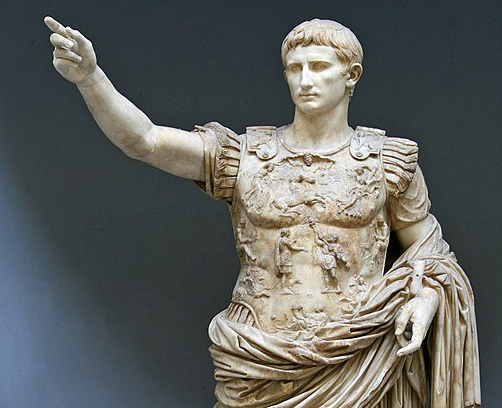
Luke added a detail to Jesus’ instruction not found in either Mark or Matthew: in Luke’s account, Jesus spoke of how the Gentiles in authority are called euergetai, or “benefactors” (Luke 22:25). The term literally means “good-doer”; certain rulers in the past were recognized with the term as an epithet, such as Ptolemy III Euergetes or Antiochus VII Euergetes. Yet the term also spoke to an entire system which had developed in the Greco-Roman world in which Jesus lived, which some today call euergetism: the expectation people in positions of power and stature would give some of their resources to benefit the poor or the people in general. We likely even have an example of a Christian participating in this kind of effort in the world: an inscription was found in the pavement of Corinth which read, “Erastus, in return for his aedileship, paved it at his own expense,” and this Erastus is often associated with Erastus the city treasurer/aedile in Romans 16:23.

We are not here to condemn Erastus for conducting himself according to the expected behavior of a Roman aedile in the middle of the first century. But it is worth noting how Jesus has brought economic matters into His critique of the exercise of power in the world. It was not just that the kings of the Gentiles lorded their power over people. They also wanted to be seen and known as benefactors, as doing good because they gave some of their resources to fix or enhance infrastructure, to feed the poor, to put on shows, and the like.

We might well wonder: is there really a problem with doing good for other people? Why would Jesus condemn the rulers for fixing or enhancing infrastructure or feeding the poor? The problem was not in what they did; the difficulty was in the hierarchy they were attempting to maintain in the process.

The Roman world was rigidly hierarchical; everyone knew their place in it, or would be quickly reminded thereof. There were rigid social classes often defined by levels of wealth. To be a benefactor meant one had the financial resources to give generously; such a person was most likely of the highest social classes. It was a moral obligation of the time for such people to thus give, and they absolutely expected to receive the appropriate honor and acclaim from the masses for their beneficence. According to the way they set things up, they would continue to profit on the basis of the domination and exploitation of their social inferiors. They would then use a small part of their wealth to provide some benefit to at least some of those social inferiors, and expected to receive due celebration and honor for doing so. They would thus be known as benefactors and justify their wealth and standing because they were benefactors, and everything would continue on as it had before. The system would expose itself whenever it was upset: nothing would be so humiliating for a benefactor than to find himself no longer as a benefactor, but as one needing benevolence. And few things would prove as socially revolting to the Roman elite than seeing freedmen or peasants somehow gaining wealth and attempting to become benefactors themselves.

Jesus did not live under any kind of delusion: this was the way things worked in the world. But it was not supposed to be so among Jesus’ disciples. Christians were supposed to treat one another very differently. And Christians were supposed to treat one another very differently because in His life, death, resurrection, ascension, and lordship, Jesus destroyed and devastated the very thing which animated this system in the world:

There is neither Jew nor Greek, there is neither slave nor free, there is neither male nor female – for all of you are one in Christ Jesus (Galatians 3:28).

All Christians are supposed to be one in Christ Jesus: in Christ, none are any greater or lesser than anyone else. God may have blessed some with more skills than others; all remain equal in standing and value before the Lord Jesus. And, yes, some maintain higher social standing, or have more financial resources, than others do; yet all remain equal in standing and value before the Lord Jesus. Because we have equal standing and value before the Lord Jesus, we recognize all the blessings and gifts God has given to us as individuals should be used to serve one another (cf. 1 Peter 4:10). From those who have received more from the Lord Jesus, more is absolutely expected, and so those who abound in the Lord should give to those who are in need (Luke 12:48, 2 Corinthians 8:1-9:15). Christians, therefore, should absolutely provide benevolence to fellow Christians in need (Galatians 2:10, 6:10). And yet, at the same time, there should be no room made or given for the “benefactor” or his attitude, as the Lord Jesus has warned us in Luke 22:25.

How can that be? What would be the difference? The “benefactor” gives out of moral obligation to justify himself and his elevated social position. The “benefactor” wants to be seen as the social superior to those to whom he provides these resources, and he expects to receive due deference and honor because of it. The “benefactor” can only really give, not receive, for in so doing he would be socially degraded in his own estimation.

There can be no room for these attitudes in Christ. Jesus does not want any of us to give out of some kind of obligation; He would have us give freely and liberally, not by way of commandment, but out of our genuine love and compassion for one another (2 Corinthians 8:1-9:15). In Christ, the one who gives is not superior to the one who receives; instead, the one who gives humbly confesses how all they have to give they have really received as blessings from God, and also expect the time will come when they will find themselves in need (2 Corinthians 8:9, 14, 9:10). In Christ, Christians may give thanks to God and commend the generosity of fellow Christians who give to those in need, but no Christian has any business expecting deference and honor because of their giving, since in so doing they are simply serving their fellow Christians with some of the benefits God has given them (2 Corinthians 9:11-14, 1 Peter 4:10).

As Christians, therefore, we must soberly consider ourselves and how we approach matters of giving and benevolence. We do best when we give out of our love and compassion for our fellow Christians, esteeming them as fellow Christians of equal value and standing before the Lord Jesus Christ. If we can only imagine ourselves as the ones giving and never the ones receiving, and cast aspersions or look down upon those who receive, we must immediately repent of such foolishness before the Lord Jesus humbles us because of our arrogant presumption. If our motivation to give is to be seen as one who gives and therefore in a morally or spiritually superior position to others, we must immediately repent of such foolishness before the Lord humbles us because of our arrogant presumption. If we expect to gain some level of power or prominence among the Lord’s people because of what we give financially, we must immediately repent of such foolishness before the Lord humbles us because of our arrogant presumption.

Our rulers today may go by different titles; “benefactors” are now called philanthropists; the social hierarchy may not be as rigid today but certainly perseveres. The world has always worked in these ways, and will continue to do so until the Lord returns. While the rulers of the world dominate and exploit and want to be seen as benefactors for the little bit they give back to others, it must not be so among us. Christians are not called to take over the rule of the world from the rulers or to demolish the customs and hierarchies of the nations; but Christians are called to embody a different spirit and follow a different way of life in their Lord Jesus Christ. Whatever social hierarchies might exist in the world must not, and should not, enter into the assemblies of the people of God. We are all equal in standing and value before the Lord Jesus, and we should act like it not only in terms of how we treat each other in matters of power and authority, but also in terms of how we relate to one another in our benevolence. There is no room in the Kingdom for “benefactors” who give in order to maintain a position of social standing above others. There is room only for Christians who humbly want to give to their fellow Christians in love and compassion in Christ. May we well reflect and embody the values of the Lord Jesus Christ in His Kingdom and before the world, and share in the grace of God in Christ through the Spirit so we might share in the resurrection of life!

Ethan R. Longhenry

Our Iniquity Falls on Him | The Voice 16.30: July 26, 2026

posted in: The Voice | 0

The Voice

Our Iniquity Falls on Him

It was another sunny day in the desert. An important official from Africa, the treasurer of Kandake of Ethiopia, had come to prostrate himself before YHWH God of Israel and was on his way to Gaza to sail home. As he traveled he was reading from the prophet Isaiah and was perplexed and challenged by what he was reading.

He was led as a sheep to the slaughter / and as a lamb before his shearer is dumb / so he openeth not his mouth.
In his humiliation his judgment was taken away / His generation, who shall declare? / For his life is taken from the earth.

We may not know whether this official was a descendant of Jewish people in exile or was a proselyte, but he is an astute student of the sacred writings. As he reads this section of Isaiah he wonders whether the prophet is speaking of himself or someone else. He is not the first to ask these questions; he would not be the last.

For generations many Israelites sought to make sense of Isaiah’s prophecies about the Servant (Isaiah 42:1-9, 18-25, 49:1-13, 50:4-11, 52:13-53:12). Of all the “servant songs” the most vexing proved to be Isaiah 52:13-53:12. Isaiah has been speaking to the Israelites who experienced the exile in Babylon (Isaiah 40:1-51:23, ca. 605-539 BCE); having established that Jerusalem and Zion would be populated again (Isaiah 52:1-12), he again speaks of the Servant and what the Servant would do for Israel. The servant will be exalted and wise and yet marred in the sight of mankind; kings will be astonished at what He reveals (Isaiah 52:13-15). Isaiah wonders who will hear the message and see what God has revealed; the Servant grew up like a plant in dry ground and had no physical stature or appearance that would suggest anything great; He was despised, afflicted, and was not esteemed (Isaiah 53:1-3).

Surely he hath borne our griefs, and carried our sorrows / yet we did esteem him stricken, smitten of God, and afflicted.
But he was wounded for our transgressions / he was bruised for our iniquities / the chastisement of our peace was upon him / and with his stripes we are healed.
All we like sheep have gone astray / we have turned every one to his own way / and YHWH hath laid on him the iniquity of us all.
He was oppressed, yet when he was afflicted he opened not his mouth / as a lamb that is led to the slaughter, and as a sheep that before its shearers is dumb, so he opened not his mouth.
By oppression and judgment he was taken away / and as for his generation, who among them considered that he was cut off out of the land of the living for the transgression of my people to whom the stroke was due?
And they made his grave with the wicked, and with a rich man in his death / although he had done no violence, neither was any deceit in his mouth (Isaiah 53:4-9).

Isaiah set forth the Servant’s experiences in Isaiah 53:4-9. Isaiah speaks of the Servant, the “he,” and also “my people,” the ones for whom the Servant endures these experiences, most often spoken of as “we” (including the prophet himself?; Isaiah 53:4-9). The Servant was afflicted with suffering: the people considered him smitten by God, stricken, and afflicted (Isaiah 53:4). His suffering and affliction did not come from illness but at the hands of others, for he was abused, and led away to suffer on account of oppression and judgment (Isaiah 53:7, 9). The Servant was wounded (Hebrew meholel, primarily “killed,” but can mean “wounded,” perhaps denoting a mortal wound; cf. Ezekiel 26:15, 30:24), crushed, chastised, and whipped (Isaiah 53:5). The Servant endured this suffering without resistance, like a sheep remaining quiet before his sharers or a lamb led to the slaughter he does not open his mouth (Isaiah 53:7) The Servant did not survive the experience; he was cut off from the land of the living, buried among the wicked and with the rich (Isaiah 53:8-9).

Why did the Servant have to endure such experiences? Isaiah speaks of the Servant’s ordeal throughout in terms of vicarious suffering, because he makes it clear that the Servant had done nothing wrong and did not deserve this treatment (Isaiah 53:9). The people have gone astray like sheep, with each having turned to his own way; they deserved to suffer affliction (Isaiah 53:6,8). Yet it is the Servant who carried the grief and sorrows of the people; his wounds, chastisement, stripes, and death were for their transgressions and iniquities (Isaiah 53:4-5, 8). The people receive healing and peace through the Servant’s suffering (Isaiah 53:5). Therefore the Servant suffers affliction and death so that the people do not; they deserved suffering and death, but the Servant experienced it on their behalf (Isaiah 53:4-9).

Yet who is this Servant? To what time or circumstance does Isaiah refer? The Ethiopian official is an astute student of the prophet, for his question gets to the heart of the interpretive difficulty for Jewish people of the Second Temple Period: to whom does the prophet refer—himself or someone else? Is he reflecting on a contemporary experience or will the situation he envisioned take place in the future?

While many have advanced the theory that the prophet himself is the Servant, and reflected upon the purposes of his suffering before it happened, such is highly unlikely. The apocryphal Martyrdom of Isaiah suggests that Isaiah was killed by Manasseh by being sawn in two; perhaps the Hebrew author alludes to Isaiah in Hebrews 11:37. But even if Isaiah were martyred there is no evidence to suggest that it was understood to be for the sins of the people; Isaiah’s audience in Isaiah 52:13-53:12, by common confession, are Israelites who would live long after his death anyway.

Some have advanced the theory that the Servant is Israel, the period of affliction and suffering as the Exile, and the Gentiles as “beneficiaries.” One could perhaps understand “the Servant” as really representing a nation; Israel certainly suffered during the exile. Nevertheless, in Isaiah 53:8-9, the Servant dies; Israel persevered and returned to its land after the exile. Furthermore, the continued prevalence of judgment oracles against the nations mitigates against the idea that Israel’s suffering would “atone” for the Gentiles (e.g. Zechariah 14:1-21). The Servant is not to be primarily understood in terms of Israel.

The Servant has been most often understood as a person who suffers for the people; “the people” is understood primarily in terms of Israel. The Greek translator of Isaiah in the Septuagint recognized the Servant would suffer for the sins of his people and emphasized it, translating “sins” for “grief” in Isaiah 53:4 and “the Lord gave him up for our sins” for “YHWH laid on him the iniquity of us all.” He, among many others in the Second Temple period, envisioned a man who would suffer affliction for the benefit of God’s people Israel.

So who would this Servant be? The Ethiopian official was about to find out. He had asked his question of a man named Philip, and we are told that from this Scripture Philip began proclaiming to the official about Jesus of Nazareth (Acts 8:26-35).

Before Jesus began His ministry, John the Baptist, through the Spirit, called Jesus the “Lamb of God, who takes away the sin of the world” (John 1:29). While the lamb is also a powerful element of the Passover, and Jesus is in many ways the “Passover lamb” (cf. John 13:1, 1 Corinthians 5:7), the Passover lamb was not sacrificed to atone for Israel, but to secure her liberation and election (Exodus 12:1-32). The Servant of Isaiah 53:4-9, on the other hand, would suffer and die for the sins of the people, and he is spoken of as a lamb led to the slaughter (Isaiah 53:4). Thus Jesus of Nazareth was already being identified in terms of the Servant in Isaiah even before He had begun to work!

Jesus of Nazareth considered Himself the suffering Servant of Isaiah 52:13-53:12 as well. He spoke of Himself as the Son of Man who must suffer all things foretold in Scripture (Mark 9:12, Luke 9:22); He understood that His life would be given as a ransom for many (Matthew 20:28). Just before His betrayal Jesus made it known that He was overwhelmed with grief and sorrow (Mark 14:34; cf. Isaiah 53:4). When it was all over Jesus opened the minds of His followers to understand the Scriptures, and that included how the Christ would suffer and die (Luke 24:44-46). While Psalm 22 does speak of the suffering of God’s Chosen One, Jesus no doubt also has Isaiah 52:13-53:12 in mind.

Even Jesus’ opponents spoke of His role as the suffering Servant! In John 11:49-51, Caiaphas, a high priest, prophesied through the Spirit that it was more expedient for one man to die for the people than for the entire nation to die. John as the Evangelist went on to explain how Caiaphas was prophesying that Jesus would die for the nation of Israel, but not only Israel, but for all God’s children scattered abroad (John 11:52-53). On what basis would such a prophecy make sense? Only in terms of the suffering Servant in Isaiah 52:13-53:12.

The Evangelists, the authors of the Gospels, also clearly understood that Jesus was the suffering Servant of which Isaiah had spoken. Matthew quotes Isaiah 53:4 as (at least partly) fulfilled in Jesus’ ministry of healing, taking away disease and infirmity (Matthew 8:16-17). All four explicitly make mention of and highlight precisely how Jesus suffered as the Servant of Isaiah 52:13-53:12 would suffer. Jesus endured grief and sorrow in the Garden of Gethsemane (Matthew 26:37-28, Mark 14:33, Luke 22:44; Isaiah 53:4). He was then led away to suffer the oppression of a sham trial (Matthew 26:57-66, Mark 14:53-64, Luke 22:66-71, John 18:19-24; Isaiah 53:8); during that trial, and his trials before Herod and Pilate, the Evangelists note how He did not open His mouth (Matthew 26:63, 27:12-14, Mark 14:61, 15:5, Luke 23:9, John 19:9; Isaiah 53:7). He was abused, mocked, and rejected by the soldiers of the Jewish religious authorities, the Roman soldiers, and the Jewish people (Matthew 26:67-68, 27:27-31, 39-44, Mark 14:65-66, 15:16-20, 27-32, Luke 22:63-65, 23:11-12, 23:35-39, John 19:2-4; Isaiah 53:2-4). Roman soldiers scourged, or whipped, Jesus (Matthew 27:26, Mark 15:15, John 19:1; Isaiah 53:5). The Romans crucified Jesus next to two insurrectionists (Matthew 27:38, Mark 15:27, Luke 23:32-33; Isaiah 53:9). After His death Jesus was buried in the tomb of Joseph of Arimathea, a wealthy man, in his new rock-cut tomb (Matthew 27:57-61, Mark 15:42-46, Luke 23:50-53, John 19:38-41; Isaiah 53:9). In all the particulars, and in quite striking and compelling ways, Jesus of Nazareth demonstrably fulfilled all of what Isaiah had said about the suffering Servant.

Jesus had promised His Apostles that they would be His witnesses; they would soon proclaim the good news (i.e. Gospel) of Jesus’ life, death, resurrection, and lordship. As they preached the Gospel the Apostles made explicit connections between Jesus and the suffering Servant of Isaiah 53. Peter spoke of Jesus as the Servant of God (Acts 3:13, 26), and that He had suffered just as God had foretold by the mouth of His prophets (Acts 3:18); the allusions to the Servant of God who would suffer for the people would not be lost on the Jewish people to whom Peter preached. As we have seen above Philip preached Jesus to the Ethiopian official (or eunuch) based on Isaiah 53:7-8 (Acts 8:26-40).

Peter would later write the following in his first letter to encourage his fellow Christians:

For what glory is it, if, when ye sin, and are buffeted for it, ye shall take it patiently? But if, when ye do well, and suffer for it, ye shall take it patiently, this is acceptable with God. For hereunto were ye called: because Christ also suffered for you, leaving you an example, that ye should follow his steps: who did no sin, neither was guile found in his mouth: who, when he was reviled, reviled not again; when he suffered, threatened not; but committed himself to him that judgeth righteously: who his own self bare our sins in his body upon the tree, that we, having died unto sins, might live unto righteousness; by whose stripes ye were healed. For ye were going astray like sheep; but are now returned unto the Shepherd and Bishop of your souls (1 Peter 2:20-25).

Here Peter thoroughly enmeshes allusions and quotations of Isaiah 53:4-9 with the sufferings of Jesus: the Servant would suffer, be reviled, and bear our sins; Jesus accomplished these things. Peter identifies the Christians to whom he writes, some of whom may have been of physical Israel but many others certainly were not (cf. 1 Peter 2:8-10), as those who had been going astray like sheep, healed by the stripes suffered by the Servant (cf. Isaiah 53:5-6). Through Jesus’ fulfillment of all that Isaiah had said about the Servant, Peter is able to establish a robust theory of atonement: Jesus bore the sins of all people on the cross, allowing those who would trust in Him the opportunity to die to sin and live to righteousness, and find healing in Jesus.

Peter would not be the only Apostle or early Christian to ground his theology of atonement in Jesus’ vicarious suffering for others as the prophesied Servant in Isaiah. Throughout the Revelation given him John describes Jesus primarily as the Lamb that had been slain, and in whose blood the saints are cleansed (Revelation 5:6, 8, 12, 12:11, etc.). The Apostle Paul understood all people, both Jews and Gentiles, as having turned aside from God (Romans 3:9-12; cf. Isaiah 53:6); he speaks of Jesus as offering Himself as the propitiation for our sins through His blood (Romans 3:24-25); Jesus is said to have died for people while they were sinful, weak, and ungodly, demonstrating God’s great love (Romans 5:6-11). Paul, like Peter, understood that through Jesus’ death Christians die to sin so they can live to righteousness (Romans 6:1-23; cf. 1 Peter 2:20-25). Paul went so far as to say that God made Jesus sin who knew no sin so we could become God’s righteousness in Him (2 Corinthians 5:21); Jesus is thus seen as a sin offering, but strongly evoking the suffering Servant of Isaiah 53:4-9 who knew no sin and in whose mouth no deceit was found yet who died for the sins of his people.

The Hebrew author devoted much of his treatise to the analysis of Jesus as the high priest in the order of Melchizedek, ruler and priest, and how Jesus’ death on the cross atoned for sin (Hebrews 4:14-10:18). The Hebrew author grounded his understanding of Jesus as high priest in the order of Melchizedek in Psalm 110:4 and based on Melchizedek’s example in Genesis 14:17-24, expected the new covenant on account of Jeremiah 31:31-34, compared Jesus’ sacrifice to the animal sacrifices found in Leviticus, and understood Jesus’ supremacy over animal sacrifices, in part, through Psalm 40:6-8. And yet on what basis would the Hebrew author ever be able to say that the blood of bulls and goats could not actually take away sin and look for a sinless human to offer Himself as the atonement for sin (cf. Hebrews 9:1-14, 10:4)? Jesus learned obedience in the things He suffered (Hebrews 2:18, 5:8); He did not sin (Hebrews 4:15). The expectation for a human being to suffer affliction and die, not for their own sin or wrongdoing, but for the sins of others, can only be found in Isaiah 52:13-53:12.

Ever since Christians have been struck by the power of the description of the suffering Servant of Isaiah 53:4-9 and its fulfillment by Jesus of Nazareth. Jesus died a miserable, wretched death; if He is the Son of God, and God is love, how could God allow Jesus to suffer so horrendously? Indeed, if there were another way to accomplish salvation that did not involve Jesus’ death on the cross, then God would be rightly denounced as a monster and the greatest child abuser for what He compelled Jesus to endure. Instead the Gospel proclaims that God actually demonstrates His love for us through Jesus’ death, for He proved willing to countenance the intense suffering of His Son so that humans could receive forgiveness of sins through His blood (John 3:16, Romans 5:6-11, 8:31-39).

Yet why did Jesus have to endure it? Humans have sinned, and the penalty of sin is death (Romans 3:23, 6:23). For God to remain just, the established penalty for sin must be paid; if it is not paid by those who sinned, it must be paid by someone who would suffer the penalty on their behalf. Such is why God established the sacrifice of animals for Israel: through it the Israelites would understand that life is in the blood, and for a guilty life to receive cleansing and atonement, an innocent life must pay that penalty of death, represented by the sacrifice of the animal and the shedding of its blood (Leviticus 4:1-7:36, 16:1-34, 17:11). Yet, in the divine economy, the blood of bulls and goats could not really atone for sin, since they did not offer themselves of their own free will, for they have no understanding so as to make free will decisions (Hebrews 10:4).

What could be done about this conundrum? Isaiah is given revelation about the Servant who had done no wrong and yet suffered and died; His suffering and death were understood to atone for the sins of the people (Isaiah 53:4-9). This Servant, and only this Servant, could really provide forgiveness of sins for the people, not only of Israel, but all mankind. Isaiah prophesied it; John recognized it in Jesus; Jesus claimed it for Himself; the Apostles proclaimed Jesus as the Servant; the Hebrew author made good theological sense of why it would happen so. Thus Jesus, the Son of God and the Son of Man, lived a sinless life, and thus could suffer and die, paying the penalty of death for sin so that everyone who had sinned could be reconciled back to God the Father through His life manifest in His blood.

The Ethiopian official, having heard Philip preach Jesus on the basis of the suffering Servant of Isaiah 53:7-8, immediately saw the connection and the fulfillment of what the prophet had spoken. He asked to be baptized into the Lord Jesus; having received it, he went away rejoicing (Acts 8:36-39). All people everywhere can share in the official’s reason for rejoicing, for Jesus of Nazareth is the Servant of whom Isaiah prophesied, the Lamb who took away the sins of the world, the One whose blood could atone for sin, for our iniquity fell on Him. May we ever praise and glorify God for the matchless demonstration of His love for us through Christ Jesus and serve Him in His Kingdom!

Ethan R. Longhenry

Works Consulted

Blenkinsopp, Joseph. The Anchor Bible: Isaiah 40-55. New York, New York: Doubleday, 2002.

North, Christopher R. The Second Isaiah. London, England: Oxford University Press, 1964.

Witness Against the People | The Voice 16.29: July 19, 2026

posted in: The Voice | 0

The Voice

YHWH’s Witness Against the People

The Word of YHWH through Micah of Moresheth would not feature many pleasantries. From the beginning it reflected the witness of YHWH against His people in Samaria and Jerusalem. Its fulfillment would not take terribly long.

The Word of YHWH came to Micah of Moresheth in the days of Jotham, Ahaz, and Hezekiah, kings of Judah (ca. 742-680 BCE; cf. Micah 1:1). Moresheth was a village in southwestern Judah where the Shephelah met the Philistine coastal plains. Micah, therefore, was not a prophet of the city, but from the rural hinterlands. At the time Micah began prophesying, much had been consistently the same for generations; when everything prophesied in Micah 1:2-16 would find its fulfillment by the end of the eighth century BCE, the Kingdom of Israel would be no more, and the Kingdom of Judah would be thoroughly ravaged. If all Israel and Judah had to go on were historical trends and their own foreign policy schemes, it would be understandable why they might have been taken off guard by what would befall them in the last third of the eighth century BCE. Yet the prophets Amos and Hosea had warned them, and Isaiah and Micah were warning them, regarding what YHWH was about to do.

The Word of YHWH through Micah began with a summons for all the nations and the inhabitants of the earth: YHWH had His accusation which He would make against them (Micah 1:2). YHWH was about to come down from His dwelling place; He would crush the mountains and the valleys would split apart like wax before fire and water poured down a steep slope (Micah 1:3-4). These powerful images presented YHWH as on the march, bringing forth judgment among the nations. This judgment was coming about on account of Israel and Judah: Micah identified Samaria as the “transgression of Jacob,” and Jerusalem as the “high places of Judah,” most likely considering them as places for idolatry and sin (Micah 1:5). Judgment, therefore, was coming for Samaria and Jerusalem.

Micah would begin with the condemnation of Samaria. YHWH would turn Samaria into a heap of ruins, a place better fit for vineyards than urban habitation (Micah 1:6). The valleys around Samaria would be filled with her ruins; the foundations of buildings would be exposed; her idols would be smashed to pieces or melted down (Micah 1:6-7). Micah expanded on the last with a visceral indictment: the metal idols came from the metal coins of prostitutes, and would again be made into coins and become the pay of prostitutes once more (Micah 1:7). Micah declared he would lament and wail and strip naked because of these things, embodying the great grief and experience of exile which would come upon the Israelites as a result of these things (Micah 1:8). Micah lamented how the wound or disease of Samaria was incurable, and it had spread to Judah and the gate, or more specifically the rulers, in Jerusalem (Micah 1:9).

Micah 1:6-9 seems to represent the totality of what Micah would see regarding Samaria; this oracle likely represents the first one given by YHWH to Micah, and would make sense as given in the waning days of Jotham king of Judah in the early 730s BCE. At any rate, the prophecy would have been uttered before Shalmaneser V/Sargon II besieged and captured Samaria ca. 722/721 BCE, fulfilling the general sentiment of what YHWH had spoken through Micah (cf. 2 Kings 17:3-6, 18:9-11). The Assyrians, Babylonians, and Persians in turn would use Samaria as an administrative center. The city would be razed to the ground in a rebellion against Alexander the Great and would be rebuilt by Macedonian colonists. Thus Samaria would eventually be destroyed and would no longer be inhabited by Israelites or many Samaritans; its idols were smashed and melted down just as YHWH promised through Micah.

Micah then turned to address many of the villages and cities of the Shephelah of Judah in ways which featured a lot of assonance and performative evocation of idioms and themes with which his local audience would be familiar. The news should not be spread in Gath, and no tears should be shed (Micah 1:10; cf. 2 Samuel 1:20). In Beth Leaphrah (“House of Dust”) they should mourn in the dust (Micah 1:10). Those in Shaphir (“Pleasant”) should pass by in nakedness and humiliation (Micah 1:11). Those in Zaanan (“go out”)…did not; they have not escaped (Micah 1:11). Beth Ezel (“house of proximity”) would mourn, having been despoiled (Micah 1:11). Those in Maroth (“bitter”) hope for good, but disaster would come against Jerusalem (Micah 1:12). Those in Lachish (“team,” as in “team of horses”) should hitch horses to chariots in preparation; Lachish served as sin for the daughter of Zion, for Israel’s sin was found in her (Micah 1:13). Lachish would have to bid farewell to Moresheth Gath (“possession of the winepress,” believed to be Moresheth, Micah’s home town; Micah 1:14). Achzib (“place on the dried up river”) would prove as disappointing as a dried well for Israel’s kings (Micah 1:14). Mareshah (“conqueror”) will be attacked by a conqueror (Micah 1:15). As David had escaped and found refuge in a cave at Adullam, so the glory of Israel would go to Adullam (Micah 1:15; cf. 2 Samuel 22:1). Micah concluded this section of his oracle with a painful, biting exhortation: they should shave their heads in mourning for their beloved children who would be taken from them into exile (Micah 1:16).

What is Micah attempting to accomplish in Micah 1:10-16? We do well to remember whereas the Word of YHWH to Micah concerns Samaria and Jerusalem, he remains Micah of Moresheth (Micah 1:1). Many imagine or assume he delivered his oracles in Jerusalem, but the text does not require it. Even if he did have a message he would deliver in Jerusalem, we should not be surprised to find more local concerns at hand. Micah is a man of the rural hinterland living on the periphery of the Judahite world.

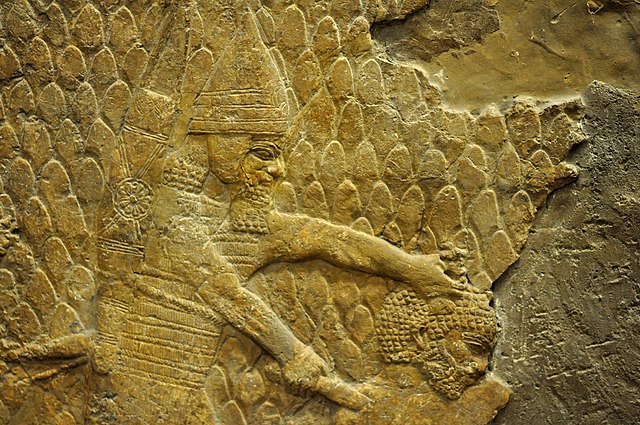
And the area in which Micah of Moresheth lived very likely saw intense military expansion and build-up during his age in preparation for possible invasion by foreign powers: the Philistines, Arameans, Israelites, or yes, even the Assyrians. These would be the “front line” communities who would first suffer in any major conflict so as to protect Jerusalem, the political and economic center of the Kingdom of Judah. And it would come to pass: Sennacherib king of Assyria began his Levantine campaign of 701 BCE along the coast, taking Sidon, Ashkelon, and Ekron by force; he then turned toward the Kingdom of Judah, and having just defeated the Philistines, his natural avenue toward Jerusalem would have begun with these villages and cities of the southwestern portion of the Judahite Shephelah. The siege and conquest of Lachish was viscerally preserved on a series of reliefs displayed in Sennacherib’s palace in Nineveh and now found in the British Museum. It would all be made a waste as Sennacherib moved on toward Jerusalem.

Therefore Micah of Moresheth gave voice to the upcoming disaster which would befall his fellow Judahites in the southwestern portion of the Shepelah. Sure, for the king and his entourage in Jerusalem, it would make a lot of sense to militarily reinforce the Shephelah to protect Jerusalem. In the process, however, his subjects in the Shephelah would suffer the full force of Assyrian might and power. We understand how YHWH would preserve Jerusalem from Sennacherib’s armies, but Lachish and all the other locations in the Shephelah mentioned in Micah 1:10-18 did not prove as fortunate: they were wiped out, with men no doubt slaughtered, and women and children enslaved and exiled (cf. 2 Kings 18:18-19:37).

All of these things might have sounded far-fetched, or perhaps even impious, in the early 730s BCE. By 721 and 701 BCE, however, they had become the bitter, harsh reality for Israelites and Judahites after YHWH’s judgment came against them in the form of the mighty armies of the Assyrians. We do well to meditate upon the fulfillment of the Word of YHWH through Micah regarding Samaria and parts of the Judahite Shephelah. Warnings of judgment and condemnation may seem far-fetched, outlandish, and even impious; how could God treat His favored people in such ways? And yet it has happened before, many times; and it could still happen today. Who knows when God will again come down from His dwelling place to crush the mountains and split the valleys and render His judgments against the nations and inhabitants of the world? May we faithfully serve God in Christ through the Spirit and entrust ourselves to Him!

Ethan R. Longhenry

John and the Word | The Voice 16.28: July 12, 2026

posted in: The Voice | 0

The Voice

John and the Word

He had experienced astounding, amazing, and wonderful things. His time on earth was growing short; perhaps encouraged by those who honored him, but certainly prompted by the Spirit of God, he would record his witness so many more might gain insight from his experiences.

Who is he? He did not come out and explicitly name himself. He identified himself as “the disciple whom Jesus loved” (John 20:20-24). Christian tradition considers this disciple to be “John.” “John” is a common name in Second Temple Judaism: there is John the Baptizer, who came before Jesus; John ben Zebedee, brother of James, an Apostle; and early Christians also spoke of “John the Elder.” Our author is generally associated with either John ben Zebedee or John the Elder. Peter and this “disciple whom Jesus loved” were the ones who ran to the tomb when Mary Magdalene reported it empty (cf. John 20:2-8). In the book of Acts Luke recorded how Peter and John ben Zebedee would visit the Temple together (cf. Acts 3:1): thus, John ben Zebedee might be the “disciple whom Jesus loved.” Papias of Hierapolis, who lived from 60 to 130, considered John the Elder the author of the Gospel and Letters of John as well as Revelation. Good arguments, therefore, can be made for either.

Whichever John wrote this Gospel did so as an eyewitness of these events which so transformed him, and he wrote so that people who heard it might believe Jesus is the Christ, the Son of God, and would have life in His name (John 20:31).

Where did John decide to begin his Gospel? Naturally, he chose the beginning; yet not the beginning we might imagine. John began before the beginning with the Word (Greek Logos). The Word was in the beginning; the Word was with God; the Word was God; all things were created by and through Him; the Word was life; the Word was the light of mankind (John 1:1-4).

There was no end of philosophical speculation regarding the Logos in the first century world, but John was no philosopher. John was attempting to communicate the profound mystery which he had encountered. The Scriptures testified to how God made all things by speaking them into existence (Genesis 1:1-2:3); the Psalmist provided confidence such was no mere rhetorical flight of fancy (Psalm 33:6-9). Moses had told Israel how YHWH had fed them with manna so they might learn how people do not live by bread alone but by everything which proceeds from the mouth of God (Deuteronomy 8:3).

Thus we can understand John’s witness in John 1:1-4. By what means did God create all things? Through speaking His Word. What provided life for every created thing? God’s Word. What created thing sustains all life? The energy which comes from light. And so the Word of God is life and light.

The beginning of John’s Gospel, therefore, is the beginning of all things, the beginning of the revealing of God, for his Gospel testified to this Word who created and spoke all such things. John will continually evoke these themes throughout his Gospel.

We speak of light as a source of energy but also light as a source of illumination, or understanding; its contrast, darkness, would bring death, and would represent a source of confusion and ignorance. The story of humanity might lead one to conclude that the forces of darkness have overcome the light; but John testified to the contrary. The light of the Word has shined in the darkness, but the darkness has not overcome it (John 1:5).

John then introduced his first witness. God sent a man, John (the Baptizer); he testified regarding the Light to come (John 1:6). He readily confessed he was not the light; he wanted people to be ready to believe in the true Light who was coming to give light to all (John 1:7-9).

John then lamented how this Light, the Word, came into the world which had been created through Him, yet it did not recognize Him (John 1:10). For that matter, He had even come to His own people, the Jewish people, the people of God, did not receive Him (John 1:11). Yet John had experienced and knew the promise: those who received Him by believing in Him were granted the right to become children of God, not by genealogy, parentage, or any other human means, but by God (John 1:12-13).

John then simply declared the most profound expression of this great mystery: this Word – the Means of creation, the Life, the Light – became flesh and dwelt, or “tabernacled,” among mankind. John and those who were with him saw His glory, the glory of the One and Only Son of God, full of grace and truth, who had come from the Father (John 1:14).

How could it be? How can the magnitude of divinity be confined to a human body? We do not know; we likely cannot know. Yet our inability to know does not mean it did not happen.

The Incarnation of the Son of God thus remains one of the most profound mysteries and essential tenets of the Christian faith. The Word becoming flesh (as Jesus of Nazareth, whom John will not identify by name until John 1:17) truly is the miracle which leads to all other miracles, as C.S. Lewis attested. Unless Jesus was born, He could not die; if He could not die, He could not be raised from the dead. Everything Jesus will do flowed from His Incarnation.

John’s language remains quite deliberately chosen and maintains a powerful effect. In the Wilderness YHWH made provision for Israel to create and erect a tent, known as the Tabernacle; in the Tabernacle YHWH would maintain His Presence among His people Israel (cf. Exodus 40:34-38). The Tabernacle was retired when the Temple of Solomon was built (cf. 1 Kings 8:1-11), and the Presence of God remained in that Temple until it departed in the days of Ezekiel (cf. Ezekiel 10:1-22). After the exile the Jewish people returned and built another Temple, yet no one ever testified they saw the Presence of God return to it. Yet YHWH did return to Israel as He had promised; He did so by taking on flesh and tabernacling among them as Jesus of Nazareth!

John and his associates perceived His glory. They experienced the power and majesty of God working through Him. They had every confidence in His promise that they would receive the glory of God if they remained faithful to Him (cf. Romans 8:17-18).

John then returned to the testimony of John the Baptizer, for he spoke of how the One who would come after him was greater than him because He existed before him (John 1:15). Ostensibly John waited until here to provide this testimony because it would be otherwise difficult to understand how the One who came after the Baptizer had existed before him.

John then testified how he, his associates, and likely his audience had received all kinds of gifts, grace upon grace, from His fullness (John 1:15). The Law came through Moses; grace and truth came from this Word made flesh, whom John now names as Jesus Christ (John 1:16). “Christ” is Jesus’ title: the Anointed One, the king. It is not as if grace and truth were entirely absent from the Law of Moses, or that in Christ there are no commandments. Instead John spoke of framing and emphasis: Israel had been given the Torah and the Torah defined the covenant between God and Israel, but now our lives in faith are defined by Jesus. Gifts come through Jesus; Jesus is the embodiment of the truth.

John then confessed how no human had ever seen God (John 1:18). No human being has ever perceived the fullness of God with any of the five explicit senses, nor could anyone. Yet John testified how Jesus, the Word made flesh, who is God and in fellowship with the Father, has made God known (John 1:18).

Thus John concluded what is deemed the “prologue” of his Gospel. He has set the tone and the framework for all which would then be related. We can understand how and why John was completely transformed by his experience of Jesus of Nazareth. He had encountered God in the flesh, communicating all the relevant characteristics of God, the embodiment of the means by which God created and sustained all things. John had heard the words of God as his ancestors had heard for untold generations; but John would then be able to experience the embodiment of God’s Word and could share in Him and follow after Him. And now he invites all of us to learn of Jesus, the Word made flesh, so we might also share in Him, follow after Him, and find life in His name!

Ethan R. Longhenry

Matter of Equality | The Voice 16.27: July 05, 2026

posted in: The Voice | 0

The Voice

A Matter of Equality

Paul was in the midst of one of the most challenging and daunting tasks of the preacher: encouraging Christians to give financially for the support of others.

Paul had determined he would soon go back to Jerusalem; he believed it would be appropriate and right for the churches with whom he worked to take up financial contributions for the poor Christians there (Romans 15:25-27, 1 Corinthians 16:1). The churches in Macedonia had given for this purpose very liberally (cf. 2 Corinthians 8:1-5); the church in Corinth had begun collecting to the same end with interest and zeal, but it seemed their enthusiasm for this work was flagging when Paul wrote to them (cf. 2 Corinthians 8:10-12). Paul dedicated 2 Corinthians 8:1-9:15 to encouraging the Corinthian Christians to revive their enthusiasm for this collection and to prepare it for Titus and/or himself on their arrival.

As part of this exhortation, Paul felt compelled to address a concern. Maybe Titus had heard some grumblings or rumblings about it while he had been in Corinth; perhaps Paul simply wanted to allay a possible difficulty so it would not be a challenge. He did not want the Corinthian Christians to believe this financial contribution would mean others would be relieved while they would be distressed (2 Corinthians 8:13).

We can imagine how this kind of concern might manifest itself. Whenever we might give to someone else, we are (relatively) impoverished, and they are (relatively) enriched in the exchange. Technically, those who give funds are, in fact, suffering a loss, and the one who receives the funds obtains some relief. Such a concern about our material disadvantage often springs up, however consciously or unconsciously, when others make appeal for us to give; we might well consider the ways in which we feel we are experiencing scarcity (suffering) in order to justify why we may not provide for the benefit (relief) of another (“I am broke”/”I cannot afford it”/”I don’t have any money”). None of us live in ancient Corinth, but we can surely imagine some of the concerns the Corinthian Christians might have had: some of them certainly seem to have a decent amount of material wealth, but many of them might be poor and themselves in relative need; when approached about what needs might exist in Jerusalem, they might well want to express concern regarding the needs which might be much closer to home.

So if providing some financial contribution to the needs of poor Christians in Jerusalem would, in fact, relatively impoverish the church in Corinth to the relative enrichment of the Christians in Jerusalem, how can Paul say such was not what he was suggesting? Paul wished to frame the situation as a matter of equality (2 Corinthians 8:13-14). And he would do so by quoting from Exodus 16:18 and thus alluding to a story from their shared heritage among the people of God (2 Corinthians 8:15).

In Exodus 16:13-36, the story is told of how Israel would experience and learn, through trial and error, how God would provide them the manna for them to eat while enduring their time in the wilderness. Manna proved to be a thin flaky substance which God would provide on the surface after the dew; each Israelite was to gather an omer, a sufficient amount for each person, for each person in their household (Exodus 16:13-16). When the Israelites first went out to gather manna, some gathered more, and others gathered less (Exodus 16:17). Those who would gather more might charitably be considered as hard-working strivers; less charitably, as greedy, or as hoarders. Those who would gather less might uncharitably be considered as lazy or indolent; more charitably, as perhaps disabled or weaker, or perhaps concerned to make sure others had some as well. And yet, when they returned and measured out the manna with the omer, the one who gathered much had nothing left over, and the one who gathered little had enough; each one ended up with the same omer, enough food for each person in the household to eat (Exodus 16:18). In this way, therefore, God made provision for the Israelites in the wilderness so that each person had enough food to eat: no matter how much or how little an Israelite gathered, God made it so that it was an omer per person in the household. Each person had enough.

Paul applied the story of God’s provisioning of manna for the Israelites to the situation of the Corinthian Christians, and by extension to all the Christians of his time and age. It was right for the abundance the Corinthian Christians enjoyed at the present time to be given (at least in part) to the present need of the poor Christians in Jerusalem, because one day the abundance of the Christians in Jerusalem might go to meet their need (2 Corinthians 8:14). Therefore, while the Corinthian Christians might experience (relative) impoverishment in giving for the (relative) enrichment and relief of Christians in Jerusalem, the situation may not always work out that way: the time might well come in which the Corinthian Christians would be the ones who stood in need of relief, and it might well come from the Christians in Jerusalem for whom they had provided earlier. This is how there would be equality: a sense of reciprocity in which those who received would give in turn, and those who gave would receive in turn (2 Corinthians 8:13-14).

We do well to consider how Paul appropriated and modified the story of the Israelites and the manna to apply it to the situation at hand. According to the events as chronicled in Exodus, God made sure each Israelite had enough food by ensuring whatever was collected became an omer of manna per person when measured (Exodus 16:17-18). In this situation, God made direct provision for each person (or at least each household). Yet Paul applied this story to the situation of Christians in churches as a whole: some Christians and churches would find themselves with an abundance, and some Christians and churches would find themselves in lack or with a need. For Israel, “equality” meant no matter how much or how little you gathered, when measured out, God made it an omer per household member. For Christians and churches, God made provision so all His people could have enough, but did not distribute it evenly; equality would come when those who had more freely, generously, and liberally shared with those who had less, trusting that in turn they might find relief from fellow Christians and churches in their time of need (2 Corinthians 8:13-15).

We are not Christians making up the church in Corinth in the middle of the first century; neither Titus nor Paul will be arriving shortly to carry our contribution to the poor Christians of Jerusalem. But we are Christians in our own time and place, and God’s will in Christ remains the same for us as it did for those to whom Paul wrote directly. God still makes provision for all of His people, and that provision still is distributed unevenly. Some Christians and churches abound; other Christians and churches are in need. We should not expect God to supernaturally intervene to make sure each has exactly what they need like He did regarding the manna for Israel. Instead, God invites Christians and churches to prove faithful in Christ by establishing the situation as a matter of equality. Christians and churches who abound should prove willing to generously and liberally give to Christians and churches in need as they have ability and opportunity. We should not reckon such things as causing distress, impoverishment, or suffering; we should want to give to share in the grace of God freely bestowed upon us. The time will come in which those who will abound will find themselves in need, and will therefore appreciate the financial relief they would receive from perhaps the very people to whom they had provided previously. In this way there is equality which glorifies God in Christ, and it is the kind of equality to which we should strive as Christians today. May we give generously when we have ability and opportunity to do so, and receive when in distress so there might be equality in God in Christ through the Spirit, and may we always and forever thus share in the life we find in Christ!

Ethan R. Longhenry

Textual Criticism | The Voice 16.26: June 28, 2026

posted in: The Voice | 0

The Voice

New Testament Textual Criticism: Why It Matters

Around two thousand years ago, Jesus of Nazareth went about the land of Israel doing good, healing the sick, casting out demons, accomplishing other signs and wonders, and teaching the Israelites regarding the Kingdom of God. Through His life, death, and resurrection, Jesus of Nazareth demonstrated how He was the Messiah of God, the Lord and Savior of all men.

Nevertheless, Jesus, as far as we can tell, did not write out His message. The Apostles, early followers of Jesus whom He empowered through the Holy Spirit to proclaim His message and establish the guidelines of how people would live in His Kingdom, initially went about the land of Israel as well as the rest of the Mediterranean basin proclaiming the Gospel of Jesus and His Kingdom.

We know about these events because these Apostles and some associates of theirs wrote down accounts of Jesus’ life, the foundational moments of the early church, and letters to various churches in what we now consider the New Testament. For the Christian, the New Testament proves crucial to the purposes of God as He has established them through Jesus: they are our only source documents regarding the life of Jesus and the early days of the Kingdom written by those who themselves saw those events happen or were in constant contact with those who did.

For Christians, the New Testament is authoritative for faith and practice. The Apostles were given authority by Jesus to bind on earth what had been bound in heaven, and loose on earth what had been loosed in heaven (Matthew 18:18). This authority was never transferred to anyone else, nor could it be, since much of the authority inherent in the Apostles was based in their participation in and witness of the life, death, and resurrection of Jesus (cf. Luke 24:44-48, Acts 1:8, 16-22, 1 Corinthians 9:1). The Apostles were empowered to lay hands on Christians to give them the measure of the Holy Spirit featuring speaking in tongues and prophecy, by which Christians were able to exhort and encourage each other and their fellow man in the Gospel of the Kingdom (cf. Acts 8:14-16, 15:32, 19:1-6, 1 Corinthians 14:1-40). The Apostle Paul gives notice to the Corinthians how that which they are prophesying in part will be completed, and at that point, the speaking in tongues and prophecy would cease (cf. 1 Corinthians 13:8-10), which happens toward the end of the first century. By common confession, by the end of the first century, the Apostles have passed on and the gifts of speaking in tongues and prophecy were not active. From this point on, Christians would turn to the New Testament, the collection of writings by the Apostles and their associates, inspired by God to present the message of the Gospel of the Kingdom, to understand more about the life of Jesus and how they were to serve Him. Even though Jesus reigned in heaven and the Apostles had passed on, Jesus and the Apostles could still speak to every successive generation through the words preserved in the New Testament. There is no other credible source of authority to which to turn in order to learn about Jesus and the Kingdom established in His name and through His blood save the New Testament.

According to the Gospel proclaimed by Jesus and the Apostles, everyone is accountable before God in Christ: a day of judgment will come, and everyone from every place under heaven throughout time will be called to account before Jesus for how they have lived (cf. Matthew 25:31-46, John 12:48, Acts 17:30, Romans 2:5-11). Therefore, even though we live two thousand years after the events described in the New Testament, we remain as accountable before God as those who saw Jesus in the flesh. Jesus is as much Lord in the early twenty-first century as He was in the first century! If He is Lord, we must serve Him; if we are to serve Him, we must know what is pleasing to Him and what He detests. To that end, the preservation of the New Testament is of the utmost importance, since in its pages we learn of Jesus the Lord and how to serve Him, and its message is profitable for us for every good work (John 20:30-31, 2 Timothy 3:16-17). If there are parts of the New Testament that are missing, we run the risk of not knowing things we must know to serve Jesus. If there are parts of the New Testament which were added later, and are not actually what Jesus and/or the Apostles stated, we run the risk of promoting doctrines and practices which do not honor Jesus to our eternal hurt (cf. Galatians 1:6-9, 1 Timothy 4:1-4).

The integrity of the New Testament, therefore, is crucial for us to maintain confidence in our faith in Jesus. This fact is well-known to the opponents of Christianity: they know that if they are able to discredit the integrity of the New Testament, they will find more success in undermining the truth claims regarding Jesus as the Risen Lord and Christ. For this reason it is necessary for every successive generation to consider the history of the text of the New Testament and to demonstrate our confidence in the text we have.

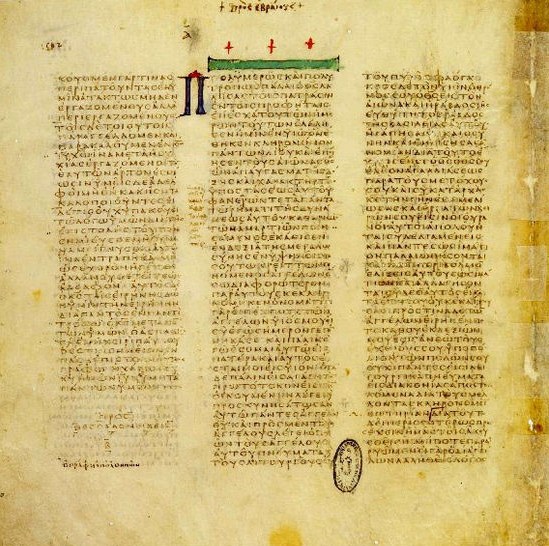
The books which make up the New Testament were written in Greek between around 40 and 100 CE. For the next 1400 or so years, the books of the New Testament were copied by hand by scribes and monks in order to transmit the text to new areas and/or to successive generations. Only after 1450 CE, when Johannes Gutenberg invented the printing press, was the text fully standardized in its publication. As far as we know, the original manuscripts of the New Testament books all perished long ago. Nevertheless, tens of thousands of copies of the New Testament remain: the earliest fragment, from the Gospel of John (𝔓52), dates from the first half of the second century, within 75 years of the original manuscripts, and the earliest complete copies of the New Testament are from the middle of the fourth century, within 300 or so years of the original manuscripts. Many of the copies of the New Testament are translations in other languages like Latin, Syriac, Gothic, Ethiopic, Armenian, and Coptic, and are preserved everywhere from Ireland to Egypt, from Ethiopia to Armenia. The New Testament is, by far, the best attested document from the ancient world in our possession. If we cannot have confidence in the integrity of the New Testament, then we cannot have confidence in the integrity of any ancient document which has been handed down through the copying process.

Yet these New Testament copies are not exactly consistent with each other in every single word and detail; in fact, no two copies of the New Testament are precisely the same in every word and letter. Those who copied the New Testament texts were humans, and despite their best efforts, variations developed in the text. There are thousands of these variants throughout the manuscripts.

If there are thousands of variations in the manuscripts of the New Testament, how can we maintain confidence in the integrity of the New Testament? How can we know how significant these variations are? Do different texts suggest different ways to serve Jesus, or do they contradict each other regarding what Jesus and the Apostles did and taught? How can we maintain confidence in our belief of Jesus as Lord and Christ and how we must serve Him, if the only repository of authoritative messages from Jesus and the Apostles, the New Testament, has so many variations? If the text of the New Testament is so important, how could God allow it to be corrupted in any way?

Some people evade the question entirely by claiming that God directly guided the entire process of transmitting the New Testament text, ultimately believing that God inspired Desiderius Erasmus in the development of his edition of the Greek New Testament, called the Textus Receptus (TR) in 1516, or that God inspired the committee of translators as they translated the King James Version in 1611 (KJV; also known as the Authorized Version, or AV). Yet on what basis should we have any confidence that these men were inspired? Neither Erasmus nor the committee of translators of the KJV claimed inspiration. Instead, they claimed to be part of a long line of people who have sought to analyze all known manuscripts to arrive at a version of the text most consistent with the original manuscripts as can be determined. They did so in full belief that the original authors, and thus the original manuscripts, of the New Testament were inspired by God, and believers do best when they attempt to ascertain the most ancient and thus authentic reading of the texts. In short, they claimed to be textual critics engaging in textual criticism.

When we think of “criticism,” our minds naturally gravitate toward images of censure and rebuke: when we criticize something, we are normally pointing out flaws and problems. Textual criticism is not like this type of criticism: they both share the idea of considering and evaluating, but textual criticism involves the evaluation and analysis of a text, especially in regard to its origin (cf. Webster’s Dictionary). There are two types of Biblical textual criticism: “higher” criticism, which is the attempt to ascertain the literary history of the New Testament texts with a view to who wrote what when and why, and “lower” criticism, which is the attempt to ascertain the textual history of the New Testament with a view of recovering the original texts. For our purposes we will focus on “lower” New Testament textual criticism: the artistic and scientific endeavor to recover the original New Testament text through investigation of all extant manuscript evidence.

Textual criticism matters because it is the means by which we can establish and defend the integrity of the New Testament in light of the thousands of variants which exist among manuscripts. Through the textual critical process of analyzing and evaluating manuscripts, textual critics have discovered that the vast majority of variants involve spelling mistakes. Other variants involve a scribe accidentally repeating a part of the text or skipping a part of the text (duplication or omission). Sometimes scribes would copy one text as if it were a parallel text (e.g. the Lord’s Prayer in Luke 11:2-4 as the Lord’s Prayer in Matthew 6:9-13, called harmonization). At other times scribes would expand names with additional titles (e.g. “Lord Jesus” for “Jesus,” called expansions of piety).

Textual critics can discern these patterns in the variants because we have so many manuscripts available over such a long period of time. Through their investigation of all the available manuscripts, textual critics have discerned that the New Testament text in Greek seems to have been standardized in the fifth century, since most of the manuscripts which come afterward follow the same patterns and reflect many of the expansions and harmonizations as described above. This is called the “Byzantine” text family and represents about 80% of existing manuscripts: it underlies the Textus Receptus and the King James Version (and the New King James Version) which was translated from the TR. Textual critics today prefer the “Alexandrian” text family which maintains shorter and more concise readings, based on the early manuscripts and dated from the second through the fourth centuries. Greek New Testaments today, like the United Bible Society’s 4th edition and the Nestle-Aland 27th edition, are based on the “Alexandrian” text family and reflected in most modern translations of the Bible.

The student of the New Testament can, to some extent, see both the results of the 1400 year transmission of the New Testament text by copyists and the fruits of the endeavors of modern “lower” New Testament textual criticism by comparing the readings of the King James Version or New King James Version with the readings in the American Standard Version, New American Standard Bible, or the English Standard Version. The differences which do exist between the two sets of translations do not impact any major doctrine or practice in Christianity, nor do they present significant differences in terms of what Jesus and the Apostles did or taught. To this day one can come to an understanding of the Christian faith and serve Jesus through reading, studying, and applying the New Testament as translated in the King James Version.

Yet those differences do exist. And ever since the New Testament has been copied, many have attempted to engage in the process of textual criticism (whether they knew it or not) in order to attempt to restore and recover the original New Testament text. Origen, in the third century, remarked on different readings in different manuscripts of the New Testament and made arguments for his preferred readings. In the fourth century, Jerome translated the Old and New Testaments into Latin, seeking to reflect the text accurately on the basis of the best linguistic and manuscript evidence. Around the same time as Erasmus in the sixteenth century, Cardinal Jiménez was at work in Spain on what would be called the Complutensian Polyglot Bible, the first printed polyglot Bible in Hebrew, Greek, Aramaic, and Latin, in order to facilitate a better understanding of the history of the text. In the seventeenth century, Theodore Beza printed an edition of the Greek New Testament based on manuscripts dating from the fifth and sixth centuries. In the nineteenth century, Constantin von Tischendorf was responsible for the rediscovery of the fourth century Codex Sinaiticus (א), an important manuscript; B.F. Westcott and F.H.A Hort published The New Testament in the Original Greek in 1880, which would become the basis of the standard Greek New Testaments used today. This same tradition was carried on throughout the late nineteenth and twentieth century with the work of Eberhard Nestle, Erwin Nestle, Kurt Aland, Bruce Metzger, Daniel Wallace, and many others. For over 1700 years, therefore, textual critics have sought to restore the New Testament text to its earliest form in the first century.

Since the witness of Christianity is based in the testimony of the Apostles and their associates as preserved in the pages of the New Testament, and Christians are to use the New Testament as the basis of their faith and practice, confidence in the integrity of the text of the New Testament is crucial for Christians to maintain confidence in their faith and to encourage confidence in others of the validity of its message. To this end, New Testament “lower” textual criticism matters greatly to our faith: through the text critical process, sensible judgment can be made regarding the variants found in the various New Testament manuscripts, allowing us to recover and restore the text of the New Testament as it was originally written and inspired by God. Based upon the evidence from the early manuscripts and the preserved writings of early Christians with their use of the New Testament in those writings, we can have confidence that the Greek texts of the New Testament which we use today accurately reflect the state of the text not long after the originals.

Each successive generation must remain vigilant. Even though the Greek New Testaments used today more accurately reflect the original Greek New Testament than ever before, many opponents of the faith attempt to subvert confidence in the integrity of the New Testament. Variants in the text which have been known for some time are interpreted in the worst light possible; many speak of the “orthodox corruption” of the New Testament, insinuating that the New Testament has been manipulated to say what early Christians wanted it to say. These arguments and insinuations must not be left unopposed. Yet this kind of opposition is precisely why we do well to investigate the history of the transmission of the New Testament and the principles of textual criticism: in so doing we will be better equipped to make a defense for the hope that is in us and explain to others why we have every right to maintain confidence in the integrity of the text of the New Testament (cf. 1 Peter 3:15). Let us stand firm in our faith in the Lord Jesus Christ, establishing our faith and practice on the basis of what is revealed in the New Testament, confident that the New Testament we are reading is, on the whole, the same as the New Testament read and heard by the earliest Christians!

Ethan R. Longhenry

Works Consulted

Aland, Kurt and Barbara. The Text of the New Testament. Ed. by Erroll Rhodes. Wm. Eerdmans Publishing Co, 1989.

Metzger, Bruce. The Text of the New Testament: Its Transmission, Corruption and Restoration. Third Edition. Oxford University Press, 1992.

Word of YHWH to Micah | The Voice 16.25: June 21, 2026

posted in: The Voice | 0

The Voice

The Word of YHWH to Micah

This is YHWH’s message that came to Micah of Moresheth during the time of Jotham, Ahaz, and Hezekiah, kings of Judah, which he saw concerning Samaria and Jerusalem (Micah 1:1).

Amos of Tekoa had already completed his commission to prophesy to Israel; Hosea ben Beeri was persevering to the same end. YHWH had called Isaiah ben Amoz to prophesy to Judah and would speak often directly to its kings. Around this same time, the Word of YHWH would come to Micah of Moresheth.

The Book of Micah can be found among the twelve “minor” prophets in the Hebrew Bible; he is sixth in English Bibles, but third in the Greek Septuagint, befitting his historical placement. We are not told anything of Micah’s family or origin. His name, “Micah” (possibly originally spelled “Micaiah,” as in the written text of Jeremiah 26:18) means “who is like God?,” which is best understood as a way of praising God more than asking some kind of question about Him. Otherwise, all we are told about him is his home, “Moresheth,” which seems to be the same place which he identified as Moresheth-Gath, between Lachish and Achzib in the Judean Shephelah, or southern hill region (Micah 1:1, 1:14). Moresheth has been tentatively identified with modern Tell ej-Judeideh/Tell Goded, not far from where the hill country of Judah met the coastal plains dominated by the Philistines. Moresheth was associated with Gath as either a previous possession of Gath overtaken by David in 1 Chronicles 18:1 or as still under the influence of Gath even in the days of Micah. Tekoa, home of Amos, was about seventeen miles to the east; and yet both of these prophets lived at the southern periphery of Judah but were called to prophesy to the people (cf. Amos 1:1). As Amos was an outsider in Bethel, so Micah would have been an outsider in Jerusalem.

The Word of YHWH came to Micah of Moresheth during the days of Jotham, Ahaz, and Hezekiah kings of Judah, and the messages concerned Samaria and Jerusalem (Micah 1:1). Altogether, Jotham, Ahaz, and Hezekiah reigned over Judah from approximately 740 until 687 BCE. None of Micah’s prophecies were presented with specific dates or circumstances. Micah 1:2-9 represents the only message concerning Samaria, which we presume dates sometime before 721 BCE; Micah 1:10-16 sounds suspiciously like the invasion path of Sennacherib king of Assyria from the coastal plain eventually leading to Jerusalem in 701 BCE, but could have been prophesied at any point before then. From Jeremiah 26:18 we learn Micah’s message in Micah 3:12 was prophesied “in the days of Hezekiah”; therefore, likely all of Micah 3:1-12 at least can be dated to some time during the reign of Hezekiah, ca. 727-687 BCE.

The Word of YHWH came to Micah of Moresheth during truly transformative times for Israel and Judah, and generally not for the better. Granted, when the Word of YHWH would have first come to Micah in the days of Jotham king of Judah (ca. 750-732 BCE), the signs of some upcoming changes had started to appear. To the south, the generally weak and fractious Libyan pharaohs of Egypt’s Twenty-Second and Twenty-Third Dynasties began to be attacked, and defeated, by the kings of Kush who would begin ruling as Egypt’s Twenty-Fifth Dynasty. At almost the exact same time, Tiglath-pileser III took over the throne of Assyria after a series of weak kings had ruled for the previous forty years. Nevertheless, on the whole, everything continued on in the days of Jotham king of Judah like they had for his ancestors since Rehoboam two hundred years earlier. If anything, things remained quite well for Israel and Judah. Despite dynastic transitions, Israel maintained its territorial integrity at this time, and the Arameans in Damascus were more allies than opponents. Jotham was able to reassert hegemony over the Ammonites according to 2 Chronicles 27:5, even though he would suffer the attacks of the combined forces of Israel and Aram toward the end of his days (2 Kings 15:37). Yet this kind of alliance and attack had gone on for the better part of two hundred years; Assyria had waxed and waned in its ability to assert its power beyond its immediate borders throughout this time as well; Egypt had not been a major player on the international scene in general for four hundred years, and had not attacked much outside its borders in about two hundred years.

In these early days, therefore, the Judahites would have had as much ability to conceive and imagine of the apocalyptic disaster which Micah of Moresheth would prophesy as the Israelites to their north did regarding the messages from Amos and Hosea. Everything was continuing as it always had. Why should they expect anything to be that terribly different than what had come before?

Judah would soon experience disaster: Jotham died, and Ahaz his son and all Judah would suffer greatly because of the continuing conflict with the Arameans and Israelites we now deem the Syro-Ephraimite War (ca. 735-732). According to 2 Chronicles 28:1-15, Ahaz would suffer a terrible defeat and lose a vast number of soldiers against Aram and Israel; the Edomites and Philistines were encouraged to make incursions against Judah as a result (2 Chronicles 28:17-18). The Kings and Chronicles authors all condemn Ahaz as less than faithful to YHWH, following in the ways of the kings of Israel, and serving the gods of the nations, and understood these misfortunes as the result of these behaviors (e.g. 2 Chronicles 28:19).

In the midst of all these difficulties, the Arameans and Israelites began to besiege Jerusalem, but could not overtake it (Isaiah 7:1). This was the point at which Ahaz would make the decision very much against Isaiah’s prophetic message and warning and which would prove influential, and disastrous, for Aram, Israel, and his own kingdom: he sent a large gift to Tiglath-pileser III king of Assyria and submitted to him as a vassal (2 Kings 16:1-8, 2 Chronicles 28:16; cf. Isaiah 7:1-25).

Ahaz’s gambit may have seemed successful at the beginning: Tiglath-pileser III had not really needed the encouragement to turn his gaze to the southwest, and by 732 BCE Tiglath-pileser had fully conquered all of the Aramean kingdom based in Damascus, eliminating it as a going concern, and conquered most of the Kingdom of Israel save for a rump state in Ephraim surrounding Samaria, and began exiling its residents (2 Kings 15:29, 16:9). Hoshea ben Elah, left as king over Ephraim, would plan to rebel against the Assyrians under Shalmaneser V; the latter and Sargon II would besiege Samaria and take the city in 721 BCE, eliminating the Kingdom of Israel as a going concern (2 Kings 17:1-6).

Throughout all of this, the Kingdom of Judah would persevere as a vassal of Assyria. Yet Hezekiah ben Ahaz, king of Judah, for all the good he did in restoring the Temple and dedication to serving YHWH, rebelled against the Assyrians and withheld tribute. In response, in 701 BCE, Sennacherib king of Assyria laid waste to Judah. Major cities like Lachish and Azekah were besieged, captured, and destroyed; Micah’s own hometown of Moresheth was likely not spared. Jerusalem was besieged and was only preserved by the miraculous intervention of YHWH (2 Kings 18:13-19:37, Isaiah 36:1-37:38). The Kingdom of Judah would persevere, but only by returning to Assyrian vassalage for another seventy-five years, and would probably have taken that long, if not longer, to begin to recover from the devastation they endured (cf. Isaiah 1:1-10).

This was the world in which the Word of YHWH came to Micah of Moresheth regarding Samaria and Jerusalem. He prophesied regarding the devastation, suffering, and disaster. Perhaps the Israelites and Judahites would have maintained little framework or imagination to hear and understand his words at the beginning; by the end, the horror would have been all too manifest and obvious.

Explicit testimony was preserved regarding the esteem with which at least some later Judahites held Micah of Moresheth. In 608 BCE, when the officials and the mob wanted to have Jeremiah executed for prophesying against the Temple and the people, some of the elders of Judah resisted them, appealing to Micah of Moresheth: Micah had denounced Zion and Jerusalem in the days of Hezekiah, and Hezekiah did not have him killed but repented and YHWH relented for a time (Jeremiah 26:1, 16-19; cf. Micah 3:12). Thus, over a century after Micah had prophesied, his messages were still remembered, his standing as a prophet had been legitimated, and Judahites were expected to remember them and how everything had turned out.

Micah of Moresheth therefore lived and prophesied during tumultuous, epoch-changing times. The Kingdom of Judah might have endured, but the neighborhood was irrevocably changed in his lifetime. Much of the Word of YHWH through Micah found its fulfillment in the Assyrian devastation of Israel and Judah in 722 and 701 BCE; some of it would find its fulfillment when Babylon would destroy Judah in 586; and some of what Micah would prophesy would find its fulfillment in Jesus the Christ and the Kingdom He would inaugurate. May we come to a better understanding of the Word of YHWH through Micah of Moresheth, entrust ourselves to God, and pursue life and truth in Him!

Ethan R. Longhenry

Contentment, Joy, Gift | The Voice 16.24: June 14, 2026

posted in: The Voice | 0

The Voice

Contentment, Joy, and the Gift

I have great joy in the Lord because now at last you have again expressed your concern for me. (Now I know you were concerned before but had no opportunity to do anything.) I am not saying this because I am in need, for I have learned to be content in any circumstance. I have experienced times of need and times of abundance. In any and every circumstance I have learned the secret of contentment, whether I go satisfied or hungry, have plenty or nothing. I am able to do all things through the one who strengthens me.
Nevertheless, you did well to share with me in my trouble. And as you Philippians know, at the beginning of my gospel ministry, when I left Macedonia, no church shared with me in this matter of giving and receiving except you alone. For even in Thessalonica on more than one occasion you sent something for my need. I do not say this because I am seeking a gift. Rather, I seek the credit that abounds to your account. For I have received everything, and I have plenty. I have all I need because I received from Epaphroditus what you sent – a fragrant offering, an acceptable sacrifice, very pleasing to God. And my God will supply your every need according to his glorious riches in Christ Jesus. May glory be given to God our Father forever and ever. Amen.
Give greetings to all the saints in Christ Jesus. The brothers with me here send greetings. All the saints greet you, especially those who belong to Caesar’s household. The grace of the Lord Jesus Christ be with your spirit (Philippians 4:10-23).

Thanks had been given; the situation was appropriately updated; exhortations had been made. At the very end, Paul decided to explicitly address the gift of the Philippians. But what kind of “thank you” message was this?

Philippi was a Roman colony in Macedonia (part of modern Greece); Paul first visited the area and preached Jesus around 51 (cf. Acts 16:11-40). Paul wrote to the Christians in Philippi most likely around 60-61 from Rome while living under house arrest there (cf. Philippians 1:1). Paul wrote to the Philippian Christians in order to provide them assurance and encouragement regarding his house arrest in Rome and to exhort them to continue to live as faithful citizens of the Gospel and to privilege their heavenly commonwealth (Philippians 1:1-4:1). Paul wanted the Philippian Christians to live that out by agreeing with one another, rejoicing, and sharing in the peace of the Lord (Philippians 4:2-9).

Once Paul had completed the peroration component of this letter in Philippians 4:9, it would have proven conventional to then present the standard aspects of an epistolary conclusion: perhaps some personal messages; conveyance of greetings; and a final message from the Lord. We find these components in Philippians 4:21-23: Paul greeted all the Christians of the church in Philippi, and conveyed the greetings of both the fellow brothers with him as well as “all the saints,” especially those in “Caesar’s household” (Philippians 4:22). Caesar’s household would have included not only the Emperor and his closest family members but also all the servants and slaves which ran the imperial household; we believe the Christians who were members of Nero Caesar’s household would have most likely come from among these slaves. The appeal to the saints in Caesar’s household represents the best evidence Paul was writing to the Philippian Christians during his time of house arrest in Rome. Asking for the grace of the Lord to be with them all represented a standard and appropriate conclusion to the letter (Philippians 4:23).

As we can tell, however, Paul did not exactly follow convention, because Philippians 4:10-20 stands between his peroration in Philippians 4:4-9 and the conclusion of the letter in Philippians 4:21-23. In it, Paul felt compelled to explicitly address the gift sent by the Philippian Christians by means of Epaphroditus (Philippians 4:18).

Paul began by expressing his joy at the renewed concern of the Philippian Christians for him; he did not assume they had no regard for him in the meantime, but they lacked opportunity (Philippians 4:10). “Thought,” or “concern,” represent socially appropriate circumlocutions for financial support, as the rest of the passage will make abundantly clear. Paul then wanted to make it clear he was not actually in any need, for he had learned how to prove content no matter his circumstances; at times he had abounded, at times he was in need, but in all things he could endure because of how God in Christ strengthened him (Philippians 4:11-13). Paul used some terms with technical valence in Greek: “content” in Philippians 4:11 is autarkes, one of the strong aspirations of conduct in Stoic thought; NET “I have learned the secret” in Philippians 4:12 translates memuemai, a verb commonly used in Greek to convey initiation into mysteries and mystery cults. Paul used these references most likely because they were understood by his audience and not to commend either Stoicism or mystery cults; if anything, by pointing to finding contentment no matter what because of his standing in Christ, he resisted those pagan viewpoints.

Many have been struck by the way Paul addressed the support he received from the Philippian Christians, for it certainly sounds like Paul was saying he was glad they were concerned for him, but he did not really need anything and had found contentment in Jesus, thank you very much. It does seem odd and it is certainly not the standard “thank you” message we would expect. Yet perhaps some of what Paul would continue to say might shed some light on why Paul approached the subject in this way, because Paul would go on to say they did well to share in his difficulty/trouble (Philippians 4:14).

Paul bore witness to, and commended again, the Philippian Christians for being the only ones to share in giving and receiving with Paul “at the beginning of his ministry,” even sending support more than once in Thessalonica while he was there and in need (Philippians 4:15-16). We presume this support was sent very soon after the establishment of the church in Philippi while Paul was in Thessalonica around 50 (Acts 17:1-9). Understanding what Paul meant by the “beginning of the gospel” remains a challenge: Paul had been preaching the Gospel for many years and in many places before he arrived in Macedonia; conceiving of his work in Macedonia as the beginning of his work in Europe reflects later characterizations and not contemporary frameworks. Paul returned to the language of accounting in Philippians 4:17: he was not seeking a gift, but was more than happy to receive it so that it might become a credit to their account. He then spoke explicitly of the gift they sent by Epaphroditus, assuring them he had received the gift in its fulness; he then shifted metaphors, speaking of the gift like a sacrifice offered before God, a “fragrant aroma,” and well-pleasing before Him (Philippians 4:18). We can appreciate the use of both metaphorical vehicles to convey the gift and its value; we should resist any temptation to start conceiving of sharing with others in terms of mere accounting alone and presume we can earn God’s favor by giving to others. He then concluded his discussion of the gift with a prayer which sounds like a statement of confidence, declaring how God would supply their every need through His glorious riches in Christ, and gave glory to God the Father (Philippians 4:19-20).

Paul’s whole Letter to the Philippians communicated Paul’s great love and appreciation of the Christians in Philippi, and so we do well to give Paul the benefit of the doubt regarding how he addressed the gift they sent. Therefore, we would not do well to consider Paul as presenting a “thankless thanks” regarding the gift. At the same time, we cannot help but notice how Paul’s response to the gift was not marked by the kind of extravagant and effusive praise which would suggest a desire to receive more or again.

We do well to remember the prevalence of the patron-client relationship in Greco-Roman society: patrons gave financial resources to clients with the expectation clients would glorify and honor them in appropriate contextual ways. Among more social equals we also find a lot of reciprocal kinds of giving, in which some gift or benefit was given with the expectation the giver would receive some kind of gift or benefit in response, and these cycles of reciprocity were expected to remain ongoing and continue.

These socio-cultural aspects might well explain why Paul often remains uncomfortable with all things related to financial support, especially among the Greeks, as indicated here in Philippians but also in the Corinthian correspondence. It is not as if Paul is against giving gifts, receiving gifts, or being financially supported to promote the Gospel; but Paul might well have concerns and hesitance regarding some of the expected social obligations which may come with receiving such gifts and how that might influence his ability to effectively and well exhort them in the Gospel of Christ.

It has also been suggested Paul wanted to find a way to communicate his appreciation for what the Philippian Christians had provided in such a way they would understand how he was thankful but did not need anything more so they would not send any further financial support in the future. There is much to commend this viewpoint: Paul did express joy and appreciation for the Philippian Christians and all they had done for him before, established full receipt of the gift (so Epaphroditus would remain blameless), but also conveyed his current satisfaction and contentment, appreciating the gift more for what it would mean for the Philippian Christians to be able to give to him than for him to benefit by it.

And beyond all this, of course, was Paul’s concern lest anyone think he preached the Gospel in order to make a living, and a very good living at that. Paul was not at all preaching Jesus for profit and did not want to insinuate anything of the sort in any of his communications. Such might also help explain why Paul was at pains to describe how he could be content in any circumstance and was not actually in need of the gift. Perhaps he actually was not really in need and had all of his basic needs met at that particular moment; perhaps he told the Philippian Christians as much to allay their concerns about him no matter what his present situation actually looked like. Either way, Paul did not at all want them to think he needed their money or preached in order to get money from them.

We do well to at least be aware of all of these possible situations and issues which lay beneath the surface of the text in Philippians 4:10-20, especially as we attempt to apply what Paul said to the Philippian Christians in our own context. We all do well to also be initiated into contentment in whatever circumstances we find ourselves so we might find ways to glorify God in Christ in the times during which we abound as well as in the times during which we may find ourselves in greater need. We also do well to affirm our capacity to endure all things through the strength God provides for us in Christ through His Spirit, which is the spirit of what Paul was saying in Philippians 4:13. It is not at all appropriate to interpret and apply Paul as if a modern self-help guru of a Stoic, treating the situation as if God in Christ is the ultimate power-up and power boost in life, or the ultimate means of self-actualization. Instead of looking to Stoicism (one of the most prevalent philosophies of the day) or mystery cults (one of the most popular forms of religious devotion of the day), Paul appropriated their language to describe how he had been initiated into contentment through his trust in the ways of God in Christ. Likewise, we can also appropriate whatever good we might find in popular and prevalent philosophies and religious devotions of our day, but only if we do so in terms of what God has accomplished in Christ and according to His Spirit.

Paul, therefore, found a way to communicate his appreciation for the financial gift provided by the Philippian Christians while affirming his present contentment and satiety, instead joyfully celebrating in the gift and the spirit of giving they displayed. May we be likewise initiated into the contentment we can only find in God in Christ through His Spirit, give as we have opportunity, receive so others might give, and entrust ourselves fully to God who can and will supply all of our needs according to His glorious riches in Christ!

Ethan R. Longhenry