First Passover | The Voice 16.37: September 13, 2026

posted in: The Voice | 0

The Voice

The First Passover

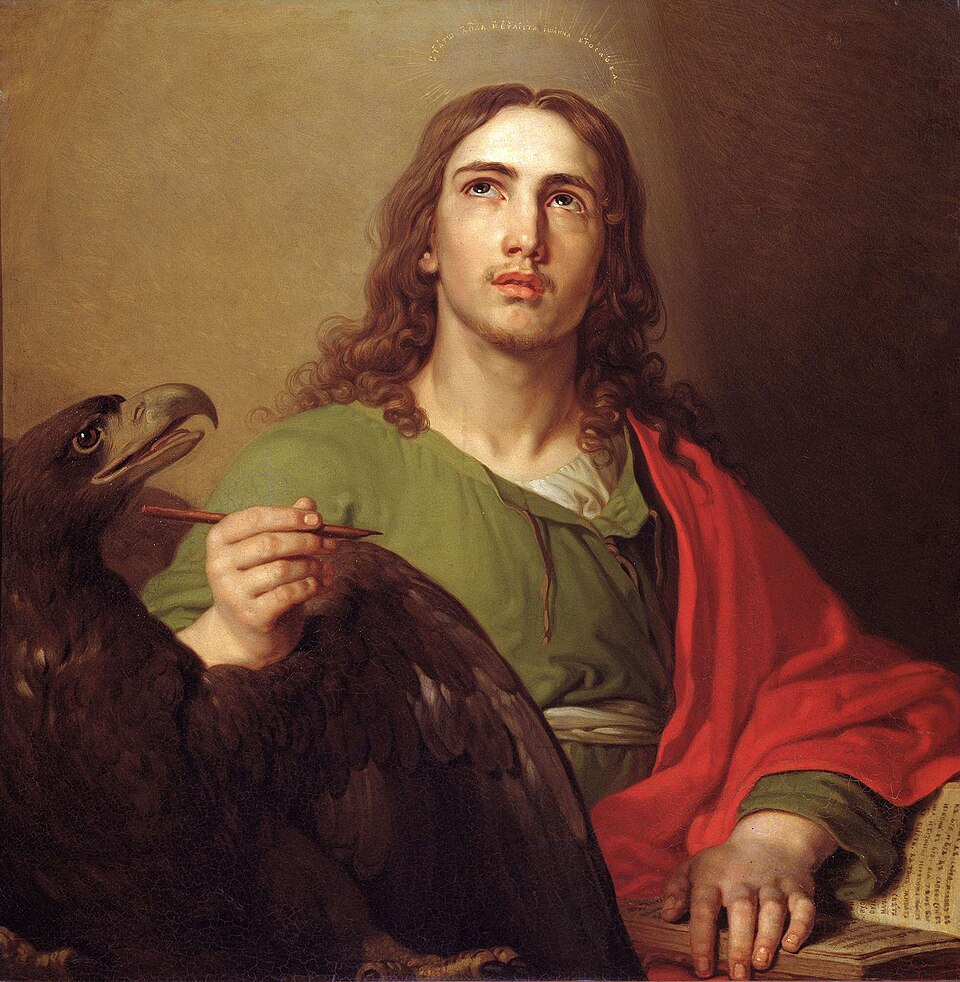
The “disciple whom Jesus loved,” known as John, either John ben Zebedee, the Apostle, or John the Elder, was writing his recollections of his experiences with Jesus so that those who hear or read would believe Jesus is the Christ, the Son of God, and would find eternal life in His name (cf. John 20:31). He began by speaking of the Word of God, the Creator, the life and light of men, who took on flesh and dwelt among us as Jesus of Nazareth (John 1:1-18). He then described the calling of the first disciples and Jesus’ first sign at the wedding in Cana (John 1:19-2:12). John the Evangelist would continue by chronicling some of the events which took place while Jesus attended the Passover in Jerusalem (John 2:13-4:3).

As would be expected during the Passover festival, Jesus entered the Temple complex. John related how Jesus was greatly distressed at how the Temple had become a marketplace; He made a whip of cords and drove the merchants of animals and money changers out of the Temple (John 2:13-16). We do well to note how John never suggested Jesus actually used the whip of cords to hit any animal or person.

What, exactly, is Jesus up to in the Temple cleansing of John 2:13-16? Throughout its existence the Second Temple was never only the place to go in order to serve YHWH; it had always been a place with many administrative and mercantile functions. The merchants were not in the holy place but in a court farther away, and their services did prove necessary. A traveler from Galilee or parts beyond would not want to bring an animal for sacrifice across that distance, and travelers would be carrying Roman money which would need exchanging for the Temple shekel. In the Synoptic Gospel accounts Jesus cleanses the Temple during His final week and evokes Jeremiah 7:11, calling it a den of robbers, and thus rendering judgment on the Second Temple as YHWH did the First Temple in the days of Jeremiah (cf. Matthew 21:12-17); yet John placed the event toward the beginning of Jesus’ ministry and without the overt political connotations. Many imagine Jesus was enraged at the oppressive costs of the animals or the exchange rate, yet such is completely speculative. The only hint John provided is what the disciples remembered: the prophecy of Psalm 69:9, how zeal for YHWH’s house would consume Him (John 2:17). We do best to understand Jesus’ cleansing of the Temple as a ritual sign act which demonstrated the close association between the Father and the Son.

The Jewish leaders recognized what Jesus was doing and why and thus asked Him for a sign which would bear witness to His authority (John 2:18). Jesus challenged them to tear down this temple and He would raise it again in three days (John 2:19). The Jewish leaders were incredulous: Herod the Great had begun his great renovation of the Second Temple in around 19 BCE. By the present moment in 27 CE it had been under construction for forty-six years; it would only be finished in 63, and would be destroyed seven years later (cf. John 2:20). No doubt this kind of statement would become the basis of the false accusations against Jesus at His trial (cf. Mark 14:58). But Jesus did not refer to the Second Temple; He spoke of the temple of His body, and His disciples remembered this when He arose from the dead and they believed (John 2:21-22).

A temple is the place in which it is believed a deity dwells or maintains its presence. YHWH demonstrated His presence among His people in former times by the Cloud of Presence in the Tabernacle and in the First Temple (cf. Exodus 40:34-35, 1 Kings 8:10-11). In a vision Ezekiel saw YHWH’s Presence depart from the First Temple, and it was destroyed soon afterward (cf. Ezekiel 10:1-22). Yet the Cloud of Presence, also known as the shekinah, did not return when the Second Temple was built; the Most Holy Place of the Temple was infamously completely empty. We cannot but keep this in mind when considering John’s testimony about Jesus in the Temple, for in Jesus the Presence of YHWH had returned and had testified against Jewish practices in the Temple.

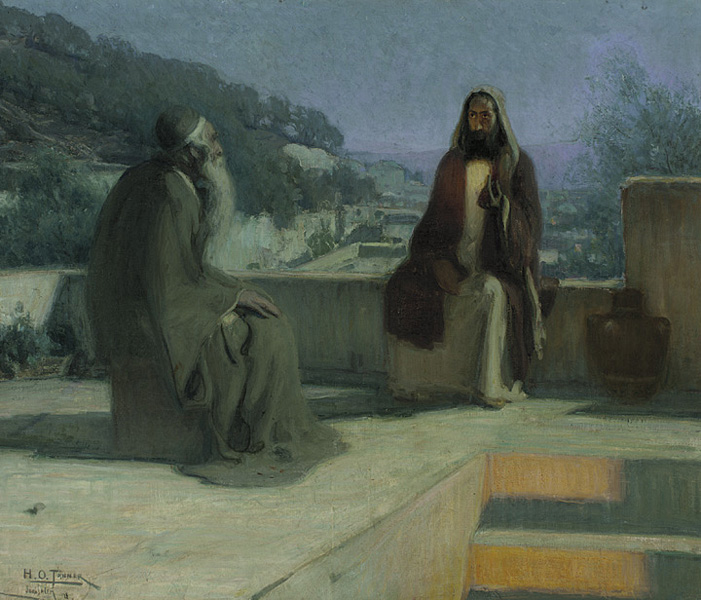
According to John the Evangelist, many believed in Jesus during that Passover, but He would not entrust Himself to the people, because He knew what people were all about (John 2:23-25). One such, perhaps, is a Pharisee of the Sanhedrin named Nicodemus, who comes to visit Jesus at night (John 3:1). He seemed to come at night to speak to Jesus without as much fear of retaliation from other Jewish authorities and likely to gain further instruction. Nicodemus proved more fair-minded than many of the religious authorities like him: he recognized God was with Jesus because no one could do the things Jesus was doing if God were not with Him (John 3:2). In contrast, fellow Pharisees would blaspheme the Spirit of God by suggesting Jesus did miracles by the power of Satan (cf. Matthew 12:22-32).

Jesus would then attempt to teach Nicodemus, yet the conversation ends up in a farce. Jesus warned Nicodemus: only by being born anothen could anyone see the Kingdom, or Reign, of God (John 3:3). Anothen, in Greek, can mean “again” or “from above”; Jesus has both in mind when speaking with Nicodemus. Thus Jesus would testify regarding the “second birth,” the need for belief and baptism which attends it in order to share in the coming Reign of God, and a more spiritually and less physically understood allegiance and association; Nicodemus could not understand it (John 3:3-12). Jesus, the Son of Man, could testify about spiritual things from above, since He had descended from above, and would ascend again one day; as Moses lifted up the serpent to provide healing for Israel in Numbers 21:5-9, so the Son of Man would need to be lifted up so those who believe in Him might share in life eternal (John 3:13-15).

“Son of Man” is a Hebrew idiom to describe a human being (cf. Psalm 8:4); yet a Pharisee like Nicodemus, who would know his Prophets and Writings well, would understand Jesus as speaking of the “one like a son of man” who would stand before the Ancient of Days to receive a Kingdom without end (cf. Daniel 7:13-14). Thus Jesus would have to be lifted up in His ascension to receive the Kingdom from His Father; but to be able to ascend Jesus would have to be lifted up in His resurrection from the dead; and His death would come from having been lifted up on the cross: and so Jesus thus evoked all He would undergo by making reference to Moses and the serpent in the Wilderness. Jesus thus testified regarding who He was, what He was about, and the basis on which He could thus speak to Nicodemus about what God was accomplishing through Him.

In John 3:16-21 John the Evangelist provided no contextual break, and so it is quite possible John was relating Jesus’ direct speech to Nicodemus; but it is also possible John has begun making his own commentary as he did in John 1:1-18. God has loved the world by giving of His only beloved Son so all who believe in Him might have eternal life (John 3:16). Jesus did not come into the world to condemn it but to save it (John 3:17); if God wanted to condemn everyone, He would have not needed any further justification, for we have all sinned and fallen short of His glory. Far too many people imagine God in Christ watches in wait to catch people in their sin to condemn them; it is Satan who does that. In Christ God is doing all He can to save people! Those who entrust themselves to Jesus are not condemned; those who deny Him are already condemned in their unbelief, having turned away from the light in Christ because it exposed the wickedness of what they did (John 3:18-20). But those who practice truth are drawn to the light of God in Christ to demonstrate their deeds are done in God (John 3:21).

According to John the Evangelist, Jesus then left Jerusalem for the Judean wilderness near the Jordan River, and was baptizing people (John 3:22). John the Baptist was across the Jordan at Aenon near Salim and was baptizing there, having not yet been imprisoned by Herod Antipas (John 3:23). The Baptist’s disciples informed him of how Jesus was also baptizing, and many had come to Him for baptism; John the Baptist then spoke of Jesus as the Bridegroom and himself as the friend of the Bridegroom, and he took great joy in how Jesus was becoming greater and he comparatively lesser (John 3:24-30).

As with John 3:16-21, so with John 3:31-36: perhaps John the Baptist continued his response, or perhaps John has taken over and provided commentary. The One who came from heaven, Jesus, maintains superior testimony to those who are of the earth and can provide only earthly testimony (John 3:31). None may accept His testimony, but He will speak God’s words since God sent Him to do so; the Father loved the Son and gave Him authority over all things (John 3:32-35). The one who entrusts him or herself to Jesus the Son has eternal life, but those who reject the Son have God’s wrath upon them (John 3:36).

The Pharisees would learn of Jesus’ great success at the Jordan River and how His disciples were baptizing more people than John the Baptist and his associates; thus Jesus departed from Judea to return to Galilee (John 4:1-3). John the Evangelist thus recorded the first Passover of Jesus’ ministry, and in so doing set forth, in word and deed, the purposes of God in Christ. YHWH was fulfilling His promises and had returned to His people. Those who entrusted themselves to God in Christ could be born again in Him to obtain eternal life. But those who rejected God in Christ would be judged, condemned, and experience the wrath of God. May we be born again from above in God in Christ through the Spirit and obtain eternal life in Him!

Ethan R. Longhenry

Sharing | The Voice 16.36: September 06, 2026

posted in: The Voice | 0

The Voice

Sharing

So the crowds were asking him, “What then should we do?”
John answered them, “The person who has two tunics must share with the person who has none, and the person who has food must do likewise” (Luke 3:10-11).

Isaiah and Malachi had told Israel to look for the one who would come and prepare the way of YHWH, the Elijah who would tell Israel how to be reconciled to God and to one another before He would return. He had finally come (Isaiah 40:2-4, Malachi 3:1-5, Luke 3:4-6). And he came with a warning and an exhortation.

John lived in the desert wastes of the Jordan River valley around the year 27 CE (Luke 3:1-2). He preached a baptism of repentance, exhorting Israelites to be ritually immersed in water to demonstrate how they were no longer going to walk in the ways of their ancestors but would change their hearts and minds to dedicate themselves to YHWH and His purposes in light of the coming Messiah (Luke 3:3).

When the crowds went out to be baptized by him, John did not mince words. He called them all a brood of vipers and asked who warned them to flee from the wrath that was coming (Luke 3:7)! He was less concerned about ingratiating himself with his audience than with the sincerity of their repentance. They should not assume their standing before God was assured by their genealogical relationship with Abraham (Luke 3:8). John solemnly warned the Israelites: if YHWH was coming, that meant the day of YHWH, or a time of judgment, was at hand, which John explained by stating the ax was laid at the root of the tree, and every tree that did not produce good fruit would become firewood (Luke 3:9). The Israelites should repent and bear good fruit if they would be preserved; otherwise they would be cut down like so many of their ancestors!

The crowds heard John and accepted his warning; they wanted to know what they should do (Luke 3:10). How were they supposed to bear the good fruit of repentance? What would be John’s primary message for the Israelites so they would escape YHWH’s condemnation and be prepared to welcome Him when He came?

John told Israel to share. A person who had two tunics must share with the one who has none, and the person who had food must share with those who did not have food (Luke 3:11).

Yes, John would go on to give specific exhortations to specific groups who asked. Tax collectors should collect nothing beyond what was required; soldiers should not take money by violence or false testimony and should be content with their pay (Luke 3:12-14). Such would well demonstrate the repentance of members of those groups.

Luke would go on to speak about John’s confession he was not the Christ, but the Christ was coming and would be the Judge; Jesus was baptized by John; John was imprisoned, and at a later time, would be executed, by Herod Antipas (Luke 3:13-23, 9:7-9). Luke 3:7-14, therefore, represents what we know of the preaching of John the Baptist as he prophesied and exhorted Israel to repentance before the great and terrible day of YHWH would arrive.

And John the Baptist, whom Jesus confessed as the Elijah to come, the greatest among those who had been born of human parentage at the time, and literally the ultimate messenger of the Law and the Prophets (cf. Matthew 11:11-14), told Israel to share.

The people of God throughout time have been tempted to complicate the faith and the relationship with God and with one another they ought to have. It is tempting to make religion all about various ideas and perspectives divorced from real life experience. It is tempting to focus on defining who has standing before God and who does not. It is tempting to try to answer all the possible questions and objections and dig deeply into various scenarios and possibilities.

Yet John’s message to the people of his time was simple: YHWH was coming. That meant judgment was coming. Those who did not change would be condemned. Thus, God’s people needed to change. They couldn’t trust in their ancestry for their standing. They needed to act as if God was coming soon. And to do that they needed to share what they had.

When they shared what they had, they demonstrated they trusted in God to provide for their necessities. They demonstrated their obedience to His command and directive. They displayed love for one another in providing for what they needed. In sharing they confessed their light hold on the things of this world and the higher priority of one another than in material comfort.

Jesus also confessed, however, that the least in the Kingdom of God was greater than John (Matthew 11:11). All John had promised came to pass: YHWH came to His people as Jesus, dwelt among them, prophetically declared judgment, died, was raised in power, ascended to heaven, was made Lord and Christ, and rendered judgment against Judah and Jerusalem.

But John’s prophetic message endures. Jesus will return again soon (Acts 17:30-31). We must live in repentance lest we find ourselves condemned on that day, for God will not show partiality (Romans 2:5-11, 2 Thessalonians 1:6-11). And how can we display the fruit of repentance? By sharing what we have with our fellow people with God and with everyone. Jesus framed the whole judgment scene according to whether or not we do so in Matthew 25:31-46. James asked how a Christian could tell someone in need to be warmed and filled without giving what was necessary and then think their faith without works could save them (James 2:14-26). John wondered how Christians could really say they loved one another and would even die for one another if they did not prove willing to provide material goods to one another in need (1 John 3:16-18, 4:7-21). Paul continually exhorted Christians to give to those in need, especially to those of the household of faith; the Hebrews author affirmed the same (Galatians 2:10, 6:10, Hebrews 13:16).

As then, so now: it is not just about the act of sharing. We share because we trust that God provides our necessities and we confess our light hold on the possessions and material wealth we have, recognizing all of it comes from God, it cannot be taken with us, and it is always better used to assist others in the present than in the vain hope of future yield. When we share, we prioritize people over comfort.

Our faith in Christ, therefore, ought to be manifest in sharing. Let us consider well John’s prophetic message of sharing and embody it fully to the glory of God in Christ!

Ethan R. Longhenry

Jude and the Assumption of Moses | The Voice 16.35: August 30, 2026

posted in: The Voice | 0

The Voice

Jude and the Ascension / Assumption / Testament of Moses

But even when Michael the archangel was arguing with the devil and debating with him concerning Moses’ body, he did not dare to bring a slanderous judgment, but said, “May the Lord rebuke you!” (Jude 1:9)

Jude the Lord’s brother denounced the tendency of false teachers in his day to insult or rail against the “glorious ones,” likely angelic beings, in Jude 1:8; he then contrasted this attitude in the next verse with that of the archangel Michael. When debating Satan about the body of Moses, Michael would not render judgment on his own; instead, he spoke of how God would rebuke Satan (Jude 1:9). If the Archangel Michael himself would not prove willing to rail against Satan, then who do Jude’s opponents think they are when they insult angelic beings?

Jude’s argument would have proven compelling to those who accepted and recognized the legitimacy of his reference to the story of the Archangel Michael and Satan regarding Moses’ body in Jude 1:9. But where does this story come from?

According to Deuteronomy 34:1-7, Moses died in the land of Moab on Mount Nebo when he was 120 years old. The author would give the impression YHWH Himself buried Moses somewhere in the land of Moab near Beth Peor, but no one knew exactly where he was buried.

We find no other mention of anything regarding the burial of Moses’ body in the Hebrew Bible or the New Testament; at no point in any of these books do we find a description of the archangel Michael contending with Satan over the body of Moses. We do find an angel of YHWH standing near Joshua the high priest and declaring “May YHWH rebuke you!” to Satan in Zechariah 3:2; the angel is left unnamed, so the possibility exists it was Michael, but it could equally have been another angel.

Jude’s argument in Jude 1:9 would have been served quite well by appealing to the vision of Zechariah 3:2, since the angel there rebuked Satan in the name of YHWH. But Jude did not cite this example; he appealed to another example, we presume, with which he expected his audience to be familiar, yet remains unattested in the Hebrew Bible and the New Testament.

But how would his audience know about it? According to the early Christians Origen and the author of the Anonymous Church History (misattributed to Gelasius of Cyzicus), Jude was making reference to a narrative preserved in the text they knew as the Ascension, or Assumption, of Moses (De Principiis 3.1.2, Anonymous Church History 2.21.7).

In the middle of the nineteenth century, Antonio Ceriani came upon a sixth century Latin manuscript in the Biblioteca Ambrosiana in Milan, Italy. The text of the manuscript was incomplete, preserving only its first eleven chapters and part of the twelfth. On its own, this text seemed to be the Testament of Moses, the very first words of the text, an apt description of most of its preserved contents, and a text which was known to early Christians. And yet one of the verses in the first chapter of this text matches a quote found in the Anonymous Church History attributed to the Ascension/Assumption of Moses!

An English translation of this text can be found at https://www.pseudepigrapha.com/pseudepigrapha/assumptionofmoses.html. In chapter one of the text, Moses commissioned Joshua and gave him books which should be stored away until the end of days. In chapters two through six of the text, Moses would foretell aspects of what Israel would experience from the conquest of Canaan until the destruction of the Temple in 70, with a heavy emphasis on the Second Temple Period. The seventh chapter has not been well preserved but seems to reflect some eschatological expectations. The eighth chapter described a persecution of Israelites; whether it should be reckoned as historical or eschatological remains disputed. The ninth chapter would commend Taxo the Levite in that day, who retreated to a cave rather than transgress the commands of God (that is, to give into Hellenistic influences). The tenth chapter presents a kind of eschatological poem in which God would redeem the Israelites and condemn the Gentiles, ending with a commendation for Joshua to preserve the message. Chapter eleven featured Joshua’s response, refusing to be comforted, asking how he could lead the Israelites. What remains of chapter twelve began Moses’ response to Joshua, comforting him in terms of God’s foreknowledge of all things and ultimate vindication.

Early Christians bore witness to some of the details in the text they called the Ascension or Assumption of Moses. As indicated, the Anonymous Church History quoted from chapter one and verse fourteen of the text above. Its author, along with Origen and some other early Christians, spoke of how there was a dispute between the archangel Michael and Satan. Joshua (and Seth and some other witnesses) watched certain events take place, after which Michael took Moses’ body away. Seth would give chase, but as he did so, Michael disappeared with the body of Moses.

We can maintain a decent amount of confidence in the witness of these early Christians about what was contained in the Ascension or Assumption of Moses: they tend to be generally reliable witnesses regarding which texts say what. They had far better access to these texts than we do, and we do well to generally trust their testimony. Therefore, we can reasonably conclude Jude did indeed make an allusion to a pseudepigraphal work known as the Ascension or Assumption of Moses.

But is the text Ceriani found in the middle of the nineteenth century an incomplete edition of the Ascension or Assumption of Moses? The text has been associated with this name because of the quote from the Anonymous Church Historian. Others have argued for it to be associated better with another text known as the Testament of Moses, since at least the part which has been preserved does indeed represent the testament genre, very common and popular in the waning days of the Second Temple Period and immediately afterward. It has also been suggested the Testament of Moses and the Ascension / Assumption of Moses started off as two separate texts which were then conflated, and what Ceriani discovered was the beginning of such a conflated text. Such is why the text Ceriani discovered has been associated with the Ascension / Assumption of Moses and the Testament of Moses.

Since the text is incomplete and we have not discovered any other manuscripts of the text, we will not be able to come to any definitive conclusion. It is possible the work is a conflation, although we should note the Anonymous Church Historian associates a quote from the first chapter with the Ascension / Assumption of Moses and not the Testament of Moses. Since the first chapter is very strongly associated with the “testament” genre, it should at least give significant pause before considering this work as the Testament of Moses. Even if it is a conflation, it is apparent it is better known as the Assumption of Moses rather than the Testament of Moses. It of course remains entirely possible the Testament of Moses was a completely different work which has been lost and not yet re-discovered.

Based on all the evidence which has been preserved, we would not be out of line to suggest the Ascension / Assumption of Moses began as preserved in the Latin text discovered by Ceriani, and the stories of Michael’s and Satan’s dispute and the ultimate fate of Moses’ body, as testified to by early Christians, would have come later in the portion now lost to us.

Ceriani’s Latin text dates from the sixth century. It seems to be a translation of a Greek text which itself was a translation of a Hebrew or Aramaic original. But it would be very difficult to associate the text we have with the historical Moses, or, for that matter, with any author in the days of the Hebrew Bible: this text quickly passes over the “Biblical” period to focus on the Second Temple Period. The witness regarding Taxo and his sons might well reflect an actual family from the latter portion of the Second Temple Period, but it seems a bit too convenient for Moses to have spoken of them in detail over a thousand years before, while not speaking of all sorts of other events or experiences of Israel during that period and before. Instead, we do better to understand this text as pseudepigraphal: it is written as if Moses spoke all of it, but it actually represents testimony from a far later period, probably the first century CE, especially since the author seems very familiar with Herod the Great.

This would mean the Ascension / Assumption of Moses, as a whole, would be a first century document, and as pseudepigraphal, certainly not inspired by the Holy Spirit. So how can we make sense of Jude making reference to such a document?

In Jude 1:19, Jude did not say he was explicitly quoting from the Ascension / Assumption of Moses. He simply related details of the story of Michael rebuking Satan over Moses’ body. Jude certainly believed those particular events happened. He probably was using the Ascension / Assumption of Moses as his source; but where did the author of the Ascension / Assumption of Moses get the story he told? Some might presume it was of his own imagination; but what if the story, or something like it, had circulated among Israelites for some time beforehand?

We know far, far less than we would like about Jude’s reference to the story of the archangel Michael contending with Satan over Moses’ body in Jude 1:9 as well as the Ascension / Assumption of Moses, the Testament of Moses, and the Latin text discovered by Ceriani. We certainly do not have a lot of ground on which to make dogmatic assertions with any confidence. We can maintain reasonable confidence in early Christian witness that Jude’s reference in Jude 1:9 had some ground or basis in the Ascension / Assumption of Moses. While associations of Ceriani’s text with the Testament of Moses are understandable, the preponderance of evidence we do have would better suggest it as the beginning of the Ascension / Assumption of Moses. It would prove incredibly challenging indeed to associate much of anything of the Ascension / Assumption of Moses we have with Moses himself or those who came immediately after him; the consensus remains that the text is pseudepigraphal and from the Second Temple Period. Therefore, we would not be wise to suggest Jude’s witness is true because it is attested in the Ascension / Assumption of Moses. We therefore do better to understand Jude and the Ascension / Assumption of Moses are both making reference to a tradition older than both of them regarding what happened to Moses’ body after his death, and the Holy Spirit through Jude is confirming at least part of that tradition in what is written in Jude 1:9.

An unknown Israelite, or a series of unknown Israelites, wrote to give encouragement to their fellow Israelites in the first century to observe the commandments of Moses and to resist Hellenization, and did so as if Moses was speaking to them across the generations. One of these Israelites testified to a tradition about the archangel Michael disputing with Satan over Moses’ body; in telling this story, he related how Michael declared to Satan how the Lord would rebuke him. The story likely had many other details, but they have been mostly lost to us because the full text has not been preserved. Jude, brother of the Lord Jesus, would make appeal to the way Michael would not directly rebuke Satan, but said the Lord would rebuke him, and expected this appeal would be accepted as legitimate by those who would read and hear his letter in Jude 1:9. He did so in contrast to how his opponents would rail against angelic beings as further evidence of their depravity. We are not Jude’s immediate audience, and we may have a lot of questions about Jude’s reference. But we can trust in the integrity of his witness while understanding the challenges which attend to the source to which it is connected. May we learn from what Jude said, be careful about rendering slanderous judgment, seek to follow the Lord Jesus in all things, and share in the resurrection of life in Him!

Ethan R. Longhenry
Works Consulted

Assumption of Moses (accessed 2026/08/26).

Communion | The Voice 16.34: August 23, 2026

posted in: The Voice | 0

The Voice

Communion

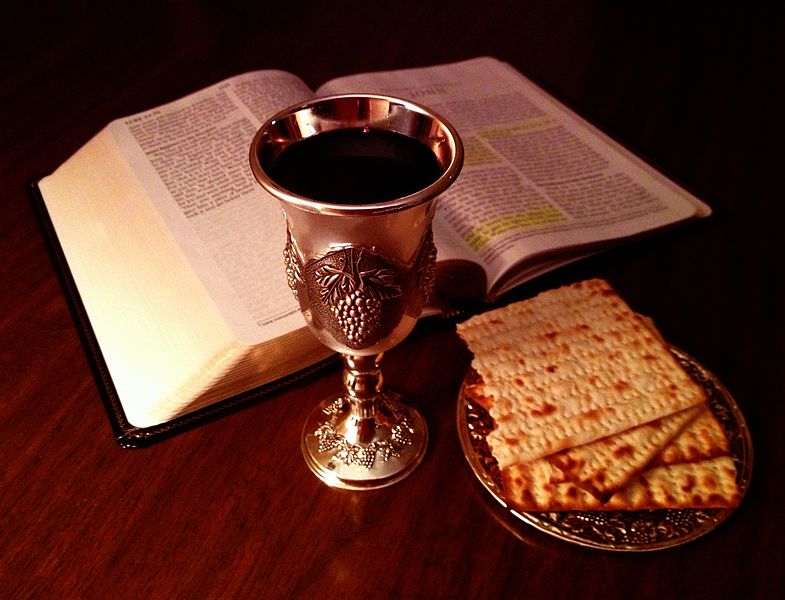
The cup of blessing which we bless, is it not a communion of the blood of Christ? The bread which we break, is it not a communion of the body of Christ? seeing that we, who are many, are one bread, one body: for we are all partake of the one bread (1 Corinthians 10:16-17).

As we come together on the first day of the week to break bread (Acts 20:7), we emphasize that the Lord’s Supper represents the memorial of our Lord’s death (1 Corinthians 11:23-26). This is, indeed, the primary purpose of the Supper. It is good and right for us to gather together on a weekly basis to consider what the Lord suffered so that we could be redeemed and added to His Kingdom (cf. Romans 5:6-11, Titus 3:3-8, Colossians 1:13).

Yet the Lord’s Supper is more than just the memorial of our Lord’s death; it also represents the communion of all the saints, both with the Lord and with each other. The communal aspect of the Lord’s Supper is often neglected but is quite powerful and necessary in its own right.

The Lord’s Supper represents the communion of the saints with their Lord. The church is considered the “body of Christ” (Ephesians 4:4-5; 5:22-33, Colossians 1:18). When Christians partake of the Lord’s Supper, they are to discern the body and blood of Christ in the bread and the fruit of the vine (1 Corinthians 11:29). Thus, it can be said in a figure that the body of Christ partakes of the body of Christ: the church coming together to partake of the Supper. As Jesus says,

Jesus therefore said unto them, “Verily, verily, I say unto you, Except ye eat the flesh of the Son of man and drink his blood, ye have not life in yourselves. He that eateth my flesh and drinketh my blood hath eternal life: and I will raise him up at the last day. For my flesh is meat indeed, and my blood is drink indeed. He that eateth my flesh and drinketh my blood abideth in me, and I in him” (John 6:53-56).

Much violence has been done to this text and many others in gross literalization of the ideas involved. This abuse of what Jesus is trying to say does not, however, mitigate the powerful message that Jesus is sending: we have to consume the Word of God in order to live. This consumption is not physical as much as it is spiritual– learning of God’s word and the practice thereof in life (1 Corinthians 9:24-27, Hebrews 5:12-6:4). Yet, in the Lord’s Supper, we have a reminder of our dependence on God and the basis of our association with Him: the body and blood of His Son, discerned in the bread and the fruit of the vine. The Lord’s Supper represents a physical representation of the communion we enjoy with God in His Son.

The Lord’s Supper also represents the communion that saints share with each other as demonstrated in 1 Corinthians 10:16-17. As 1 Corinthians 11:23-33 indicates, the Lord’s Supper is an individual action done collectively: we each must purpose to assemble to partake of the Supper and we each must individually examine ourselves before we partake. And, as Paul indicates in 1 Corinthians 10:16-17, it is the shared partaking that is such a powerful demonstration of the unity of the faith.

Understanding of the nature of our communion has also suffered because of gross literalization and extremism. Our communion is not dependent on eating the exact same piece of bread, nor is it dependent on eating the bread simultaneously. In 1 Corinthians 10:17, Paul says that “we” who are many are “one bread” because “we” partake of the “one bread,” and he can say this even though he is physically in Ephesus and his audience is in Corinth (cf. 1 Corinthians 16:8).

The unity of our communion, therefore, is realized mostly in our shared practice of coming together on the first day of the week and participating in the Lord’s Supper. This wonderful unity begins while we are engaged in Saturday evening activities when our brethren in Australia and Japan come together to remember the Lord. As we rest during the evening, our brethren in India, Africa, and Europe come together to partake of the one bread. While we are getting ready in the morning, brethren in Brazil do so. After we partake and go about our Sunday afternoon, brethren to our west come together and remember the Lord. As brethren often come back together later on the first day of the week, other saints participate in this communion.

We all may speak different languages, wear different clothing, have different cultures and perspectives on things, but we all come together to partake of the one bread. We all spend some time on the first day of the week focusing on the Lord’s death. It does not matter how wealthy or poor we are, what race or culture we belong to, or any other difference: we are the one bread. We are the People of the Bread and the Fruit of the Vine, according to 1 Corinthians 10:16-17.

We may not always think about these things, but they take place on a weekly basis around the world. It ought to provide us great comfort and encouragement. We are one with brethren throughout the world; we may not know them, and they may not know us, but we have joint participation in the Kingdom through the blood of Christ (1 John 1:7). We demonstrate this by coming together on the first day of the week to partake of the bread and the fruit of the vine.

While 1 Corinthians 10:16-17 shows that our communion is shared with all of our brethren around the world, there is a reason why we partake of the Lord’s Supper as a local congregation of God’s people. The abstract unity of all believers in the faith throughout the world is most concretely realized in the functioning of each local congregation of God’s people, where most of our effort is expended (Romans 12:3-8, 1 Corinthians 12:12-28).

It would be quite difficult to imagine the unity of all the believers in communion if we partook alone and in isolation! In a very concrete way, we demonstrate our shared participation in God’s Kingdom in the local church by coming together and sharing the Lord’s Supper with one another. In so doing, we proclaim our unity. In any given local congregation there are people of different classes, socioeconomic backgrounds, ages, and talents. Yet, in the Lord’s Supper, all partake of the “one bread” and the “cup of the Lord.” This is why, ideally, all the saints will come together on the first day of the week to break bread– to remember the Lord’s death and proclaim His victory, but also to demonstrate our shared unitary faith. As we are one bread, let us partake of the one bread!

Ethan R. Longhenry

Right Preacher For This People | The Voice 16.33: August 16, 2026

posted in: The Voice | 0

The Voice

The Right Preacher For These People

Micah of Moresheth was almost certainly not the kind of prophet or preacher the Judahites wanted. Yet he was called by YHWH to give warning to the people. Whether they would heed the warning or not would be up to them.

The Word of YHWH came to Micah of Moresheth in the days of Jotham, Ahaz, and Hezekiah, kings of Judah (ca. 742-680 BCE; cf. Micah 1:1). The Word of YHWH which Micah saw regarding Samaria pronounced its imminent doom (Micah 1:2-9). Moresheth was a village in southwestern Judah where the Shephelah met the Philistine coastal plains, and Micah had messages of warning for his fellow inhabitants in the Shephelah regarding the destruction and devastation which would soon come despite all the preparations the state had made (Micah 1:10-16).

Yet YHWH, through Micah, did not want the Judahites to be confused at all regarding the reasons why such devastation would come. He pronounced a woe upon those wicked schemers among the wealthy and well-established who would devise calamity while they rested, carrying out their plans in the morning since they had complete power to do so (Micah 2:1). As a result, ancestral inherited lands and property held by the people soon became the property of the most connected and elite among the nobility, and all done through “legal” means which they established to accomplish their purposes (Micah 2:2). On account of these things YHWH was planning disaster against Judah, and they would not be able to escape it (Micah 2:3). Micah imagined the mocking lament raised in taunt against them: they are completely destroyed, and their lands have been sold off to their conquerors (Micah 2:4). They may have gained all kinds of land now, but the day would come on which they would no longer have any descendants to inherit land among YHWH’s people (Micah 2:5; cf. Joshua 15:1-21:45).

At least some of those who heard Micah of Moresheth’s message of denunciation seem to have been less than pleased by it. Micah recorded some level of reaction to him: he should not prophesy in such ways, for they remained confident they would not be overtaken by such humiliation (Micah 2:6). The Masoretic Text in Micah 2:7-10 presents us with many challenges, but it would seem the first portion continues the same theme, suggesting Israelites are saying YHWH’s patience with them would not be exhausted, and He would never allow His people to experience such degradation (Micah 2:7). It would then seem Micah would respond to these Judahites: those who obey YHWH’s commands would find rewards, but they were doing the opposite: they resisted the people of Judah as if enemies by stealing clothing from people, casting out women and children from their homes, and defrauding people of their inheritances (Micah 2:7-9). They would be forced to leave the land, for it was not as secure as they imagined; sin would lead to such devastation (Micah 2:10). Micah then presented his coup de grâce: if a man led by the wind/a spirit would come speaking of wine and beer, he would be the kind of prophet or preacher this people would want to hear (Micah 2:11)!

Micah’s woe and its response can give us a lot of insight into the situation at hand. It remains possible the majority of the people wanted to speak against what Micah was talking about, but more likely he was receiving resistance from the very people doing the kinds of things he was condemning. Those who were on the receiving end of the oppression might well have appreciated what Micah was saying. We can somewhat reconstruct the theology of Micah’s opponents: they maintained great confidence in YHWH as the God of Israel, and expected YHWH as the God of Israel to continue to preserve His people against their enemies and to maintain their standing in the land as they had enjoyed it for innumerable generations to that point. It was inconceivable to them for YHWH to so thoroughly degrade and humiliate His own people: what kind of god would willingly do that? They wanted to find their justification and rationalization for continuing the status quo which was working very much in their favor even if it caused great distress and grief to many others.

Micah 2:11 remains justly famous: the people would love to hear of a man with a certain kind of spirit and who would preach about them. Yes, many would want to hear about wine and beer. But Micah probably has in mind well more than just wine and beer: the “good life,” in which one is able to enjoy wine, beer, probably women, and other luxuries. All those things sound good, fantastic, and fun, but Micah of Moresheth knows what they cost. They enjoy their wine, beer, and other luxuries at the expense of the many they have disinherited in order to build and grow their wealth. Such was not according to the will or purpose of YHWH. Yes, for a moment, they might enjoy all their property they have accumulated. But the time would soon come when an enemy would arise and would dispossess the dispossessors. They had caused grief and ruin; grief and ruin would come upon them. And their enemies, no doubt, would celebrate; their enemies would want to hear a man prophesy of wine and beer. It would be the last thing they would want to hear about on that day.

But this would not be the final word or the end of the situation. YHWH would gather all of the Israelites would remain after these days, and would gather them like a shepherd and multiply them greatly (Micah 2:12). Micah imagined YHWH leading His people, with their king advancing before them, with one having broken them out of the city in which they were held captive (Micah 2:13).

It would all come to pass just as Micah of Moresheth prophesied. The Assyrians would devastate the land, and many of its landholders, in 701 BCE; in 586 BCE, the Babylonians would destroy Jerusalem and the Temple and exile most of its inhabitants. Jesus of Nazareth would suffer, die, and be raised so the people of God could be broken out of their captivity to sin and death. And yet the message of Micah resonates to this day. In almost every land there are the wealthy and well-connected who continue to get the laws made to their advantage so they can obtain the ancestral land and wealth of those less fortunate than they. Many people still would rather hear a lying deceiver of wine and beer rather than a preacher who speak frank, uncomfortable truths of God. Such people might prosper in the moment, but YHWH of Hosts has noticed, and it will be done unto them or their descendants as they did unto others at some point. We all do better to seek the ways of God in Christ through the Spirit, to uphold His justice and righteousness, and obtain salvation in Him!

Ethan R. Longhenry

Bethany to Cana | The Voice 16.32: August 09, 2026

posted in: The Voice | 0

The Voice

From Bethany to Cana

The “disciple whom Jesus loved,” known as John, either John ben Zebedee, the Apostle, or John the Elder, was writing his recollections of his experiences with Jesus so that those who hear or read would believe Jesus is the Christ, the Son of God, and would find eternal life in His name (cf. John 20:31). He began by speaking of the Word of God, the Creator, the life and light of men, who took on flesh and dwelt among us as Jesus of Nazareth (John 1:1-18).

John the Evangelist had spoken of John the Baptist as one sent by God to testify regarding the light and the One who was greater than he (cf. John 1:6-8, 15). John the Evangelist then set forth John the Baptist’s testimony (John 1:19-28). In Bethany beyond the Jordan, where John the Baptist was doing his baptizing, the Jewish leaders asked John whether he was the Christ, Elijah, or the prophet; John denied it all; instead, John would only affirm himself as the voice shouting in the wilderness to prepare the way of the Lord, the fulfillment of Isaiah 40:3 (John 1:19-24). Jesus Himself would later consider John to be the Elijah to come, just as the angel Gabriel had predicted John would come as the Elijah to fulfill the word of YHWH in Malachi 4:5-6 (Matthew 11:7-15, Luke 1:11-18). Jesus’ and Gabriel’s testimony are enough to prove the case; perhaps it was not revealed to John that he was Elijah.

The Jewish religious leaders wanted to understand why John was baptizing if he was not the Christ, Elijah, or the prophet, and it was a good question. Jewish people of the Second Temple Period valued ritual washings highly; the places for such ritual washings, known as mikva’ot, can be found in all kinds of dwellings of this period. A baptism of repentance, however, was not something commanded or even spoken of as part of the Law of Moses or a ritual in Judaism. John baptized because God told him to do so; it would symbolically represent repentance, a changing of the hearts and minds of the people; he looked forward to One coming of whom he was unworthy to even untie His sandal (John 1:25-28).

The next day John the Baptist saw Jesus walking toward him; John then testified to Jesus as the Lamb of God who would take away the sin of the world (John 1:29). Lambs were not the standard offering as sin offerings, but the lamb was the offering made for the Passover which led to the liberation of the Israelites from Egyptian bondage (Exodus 12:1-27). It was revealed to John how Jesus would thus be sacrificed to liberate the creation from its bondage of sin. John testified regarding how he had come believe Jesus was the Chosen One of God: God had told him the One whom he baptized upon whom the Spirit would descend like a dove would be the One who would baptize with the Holy Spirit; lo and behold, when John baptized Jesus, the Spirit descended upon Him (John 1:30-34). Thus John the Evangelist did not directly narrate the story of Jesus’ baptism, but provided John’s testimony regarding that baptism. Furthermore, according to John, Jesus was baptized by the will of God as a sign to John to confirm who He was.

The day after that John the Baptist was standing with two of his disciples, and Jesus again walked by him. John again spoke of Jesus as the Lamb of God, and those two disciples began following Jesus (John 1:35-37). John the Evangelist would then narrate the call of some of the disciples in a whimsical way. One of the disciples was Andrew, brother of Simon; the other disciple is left unmentioned, but since we are reading this story as part of the witness of John the Evangelist, we have reason to assume he is that other disciple. They ask where Jesus is staying, and He said they would see; they stayed with Him for a while, and Andrew then went out to find his brother Simon and told him they had found the Messiah of God (John 1:36-41). Andrew brought Simon to Jesus, and Jesus named him Peter (John 1:42).

The next day Jesus intended to go to Galilee. He saw Philip and called him to follow. Philip found his friend Nathanael and told him how he had found the One whom Moses and the prophets had written: Jesus of Nazareth (John 1:43-45). Nazareth was a very small village in rural Galilee; Nathanael thus asked if any good thing could come out of Nazareth, and Philip told him to come and see (John 1:46). When Jesus saw Nathanael approaching, He spoke of him as an Israelite in whom there was no guile: that is, he has no filter, and said what he thought (John 1:47). Nathanael wondered how Jesus could know who he is; Jesus said he saw Nathanael under the fig tree before Philip called him (and thus, ostensibly, gave indication He knew exactly what Nathanael had said; John 1:48). Nathanael immediately confessed Jesus as the Son of God, the King of Israel; Jesus responded he would see greater things than these, and then evoked Jacob’s ladder, saying they would see heaven opened up and angels ascending and descending on the Son of Man, thus foretelling His death, resurrection, and ascension (John 1:49-51).

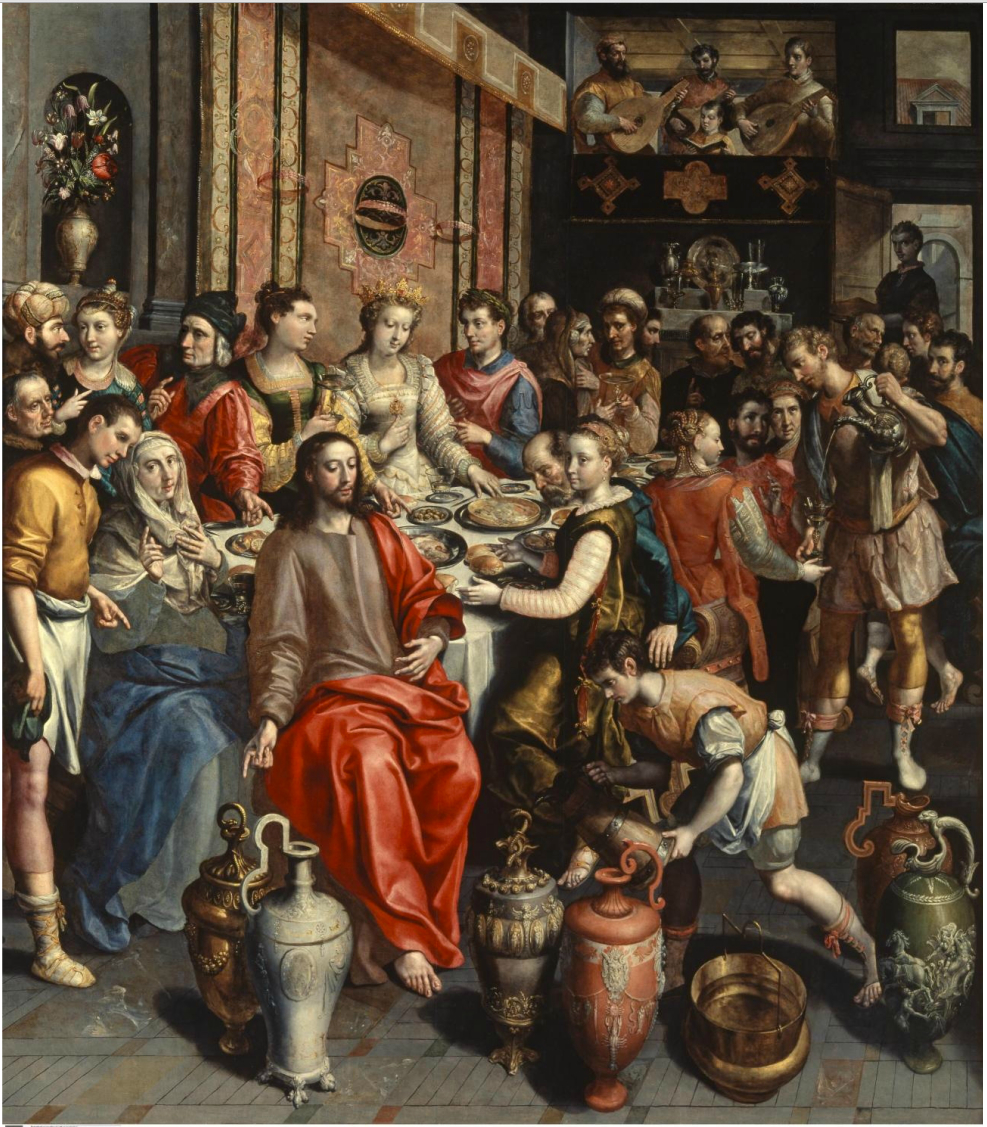
“On the third day,” an idiom indicating a few days later, Jesus and His disciples had made it to Galilee and attending a wedding to which they were invited (John 2:1-2). Jewish weddings were extravagant affairs hosted by the groom’s family and which would last for many days. The host family, however, experienced a scandal: the wine had run out. While we might experience such a situation as embarrassing because of poor planning, the host family would be experiencing it as a shameful demonstration of poverty. Jesus’ mother Mary was at the wedding, and sufficiently well-known to the host family to be able to give commands to the slaves; she told Jesus they were out of wine (John 2:3). Jesus asked her what she wanted from Him, for His time had not yet come; she knew who was His Father and what He could do, but He had not yet begun His active ministry (John 2:4). Mary knew her Son would honor her subliminal request, and told the slaves to do whatever Jesus told them to do (John 2:5). Jesus told them to fill to the brink with water six stone jars of purification: they would be ritually clean, and by virtue of their purpose, would have only held water (John 2:6-8). When the head steward of the wedding tasted the wine, he summoned the host family: for understandable reasons hosts begin feasts with the best wine and reserve wine of lower quality for later after everyone’s taste buds had been dulled; yet the host family had kept the best wine until later (John 2:9-10)! John the Evangelist identified Jesus’ turning the water to wine as His first miraculous sign, and His disciples thus believed in Him (John 2:11). Jesus spent some time with His mother and disciples in Capernaum (John 2:12).

Jesus’ first miraculous sign at the wedding in Cana has caused a lot of difficulties for many who profess to follow Jesus. They have a hard time understanding how Jesus could have done such a thing and enabled people getting drunk. They thus imagine to themselves Jesus would have not really turned the water into wine but alcohol-free grape juice. Such represents a complete misunderstanding of ancient practice and Jesus’ purposes. Greek oinos means alcoholic wine by default; there are some uses of the term to describe grape juice in the process of becoming wine, but such a context is explicitly identified when speaking of oinos in that way. Both Jewish and Greco-Roman people consumed wine in prodigious amounts; it was the standard beverage of the time. They would have consumed wine cut with water; to consume wine uncut was considered barbaric.

No one at the wedding in Cana would have understood Jesus’ behavior as enabling drunkenness or dissipation. Instead, they understood what was at stake. If there was no more wine, there was no more wedding feast. The host family would be shamed and the marriage of the young couple would begin under inauspicious circumstances. By turning the water into wine, Jesus allowed the party to continue. Jesus made much of celebration and festival. When the Pharisees asked Jesus’ disciples why they did not fast, Jesus told them they could not fast while the Bridegroom was present (cf. Matthew 9:14-15). Jesus spoke of His return as the Bridegroom entering the wedding feast (Matthew 25:1-13). One of the seven blessings in Revelation come to those invited to the wedding banquet of the Lamb, which, as we can see from John 1:29, 36, is Jesus (Revelation 19:7, 9). Many in cold, dour, and sterile contexts imagine Jesus to be cold, dour, and without much joy; such is entirely inconsistent with the portrayal of Jesus in the Scriptures. Jesus is the Life of the party. Jesus’ first miracle in John’s Gospel kept the party going. There are indeed circumstances which call for lamentation, mourning, and bitterness; but there are also circumstances which call for excitement, joy, and celebration. Jesus well navigated both; but we do well to never forget Jesus lived, died, was raised, reigns, and will return in order to throw a huge party, and understand Him appropriately.

Thus John the Evangelist narrated how Jesus had gone from Bethany to Cana and the beginning of His active ministry in Israel. May we follow Jesus so we might be able to celebrate with Him for all eternity!

Ethan R. Longhenry

Benefactors | The Voice 16.31: August 02, 2026

posted in: The Voice | 0

The Voice

Benefactors

So Jesus said to them, “The kings of the Gentiles lord it over them, and those in authority over them are called ‘benefactors.’ Not so with you; instead the one who is greatest among you must become like the youngest, and the leader like the one who serves” (Luke 22:25-26).

In Luke 22:24-27, and in its parallel forms in Matthew 20:25-28 and Mark 10:42-45, Jesus responded to His disciples when they were arguing among themselves regarding who was the greatest. They believed much was at stake in this argument: as Herod’s court or the Roman imperial court would have maintained a strict hierarchy of people in relatively higher or lower positions of power and influence, so they imagined Jesus’ Kingdom would feature the same. They all wanted to have high places of influence and position and therefore power. Jesus felt compelled to intervene and devastate all such aspirations. He openly recognized how such was exactly the way the rulers of the nations exercised power over others, but it would not be so among those who would be Jesus’ disciples. Instead, Jesus called His disciples into a paradox: in Luke’s account, the greatest must become like the youngest, and the leader as one who serves (Luke 22:26). Such entirely upset the existing social and power hierarchies, for the youngest and servants were not reckoned as exalted into high positions. Jesus offered Himself as the model: He sat at table among them, and yet He served them, and so they should serve one another (Luke 22:27).

Luke added a detail to Jesus’ instruction not found in either Mark or Matthew: in Luke’s account, Jesus spoke of how the Gentiles in authority are called euergetai, or “benefactors” (Luke 22:25). The term literally means “good-doer”; certain rulers in the past were recognized with the term as an epithet, such as Ptolemy III Euergetes or Antiochus VII Euergetes. Yet the term also spoke to an entire system which had developed in the Greco-Roman world in which Jesus lived, which some today call euergetism: the expectation people in positions of power and stature would give some of their resources to benefit the poor or the people in general. We likely even have an example of a Christian participating in this kind of effort in the world: an inscription was found in the pavement of Corinth which read, “Erastus, in return for his aedileship, paved it at his own expense,” and this Erastus is often associated with Erastus the city treasurer/aedile in Romans 16:23.

We are not here to condemn Erastus for conducting himself according to the expected behavior of a Roman aedile in the middle of the first century. But it is worth noting how Jesus has brought economic matters into His critique of the exercise of power in the world. It was not just that the kings of the Gentiles lorded their power over people. They also wanted to be seen and known as benefactors, as doing good because they gave some of their resources to fix or enhance infrastructure, to feed the poor, to put on shows, and the like.

We might well wonder: is there really a problem with doing good for other people? Why would Jesus condemn the rulers for fixing or enhancing infrastructure or feeding the poor? The problem was not in what they did; the difficulty was in the hierarchy they were attempting to maintain in the process.

The Roman world was rigidly hierarchical; everyone knew their place in it, or would be quickly reminded thereof. There were rigid social classes often defined by levels of wealth. To be a benefactor meant one had the financial resources to give generously; such a person was most likely of the highest social classes. It was a moral obligation of the time for such people to thus give, and they absolutely expected to receive the appropriate honor and acclaim from the masses for their beneficence. According to the way they set things up, they would continue to profit on the basis of the domination and exploitation of their social inferiors. They would then use a small part of their wealth to provide some benefit to at least some of those social inferiors, and expected to receive due celebration and honor for doing so. They would thus be known as benefactors and justify their wealth and standing because they were benefactors, and everything would continue on as it had before. The system would expose itself whenever it was upset: nothing would be so humiliating for a benefactor than to find himself no longer as a benefactor, but as one needing benevolence. And few things would prove as socially revolting to the Roman elite than seeing freedmen or peasants somehow gaining wealth and attempting to become benefactors themselves.

Jesus did not live under any kind of delusion: this was the way things worked in the world. But it was not supposed to be so among Jesus’ disciples. Christians were supposed to treat one another very differently. And Christians were supposed to treat one another very differently because in His life, death, resurrection, ascension, and lordship, Jesus destroyed and devastated the very thing which animated this system in the world:

There is neither Jew nor Greek, there is neither slave nor free, there is neither male nor female – for all of you are one in Christ Jesus (Galatians 3:28).

All Christians are supposed to be one in Christ Jesus: in Christ, none are any greater or lesser than anyone else. God may have blessed some with more skills than others; all remain equal in standing and value before the Lord Jesus. And, yes, some maintain higher social standing, or have more financial resources, than others do; yet all remain equal in standing and value before the Lord Jesus. Because we have equal standing and value before the Lord Jesus, we recognize all the blessings and gifts God has given to us as individuals should be used to serve one another (cf. 1 Peter 4:10). From those who have received more from the Lord Jesus, more is absolutely expected, and so those who abound in the Lord should give to those who are in need (Luke 12:48, 2 Corinthians 8:1-9:15). Christians, therefore, should absolutely provide benevolence to fellow Christians in need (Galatians 2:10, 6:10). And yet, at the same time, there should be no room made or given for the “benefactor” or his attitude, as the Lord Jesus has warned us in Luke 22:25.

How can that be? What would be the difference? The “benefactor” gives out of moral obligation to justify himself and his elevated social position. The “benefactor” wants to be seen as the social superior to those to whom he provides these resources, and he expects to receive due deference and honor because of it. The “benefactor” can only really give, not receive, for in so doing he would be socially degraded in his own estimation.

There can be no room for these attitudes in Christ. Jesus does not want any of us to give out of some kind of obligation; He would have us give freely and liberally, not by way of commandment, but out of our genuine love and compassion for one another (2 Corinthians 8:1-9:15). In Christ, the one who gives is not superior to the one who receives; instead, the one who gives humbly confesses how all they have to give they have really received as blessings from God, and also expect the time will come when they will find themselves in need (2 Corinthians 8:9, 14, 9:10). In Christ, Christians may give thanks to God and commend the generosity of fellow Christians who give to those in need, but no Christian has any business expecting deference and honor because of their giving, since in so doing they are simply serving their fellow Christians with some of the benefits God has given them (2 Corinthians 9:11-14, 1 Peter 4:10).

As Christians, therefore, we must soberly consider ourselves and how we approach matters of giving and benevolence. We do best when we give out of our love and compassion for our fellow Christians, esteeming them as fellow Christians of equal value and standing before the Lord Jesus Christ. If we can only imagine ourselves as the ones giving and never the ones receiving, and cast aspersions or look down upon those who receive, we must immediately repent of such foolishness before the Lord Jesus humbles us because of our arrogant presumption. If our motivation to give is to be seen as one who gives and therefore in a morally or spiritually superior position to others, we must immediately repent of such foolishness before the Lord humbles us because of our arrogant presumption. If we expect to gain some level of power or prominence among the Lord’s people because of what we give financially, we must immediately repent of such foolishness before the Lord humbles us because of our arrogant presumption.

Our rulers today may go by different titles; “benefactors” are now called philanthropists; the social hierarchy may not be as rigid today but certainly perseveres. The world has always worked in these ways, and will continue to do so until the Lord returns. While the rulers of the world dominate and exploit and want to be seen as benefactors for the little bit they give back to others, it must not be so among us. Christians are not called to take over the rule of the world from the rulers or to demolish the customs and hierarchies of the nations; but Christians are called to embody a different spirit and follow a different way of life in their Lord Jesus Christ. Whatever social hierarchies might exist in the world must not, and should not, enter into the assemblies of the people of God. We are all equal in standing and value before the Lord Jesus, and we should act like it not only in terms of how we treat each other in matters of power and authority, but also in terms of how we relate to one another in our benevolence. There is no room in the Kingdom for “benefactors” who give in order to maintain a position of social standing above others. There is room only for Christians who humbly want to give to their fellow Christians in love and compassion in Christ. May we well reflect and embody the values of the Lord Jesus Christ in His Kingdom and before the world, and share in the grace of God in Christ through the Spirit so we might share in the resurrection of life!

Ethan R. Longhenry

Our Iniquity Falls on Him | The Voice 16.30: July 26, 2026

posted in: The Voice | 0

The Voice

Our Iniquity Falls on Him

It was another sunny day in the desert. An important official from Africa, the treasurer of Kandake of Ethiopia, had come to prostrate himself before YHWH God of Israel and was on his way to Gaza to sail home. As he traveled he was reading from the prophet Isaiah and was perplexed and challenged by what he was reading.

He was led as a sheep to the slaughter / and as a lamb before his shearer is dumb / so he openeth not his mouth.
In his humiliation his judgment was taken away / His generation, who shall declare? / For his life is taken from the earth.

We may not know whether this official was a descendant of Jewish people in exile or was a proselyte, but he is an astute student of the sacred writings. As he reads this section of Isaiah he wonders whether the prophet is speaking of himself or someone else. He is not the first to ask these questions; he would not be the last.

For generations many Israelites sought to make sense of Isaiah’s prophecies about the Servant (Isaiah 42:1-9, 18-25, 49:1-13, 50:4-11, 52:13-53:12). Of all the “servant songs” the most vexing proved to be Isaiah 52:13-53:12. Isaiah has been speaking to the Israelites who experienced the exile in Babylon (Isaiah 40:1-51:23, ca. 605-539 BCE); having established that Jerusalem and Zion would be populated again (Isaiah 52:1-12), he again speaks of the Servant and what the Servant would do for Israel. The servant will be exalted and wise and yet marred in the sight of mankind; kings will be astonished at what He reveals (Isaiah 52:13-15). Isaiah wonders who will hear the message and see what God has revealed; the Servant grew up like a plant in dry ground and had no physical stature or appearance that would suggest anything great; He was despised, afflicted, and was not esteemed (Isaiah 53:1-3).

Surely he hath borne our griefs, and carried our sorrows / yet we did esteem him stricken, smitten of God, and afflicted.
But he was wounded for our transgressions / he was bruised for our iniquities / the chastisement of our peace was upon him / and with his stripes we are healed.
All we like sheep have gone astray / we have turned every one to his own way / and YHWH hath laid on him the iniquity of us all.
He was oppressed, yet when he was afflicted he opened not his mouth / as a lamb that is led to the slaughter, and as a sheep that before its shearers is dumb, so he opened not his mouth.
By oppression and judgment he was taken away / and as for his generation, who among them considered that he was cut off out of the land of the living for the transgression of my people to whom the stroke was due?
And they made his grave with the wicked, and with a rich man in his death / although he had done no violence, neither was any deceit in his mouth (Isaiah 53:4-9).

Isaiah set forth the Servant’s experiences in Isaiah 53:4-9. Isaiah speaks of the Servant, the “he,” and also “my people,” the ones for whom the Servant endures these experiences, most often spoken of as “we” (including the prophet himself?; Isaiah 53:4-9). The Servant was afflicted with suffering: the people considered him smitten by God, stricken, and afflicted (Isaiah 53:4). His suffering and affliction did not come from illness but at the hands of others, for he was abused, and led away to suffer on account of oppression and judgment (Isaiah 53:7, 9). The Servant was wounded (Hebrew meholel, primarily “killed,” but can mean “wounded,” perhaps denoting a mortal wound; cf. Ezekiel 26:15, 30:24), crushed, chastised, and whipped (Isaiah 53:5). The Servant endured this suffering without resistance, like a sheep remaining quiet before his sharers or a lamb led to the slaughter he does not open his mouth (Isaiah 53:7) The Servant did not survive the experience; he was cut off from the land of the living, buried among the wicked and with the rich (Isaiah 53:8-9).

Why did the Servant have to endure such experiences? Isaiah speaks of the Servant’s ordeal throughout in terms of vicarious suffering, because he makes it clear that the Servant had done nothing wrong and did not deserve this treatment (Isaiah 53:9). The people have gone astray like sheep, with each having turned to his own way; they deserved to suffer affliction (Isaiah 53:6,8). Yet it is the Servant who carried the grief and sorrows of the people; his wounds, chastisement, stripes, and death were for their transgressions and iniquities (Isaiah 53:4-5, 8). The people receive healing and peace through the Servant’s suffering (Isaiah 53:5). Therefore the Servant suffers affliction and death so that the people do not; they deserved suffering and death, but the Servant experienced it on their behalf (Isaiah 53:4-9).

Yet who is this Servant? To what time or circumstance does Isaiah refer? The Ethiopian official is an astute student of the prophet, for his question gets to the heart of the interpretive difficulty for Jewish people of the Second Temple Period: to whom does the prophet refer—himself or someone else? Is he reflecting on a contemporary experience or will the situation he envisioned take place in the future?

While many have advanced the theory that the prophet himself is the Servant, and reflected upon the purposes of his suffering before it happened, such is highly unlikely. The apocryphal Martyrdom of Isaiah suggests that Isaiah was killed by Manasseh by being sawn in two; perhaps the Hebrew author alludes to Isaiah in Hebrews 11:37. But even if Isaiah were martyred there is no evidence to suggest that it was understood to be for the sins of the people; Isaiah’s audience in Isaiah 52:13-53:12, by common confession, are Israelites who would live long after his death anyway.

Some have advanced the theory that the Servant is Israel, the period of affliction and suffering as the Exile, and the Gentiles as “beneficiaries.” One could perhaps understand “the Servant” as really representing a nation; Israel certainly suffered during the exile. Nevertheless, in Isaiah 53:8-9, the Servant dies; Israel persevered and returned to its land after the exile. Furthermore, the continued prevalence of judgment oracles against the nations mitigates against the idea that Israel’s suffering would “atone” for the Gentiles (e.g. Zechariah 14:1-21). The Servant is not to be primarily understood in terms of Israel.

The Servant has been most often understood as a person who suffers for the people; “the people” is understood primarily in terms of Israel. The Greek translator of Isaiah in the Septuagint recognized the Servant would suffer for the sins of his people and emphasized it, translating “sins” for “grief” in Isaiah 53:4 and “the Lord gave him up for our sins” for “YHWH laid on him the iniquity of us all.” He, among many others in the Second Temple period, envisioned a man who would suffer affliction for the benefit of God’s people Israel.

So who would this Servant be? The Ethiopian official was about to find out. He had asked his question of a man named Philip, and we are told that from this Scripture Philip began proclaiming to the official about Jesus of Nazareth (Acts 8:26-35).

Before Jesus began His ministry, John the Baptist, through the Spirit, called Jesus the “Lamb of God, who takes away the sin of the world” (John 1:29). While the lamb is also a powerful element of the Passover, and Jesus is in many ways the “Passover lamb” (cf. John 13:1, 1 Corinthians 5:7), the Passover lamb was not sacrificed to atone for Israel, but to secure her liberation and election (Exodus 12:1-32). The Servant of Isaiah 53:4-9, on the other hand, would suffer and die for the sins of the people, and he is spoken of as a lamb led to the slaughter (Isaiah 53:4). Thus Jesus of Nazareth was already being identified in terms of the Servant in Isaiah even before He had begun to work!

Jesus of Nazareth considered Himself the suffering Servant of Isaiah 52:13-53:12 as well. He spoke of Himself as the Son of Man who must suffer all things foretold in Scripture (Mark 9:12, Luke 9:22); He understood that His life would be given as a ransom for many (Matthew 20:28). Just before His betrayal Jesus made it known that He was overwhelmed with grief and sorrow (Mark 14:34; cf. Isaiah 53:4). When it was all over Jesus opened the minds of His followers to understand the Scriptures, and that included how the Christ would suffer and die (Luke 24:44-46). While Psalm 22 does speak of the suffering of God’s Chosen One, Jesus no doubt also has Isaiah 52:13-53:12 in mind.

Even Jesus’ opponents spoke of His role as the suffering Servant! In John 11:49-51, Caiaphas, a high priest, prophesied through the Spirit that it was more expedient for one man to die for the people than for the entire nation to die. John as the Evangelist went on to explain how Caiaphas was prophesying that Jesus would die for the nation of Israel, but not only Israel, but for all God’s children scattered abroad (John 11:52-53). On what basis would such a prophecy make sense? Only in terms of the suffering Servant in Isaiah 52:13-53:12.

The Evangelists, the authors of the Gospels, also clearly understood that Jesus was the suffering Servant of which Isaiah had spoken. Matthew quotes Isaiah 53:4 as (at least partly) fulfilled in Jesus’ ministry of healing, taking away disease and infirmity (Matthew 8:16-17). All four explicitly make mention of and highlight precisely how Jesus suffered as the Servant of Isaiah 52:13-53:12 would suffer. Jesus endured grief and sorrow in the Garden of Gethsemane (Matthew 26:37-28, Mark 14:33, Luke 22:44; Isaiah 53:4). He was then led away to suffer the oppression of a sham trial (Matthew 26:57-66, Mark 14:53-64, Luke 22:66-71, John 18:19-24; Isaiah 53:8); during that trial, and his trials before Herod and Pilate, the Evangelists note how He did not open His mouth (Matthew 26:63, 27:12-14, Mark 14:61, 15:5, Luke 23:9, John 19:9; Isaiah 53:7). He was abused, mocked, and rejected by the soldiers of the Jewish religious authorities, the Roman soldiers, and the Jewish people (Matthew 26:67-68, 27:27-31, 39-44, Mark 14:65-66, 15:16-20, 27-32, Luke 22:63-65, 23:11-12, 23:35-39, John 19:2-4; Isaiah 53:2-4). Roman soldiers scourged, or whipped, Jesus (Matthew 27:26, Mark 15:15, John 19:1; Isaiah 53:5). The Romans crucified Jesus next to two insurrectionists (Matthew 27:38, Mark 15:27, Luke 23:32-33; Isaiah 53:9). After His death Jesus was buried in the tomb of Joseph of Arimathea, a wealthy man, in his new rock-cut tomb (Matthew 27:57-61, Mark 15:42-46, Luke 23:50-53, John 19:38-41; Isaiah 53:9). In all the particulars, and in quite striking and compelling ways, Jesus of Nazareth demonstrably fulfilled all of what Isaiah had said about the suffering Servant.

Jesus had promised His Apostles that they would be His witnesses; they would soon proclaim the good news (i.e. Gospel) of Jesus’ life, death, resurrection, and lordship. As they preached the Gospel the Apostles made explicit connections between Jesus and the suffering Servant of Isaiah 53. Peter spoke of Jesus as the Servant of God (Acts 3:13, 26), and that He had suffered just as God had foretold by the mouth of His prophets (Acts 3:18); the allusions to the Servant of God who would suffer for the people would not be lost on the Jewish people to whom Peter preached. As we have seen above Philip preached Jesus to the Ethiopian official (or eunuch) based on Isaiah 53:7-8 (Acts 8:26-40).

Peter would later write the following in his first letter to encourage his fellow Christians:

For what glory is it, if, when ye sin, and are buffeted for it, ye shall take it patiently? But if, when ye do well, and suffer for it, ye shall take it patiently, this is acceptable with God. For hereunto were ye called: because Christ also suffered for you, leaving you an example, that ye should follow his steps: who did no sin, neither was guile found in his mouth: who, when he was reviled, reviled not again; when he suffered, threatened not; but committed himself to him that judgeth righteously: who his own self bare our sins in his body upon the tree, that we, having died unto sins, might live unto righteousness; by whose stripes ye were healed. For ye were going astray like sheep; but are now returned unto the Shepherd and Bishop of your souls (1 Peter 2:20-25).

Here Peter thoroughly enmeshes allusions and quotations of Isaiah 53:4-9 with the sufferings of Jesus: the Servant would suffer, be reviled, and bear our sins; Jesus accomplished these things. Peter identifies the Christians to whom he writes, some of whom may have been of physical Israel but many others certainly were not (cf. 1 Peter 2:8-10), as those who had been going astray like sheep, healed by the stripes suffered by the Servant (cf. Isaiah 53:5-6). Through Jesus’ fulfillment of all that Isaiah had said about the Servant, Peter is able to establish a robust theory of atonement: Jesus bore the sins of all people on the cross, allowing those who would trust in Him the opportunity to die to sin and live to righteousness, and find healing in Jesus.

Peter would not be the only Apostle or early Christian to ground his theology of atonement in Jesus’ vicarious suffering for others as the prophesied Servant in Isaiah. Throughout the Revelation given him John describes Jesus primarily as the Lamb that had been slain, and in whose blood the saints are cleansed (Revelation 5:6, 8, 12, 12:11, etc.). The Apostle Paul understood all people, both Jews and Gentiles, as having turned aside from God (Romans 3:9-12; cf. Isaiah 53:6); he speaks of Jesus as offering Himself as the propitiation for our sins through His blood (Romans 3:24-25); Jesus is said to have died for people while they were sinful, weak, and ungodly, demonstrating God’s great love (Romans 5:6-11). Paul, like Peter, understood that through Jesus’ death Christians die to sin so they can live to righteousness (Romans 6:1-23; cf. 1 Peter 2:20-25). Paul went so far as to say that God made Jesus sin who knew no sin so we could become God’s righteousness in Him (2 Corinthians 5:21); Jesus is thus seen as a sin offering, but strongly evoking the suffering Servant of Isaiah 53:4-9 who knew no sin and in whose mouth no deceit was found yet who died for the sins of his people.

The Hebrew author devoted much of his treatise to the analysis of Jesus as the high priest in the order of Melchizedek, ruler and priest, and how Jesus’ death on the cross atoned for sin (Hebrews 4:14-10:18). The Hebrew author grounded his understanding of Jesus as high priest in the order of Melchizedek in Psalm 110:4 and based on Melchizedek’s example in Genesis 14:17-24, expected the new covenant on account of Jeremiah 31:31-34, compared Jesus’ sacrifice to the animal sacrifices found in Leviticus, and understood Jesus’ supremacy over animal sacrifices, in part, through Psalm 40:6-8. And yet on what basis would the Hebrew author ever be able to say that the blood of bulls and goats could not actually take away sin and look for a sinless human to offer Himself as the atonement for sin (cf. Hebrews 9:1-14, 10:4)? Jesus learned obedience in the things He suffered (Hebrews 2:18, 5:8); He did not sin (Hebrews 4:15). The expectation for a human being to suffer affliction and die, not for their own sin or wrongdoing, but for the sins of others, can only be found in Isaiah 52:13-53:12.

Ever since Christians have been struck by the power of the description of the suffering Servant of Isaiah 53:4-9 and its fulfillment by Jesus of Nazareth. Jesus died a miserable, wretched death; if He is the Son of God, and God is love, how could God allow Jesus to suffer so horrendously? Indeed, if there were another way to accomplish salvation that did not involve Jesus’ death on the cross, then God would be rightly denounced as a monster and the greatest child abuser for what He compelled Jesus to endure. Instead the Gospel proclaims that God actually demonstrates His love for us through Jesus’ death, for He proved willing to countenance the intense suffering of His Son so that humans could receive forgiveness of sins through His blood (John 3:16, Romans 5:6-11, 8:31-39).

Yet why did Jesus have to endure it? Humans have sinned, and the penalty of sin is death (Romans 3:23, 6:23). For God to remain just, the established penalty for sin must be paid; if it is not paid by those who sinned, it must be paid by someone who would suffer the penalty on their behalf. Such is why God established the sacrifice of animals for Israel: through it the Israelites would understand that life is in the blood, and for a guilty life to receive cleansing and atonement, an innocent life must pay that penalty of death, represented by the sacrifice of the animal and the shedding of its blood (Leviticus 4:1-7:36, 16:1-34, 17:11). Yet, in the divine economy, the blood of bulls and goats could not really atone for sin, since they did not offer themselves of their own free will, for they have no understanding so as to make free will decisions (Hebrews 10:4).

What could be done about this conundrum? Isaiah is given revelation about the Servant who had done no wrong and yet suffered and died; His suffering and death were understood to atone for the sins of the people (Isaiah 53:4-9). This Servant, and only this Servant, could really provide forgiveness of sins for the people, not only of Israel, but all mankind. Isaiah prophesied it; John recognized it in Jesus; Jesus claimed it for Himself; the Apostles proclaimed Jesus as the Servant; the Hebrew author made good theological sense of why it would happen so. Thus Jesus, the Son of God and the Son of Man, lived a sinless life, and thus could suffer and die, paying the penalty of death for sin so that everyone who had sinned could be reconciled back to God the Father through His life manifest in His blood.

The Ethiopian official, having heard Philip preach Jesus on the basis of the suffering Servant of Isaiah 53:7-8, immediately saw the connection and the fulfillment of what the prophet had spoken. He asked to be baptized into the Lord Jesus; having received it, he went away rejoicing (Acts 8:36-39). All people everywhere can share in the official’s reason for rejoicing, for Jesus of Nazareth is the Servant of whom Isaiah prophesied, the Lamb who took away the sins of the world, the One whose blood could atone for sin, for our iniquity fell on Him. May we ever praise and glorify God for the matchless demonstration of His love for us through Christ Jesus and serve Him in His Kingdom!

Ethan R. Longhenry

Works Consulted

Blenkinsopp, Joseph. The Anchor Bible: Isaiah 40-55. New York, New York: Doubleday, 2002.

North, Christopher R. The Second Isaiah. London, England: Oxford University Press, 1964.

Witness Against the People | The Voice 16.29: July 19, 2026

posted in: The Voice | 0

The Voice

YHWH’s Witness Against the People

The Word of YHWH through Micah of Moresheth would not feature many pleasantries. From the beginning it reflected the witness of YHWH against His people in Samaria and Jerusalem. Its fulfillment would not take terribly long.

The Word of YHWH came to Micah of Moresheth in the days of Jotham, Ahaz, and Hezekiah, kings of Judah (ca. 742-680 BCE; cf. Micah 1:1). Moresheth was a village in southwestern Judah where the Shephelah met the Philistine coastal plains. Micah, therefore, was not a prophet of the city, but from the rural hinterlands. At the time Micah began prophesying, much had been consistently the same for generations; when everything prophesied in Micah 1:2-16 would find its fulfillment by the end of the eighth century BCE, the Kingdom of Israel would be no more, and the Kingdom of Judah would be thoroughly ravaged. If all Israel and Judah had to go on were historical trends and their own foreign policy schemes, it would be understandable why they might have been taken off guard by what would befall them in the last third of the eighth century BCE. Yet the prophets Amos and Hosea had warned them, and Isaiah and Micah were warning them, regarding what YHWH was about to do.

The Word of YHWH through Micah began with a summons for all the nations and the inhabitants of the earth: YHWH had His accusation which He would make against them (Micah 1:2). YHWH was about to come down from His dwelling place; He would crush the mountains and the valleys would split apart like wax before fire and water poured down a steep slope (Micah 1:3-4). These powerful images presented YHWH as on the march, bringing forth judgment among the nations. This judgment was coming about on account of Israel and Judah: Micah identified Samaria as the “transgression of Jacob,” and Jerusalem as the “high places of Judah,” most likely considering them as places for idolatry and sin (Micah 1:5). Judgment, therefore, was coming for Samaria and Jerusalem.

Micah would begin with the condemnation of Samaria. YHWH would turn Samaria into a heap of ruins, a place better fit for vineyards than urban habitation (Micah 1:6). The valleys around Samaria would be filled with her ruins; the foundations of buildings would be exposed; her idols would be smashed to pieces or melted down (Micah 1:6-7). Micah expanded on the last with a visceral indictment: the metal idols came from the metal coins of prostitutes, and would again be made into coins and become the pay of prostitutes once more (Micah 1:7). Micah declared he would lament and wail and strip naked because of these things, embodying the great grief and experience of exile which would come upon the Israelites as a result of these things (Micah 1:8). Micah lamented how the wound or disease of Samaria was incurable, and it had spread to Judah and the gate, or more specifically the rulers, in Jerusalem (Micah 1:9).

Micah 1:6-9 seems to represent the totality of what Micah would see regarding Samaria; this oracle likely represents the first one given by YHWH to Micah, and would make sense as given in the waning days of Jotham king of Judah in the early 730s BCE. At any rate, the prophecy would have been uttered before Shalmaneser V/Sargon II besieged and captured Samaria ca. 722/721 BCE, fulfilling the general sentiment of what YHWH had spoken through Micah (cf. 2 Kings 17:3-6, 18:9-11). The Assyrians, Babylonians, and Persians in turn would use Samaria as an administrative center. The city would be razed to the ground in a rebellion against Alexander the Great and would be rebuilt by Macedonian colonists. Thus Samaria would eventually be destroyed and would no longer be inhabited by Israelites or many Samaritans; its idols were smashed and melted down just as YHWH promised through Micah.

Micah then turned to address many of the villages and cities of the Shephelah of Judah in ways which featured a lot of assonance and performative evocation of idioms and themes with which his local audience would be familiar. The news should not be spread in Gath, and no tears should be shed (Micah 1:10; cf. 2 Samuel 1:20). In Beth Leaphrah (“House of Dust”) they should mourn in the dust (Micah 1:10). Those in Shaphir (“Pleasant”) should pass by in nakedness and humiliation (Micah 1:11). Those in Zaanan (“go out”)…did not; they have not escaped (Micah 1:11). Beth Ezel (“house of proximity”) would mourn, having been despoiled (Micah 1:11). Those in Maroth (“bitter”) hope for good, but disaster would come against Jerusalem (Micah 1:12). Those in Lachish (“team,” as in “team of horses”) should hitch horses to chariots in preparation; Lachish served as sin for the daughter of Zion, for Israel’s sin was found in her (Micah 1:13). Lachish would have to bid farewell to Moresheth Gath (“possession of the winepress,” believed to be Moresheth, Micah’s home town; Micah 1:14). Achzib (“place on the dried up river”) would prove as disappointing as a dried well for Israel’s kings (Micah 1:14). Mareshah (“conqueror”) will be attacked by a conqueror (Micah 1:15). As David had escaped and found refuge in a cave at Adullam, so the glory of Israel would go to Adullam (Micah 1:15; cf. 2 Samuel 22:1). Micah concluded this section of his oracle with a painful, biting exhortation: they should shave their heads in mourning for their beloved children who would be taken from them into exile (Micah 1:16).

What is Micah attempting to accomplish in Micah 1:10-16? We do well to remember whereas the Word of YHWH to Micah concerns Samaria and Jerusalem, he remains Micah of Moresheth (Micah 1:1). Many imagine or assume he delivered his oracles in Jerusalem, but the text does not require it. Even if he did have a message he would deliver in Jerusalem, we should not be surprised to find more local concerns at hand. Micah is a man of the rural hinterland living on the periphery of the Judahite world.

And the area in which Micah of Moresheth lived very likely saw intense military expansion and build-up during his age in preparation for possible invasion by foreign powers: the Philistines, Arameans, Israelites, or yes, even the Assyrians. These would be the “front line” communities who would first suffer in any major conflict so as to protect Jerusalem, the political and economic center of the Kingdom of Judah. And it would come to pass: Sennacherib king of Assyria began his Levantine campaign of 701 BCE along the coast, taking Sidon, Ashkelon, and Ekron by force; he then turned toward the Kingdom of Judah, and having just defeated the Philistines, his natural avenue toward Jerusalem would have begun with these villages and cities of the southwestern portion of the Judahite Shephelah. The siege and conquest of Lachish was viscerally preserved on a series of reliefs displayed in Sennacherib’s palace in Nineveh and now found in the British Museum. It would all be made a waste as Sennacherib moved on toward Jerusalem.

Therefore Micah of Moresheth gave voice to the upcoming disaster which would befall his fellow Judahites in the southwestern portion of the Shepelah. Sure, for the king and his entourage in Jerusalem, it would make a lot of sense to militarily reinforce the Shephelah to protect Jerusalem. In the process, however, his subjects in the Shephelah would suffer the full force of Assyrian might and power. We understand how YHWH would preserve Jerusalem from Sennacherib’s armies, but Lachish and all the other locations in the Shephelah mentioned in Micah 1:10-18 did not prove as fortunate: they were wiped out, with men no doubt slaughtered, and women and children enslaved and exiled (cf. 2 Kings 18:18-19:37).

All of these things might have sounded far-fetched, or perhaps even impious, in the early 730s BCE. By 721 and 701 BCE, however, they had become the bitter, harsh reality for Israelites and Judahites after YHWH’s judgment came against them in the form of the mighty armies of the Assyrians. We do well to meditate upon the fulfillment of the Word of YHWH through Micah regarding Samaria and parts of the Judahite Shephelah. Warnings of judgment and condemnation may seem far-fetched, outlandish, and even impious; how could God treat His favored people in such ways? And yet it has happened before, many times; and it could still happen today. Who knows when God will again come down from His dwelling place to crush the mountains and split the valleys and render His judgments against the nations and inhabitants of the world? May we faithfully serve God in Christ through the Spirit and entrust ourselves to Him!

Ethan R. Longhenry

John and the Word | The Voice 16.28: July 12, 2026

posted in: The Voice | 0

The Voice

John and the Word

He had experienced astounding, amazing, and wonderful things. His time on earth was growing short; perhaps encouraged by those who honored him, but certainly prompted by the Spirit of God, he would record his witness so many more might gain insight from his experiences.

Who is he? He did not come out and explicitly name himself. He identified himself as “the disciple whom Jesus loved” (John 20:20-24). Christian tradition considers this disciple to be “John.” “John” is a common name in Second Temple Judaism: there is John the Baptizer, who came before Jesus; John ben Zebedee, brother of James, an Apostle; and early Christians also spoke of “John the Elder.” Our author is generally associated with either John ben Zebedee or John the Elder. Peter and this “disciple whom Jesus loved” were the ones who ran to the tomb when Mary Magdalene reported it empty (cf. John 20:2-8). In the book of Acts Luke recorded how Peter and John ben Zebedee would visit the Temple together (cf. Acts 3:1): thus, John ben Zebedee might be the “disciple whom Jesus loved.” Papias of Hierapolis, who lived from 60 to 130, considered John the Elder the author of the Gospel and Letters of John as well as Revelation. Good arguments, therefore, can be made for either.

Whichever John wrote this Gospel did so as an eyewitness of these events which so transformed him, and he wrote so that people who heard it might believe Jesus is the Christ, the Son of God, and would have life in His name (John 20:31).

Where did John decide to begin his Gospel? Naturally, he chose the beginning; yet not the beginning we might imagine. John began before the beginning with the Word (Greek Logos). The Word was in the beginning; the Word was with God; the Word was God; all things were created by and through Him; the Word was life; the Word was the light of mankind (John 1:1-4).

There was no end of philosophical speculation regarding the Logos in the first century world, but John was no philosopher. John was attempting to communicate the profound mystery which he had encountered. The Scriptures testified to how God made all things by speaking them into existence (Genesis 1:1-2:3); the Psalmist provided confidence such was no mere rhetorical flight of fancy (Psalm 33:6-9). Moses had told Israel how YHWH had fed them with manna so they might learn how people do not live by bread alone but by everything which proceeds from the mouth of God (Deuteronomy 8:3).

Thus we can understand John’s witness in John 1:1-4. By what means did God create all things? Through speaking His Word. What provided life for every created thing? God’s Word. What created thing sustains all life? The energy which comes from light. And so the Word of God is life and light.

The beginning of John’s Gospel, therefore, is the beginning of all things, the beginning of the revealing of God, for his Gospel testified to this Word who created and spoke all such things. John will continually evoke these themes throughout his Gospel.

We speak of light as a source of energy but also light as a source of illumination, or understanding; its contrast, darkness, would bring death, and would represent a source of confusion and ignorance. The story of humanity might lead one to conclude that the forces of darkness have overcome the light; but John testified to the contrary. The light of the Word has shined in the darkness, but the darkness has not overcome it (John 1:5).

John then introduced his first witness. God sent a man, John (the Baptizer); he testified regarding the Light to come (John 1:6). He readily confessed he was not the light; he wanted people to be ready to believe in the true Light who was coming to give light to all (John 1:7-9).

John then lamented how this Light, the Word, came into the world which had been created through Him, yet it did not recognize Him (John 1:10). For that matter, He had even come to His own people, the Jewish people, the people of God, did not receive Him (John 1:11). Yet John had experienced and knew the promise: those who received Him by believing in Him were granted the right to become children of God, not by genealogy, parentage, or any other human means, but by God (John 1:12-13).

John then simply declared the most profound expression of this great mystery: this Word – the Means of creation, the Life, the Light – became flesh and dwelt, or “tabernacled,” among mankind. John and those who were with him saw His glory, the glory of the One and Only Son of God, full of grace and truth, who had come from the Father (John 1:14).

How could it be? How can the magnitude of divinity be confined to a human body? We do not know; we likely cannot know. Yet our inability to know does not mean it did not happen.

The Incarnation of the Son of God thus remains one of the most profound mysteries and essential tenets of the Christian faith. The Word becoming flesh (as Jesus of Nazareth, whom John will not identify by name until John 1:17) truly is the miracle which leads to all other miracles, as C.S. Lewis attested. Unless Jesus was born, He could not die; if He could not die, He could not be raised from the dead. Everything Jesus will do flowed from His Incarnation.

John’s language remains quite deliberately chosen and maintains a powerful effect. In the Wilderness YHWH made provision for Israel to create and erect a tent, known as the Tabernacle; in the Tabernacle YHWH would maintain His Presence among His people Israel (cf. Exodus 40:34-38). The Tabernacle was retired when the Temple of Solomon was built (cf. 1 Kings 8:1-11), and the Presence of God remained in that Temple until it departed in the days of Ezekiel (cf. Ezekiel 10:1-22). After the exile the Jewish people returned and built another Temple, yet no one ever testified they saw the Presence of God return to it. Yet YHWH did return to Israel as He had promised; He did so by taking on flesh and tabernacling among them as Jesus of Nazareth!

John and his associates perceived His glory. They experienced the power and majesty of God working through Him. They had every confidence in His promise that they would receive the glory of God if they remained faithful to Him (cf. Romans 8:17-18).

John then returned to the testimony of John the Baptizer, for he spoke of how the One who would come after him was greater than him because He existed before him (John 1:15). Ostensibly John waited until here to provide this testimony because it would be otherwise difficult to understand how the One who came after the Baptizer had existed before him.

John then testified how he, his associates, and likely his audience had received all kinds of gifts, grace upon grace, from His fullness (John 1:15). The Law came through Moses; grace and truth came from this Word made flesh, whom John now names as Jesus Christ (John 1:16). “Christ” is Jesus’ title: the Anointed One, the king. It is not as if grace and truth were entirely absent from the Law of Moses, or that in Christ there are no commandments. Instead John spoke of framing and emphasis: Israel had been given the Torah and the Torah defined the covenant between God and Israel, but now our lives in faith are defined by Jesus. Gifts come through Jesus; Jesus is the embodiment of the truth.

John then confessed how no human had ever seen God (John 1:18). No human being has ever perceived the fullness of God with any of the five explicit senses, nor could anyone. Yet John testified how Jesus, the Word made flesh, who is God and in fellowship with the Father, has made God known (John 1:18).

Thus John concluded what is deemed the “prologue” of his Gospel. He has set the tone and the framework for all which would then be related. We can understand how and why John was completely transformed by his experience of Jesus of Nazareth. He had encountered God in the flesh, communicating all the relevant characteristics of God, the embodiment of the means by which God created and sustained all things. John had heard the words of God as his ancestors had heard for untold generations; but John would then be able to experience the embodiment of God’s Word and could share in Him and follow after Him. And now he invites all of us to learn of Jesus, the Word made flesh, so we might also share in Him, follow after Him, and find life in His name!

Ethan R. Longhenry