
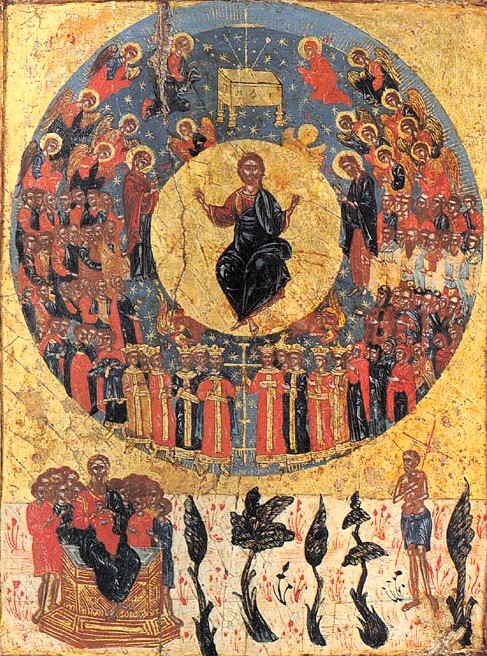

The Gospel and the End
The good news of the life, death, resurrection, ascension, lordship, and imminent return of Jesus of Nazareth, the Son of God, is not over. The story has not yet reached its conclusion; such is why we have continually spoken of Jesus’ imminent return, since it has yet to take place. God has proven faithful; therefore, we maintain great confidence He will continue to prove faithful and Jesus will return as God has promised. We can maintain a similar confidence in how the return of Jesus will be aligned and consistent with the story of His life, death, resurrection, ascension, and lordship, and will not prove the repudiation of any or all of what God has accomplished in Christ.
We must say such things because the eschaton, the end, when the Lord Jesus returns as promised, has proven to be one of the great lightning rods of controversy, disputation, and dissension among the people of God and in society in general. Early presumptions about Jesus’ return caused great distress and grief among the Thessalonian Christians, and the people of God have been distressed and given reason for consternation about such speculations ever since (cf. 1 Thessalonians 4:13-5:11, 2 Thessalonians 2:1-12).
When we approach matters of eschatology, we do well to remain humble: we do not wish to become as those whom we critique and become dogmatic regarding matters we do not, and cannot, fully understand. We do well to insist on those matters on which the Apostles staked the Gospel, and be charitable in disagreements regarding matters where we put all the witness of Scripture together slightly differently or provide emphasis on different matters.
The Apostles strongly insisted on the expectation of Jesus to return to judge the living and the dead according to what they did while in the body. While in the flesh Jesus spoke of the judgment to come in passages like Matthew 25:1-46; the angels solemnly promised Jesus would return in the same way He ascended in Acts 1:10-11. Paul affirmed the judgment to come in Acts 17:30-31, Romans 2:5-11, 2 Corinthians 5:11, 2 Thessalonians 1:6-9; James expected a judgment to take place as well in James 2:12-13, as did the Hebrews author in Hebrews 10:26-31, Peter in 1 Peter 4:5-6, Jude in Jude 1:13-15, and John in Revelation 20:11-15.
Likewise, Jesus and the Apostles also strongly insisted on the expectation everyone would experience either the resurrection of life or resurrection of condemnation on that day of judgment. In light of Daniel 12:1-2, Jesus spoke of the day of the resurrection of life and condemnation in John 5:28-29. Paul staked the legitimacy of the faith on Jesus’ resurrection from the dead in 1 Corinthians 15:1-20, and went on to likewise insist on the future resurrection of believers in 1 Corinthians 15:21-58. Philippians 3:21 should leave no one in confusion: Paul expected Christians to be raised from the dead bodily and transformed to become like Jesus in His resurrection body, a prospect we can also see from John in 1 John 3:1-2.
In this way all will go to their eternal destinations: those who were condemned will experience the “second death,” given over to their desires to be separated from God and thus alienated from the Source of light and life (Matthew 13:47-50, 2 Thessalonians 1:6-9, Revelation 20:11-15). Those who will be saved will be those found in Christ or justified by Christ on the day of judgment; they will receive unimaginable glory from the Father and will dwell in the presence of God forever where all will be made right and new (Romans 8:15-23, 2 Corinthians 4:14-5:11, Revelation 21:1-22:6).
Jesus and the Apostles have also assured us of how many would come to sow confusion regarding these matters in various ways but all for ungodly reasons. Some would suggest the day of the Lord Jesus had already come and the resurrection has taken place, as some did to the Thessalonian Christians in 2 Thessalonians 2:1-2 and Hymenaeus and Philetus went about preaching according to 2 Timothy 2:17-18. In our day some suggest the destruction of Jerusalem was the only “day of the Lord” imagined in the New Testament, thus suggesting the resurrection is spiritual and has already taken place. In this way such advocates perpetuate the gangrenous type of false teaching like that of Hymenaeus and Philetus, and they should be marked and rebuked accordingly. Others would come and suggest the exact opposite premise: the Lord Jesus would not return in the way He ascended, since everything continues as it always has, as seen in 2 Peter 3:2-4 and likely Jude 1:18 as well. Many might well feel justified in this posture: it has been almost two thousand years since Jesus ascended to the Father, about as much time as passed between Abraham and Jesus! This kind of scoffing undermines confidence in the Lord’s judgment and return and would encourage less than godly behavior. Instead, we do better to maintain our confidence in God’s faithfulness, patience, and kindness, knowing how a thousand years is as one day to God just like one day is as a thousand years to Him (2 Peter 3:8). The Bridegroom is taking longer than anyone might have expected; we do best to make sure to have as much oil as possible to wait for Him (cf. Matthew 25:1-13).
Much of the consternation, confusion, and disputation that takes place regarding the Lord’s return has far less to do with Jesus’ actual final return and much more to do with the imagined events which would lead to that event. The nature of the thousand years, or “millennium,” expressed in the vision of Revelation 20:1-10 has been argued about and disputed ever since it was shown to John by God in Christ. For the past two hundred or so years, however, the various types of stories concocted under the premises of dispensational premillennialism have proven unduly popular, instigating wave after wave of eschatological interest, confident declarations of the return of Jesus, looking out for the Antichrist or the signs of the “rapture,” locking successive generations into a paradigm of expecting great devastation and violence to accompany the return of the Lord Jesus Christ.
It is not for us at this time to go into great detail regarding the distorted decontextualization of Scripture and the great violence done to the text in order to come up with the stories regarding the supposed “rapture,” “tribulation,” “Antichrist,” and other such aspects of dispensational premillennialism; we encourage you to visit A Study of Denominations: Plymouth Brethren for such an investigation. Instead, we would like to ask how the narrative presented according to the various theories under the umbrella of dispensational premillennialism proves consistent in any way, shape, or form with the good news of Jesus’ life, death, resurrection, ascension, and lordship. The violence, bloodthirstiness, utter disregard for the creation and its value, and many other elements of the presentation of dispensational premillennialist theories may thrill the hearts of red-blooded Americans, but such is not how we have learned of the Christ who suffered such violence and degradation. God will vindicate His people who have suffered injustice, oppression, and persecution on the final day, and He will establish His justice and righteousness (Romans 12:19-21, 1 Peter 4:9). But it will be consistent with, and not contrary to, how God has established His purposes in Christ.
Ever since Jesus ascended there have been people predicting exactly when and how they believe Jesus will return. Almost every major political figure has been called the Antichrist by someone or another. People have claimed Jesus was going to return on date after date after date, and yet we are all still here. This does not mean Jesus is not going to return. Instead, it shows how foolish and stubborn people have proven, unwilling or resisting listening to the words of the Lord Himself, how he promised that the day and the time of His return is known only to the Father (Matthew 24:36). If we try to stand up and claim to know when Jesus is coming back, or confidently declare how a series of events needs to happen first, and of course how all those events are all leading up to events taking place in our own lifetimes, then we will more likely than not end up looking as foolish as all of those who have done so in the past, and will be made as ashamed as they were and are.
Neither the Lord nor the Apostles have left us without guidance regarding these matters. Contrary to dispensational premillennialist Christology and ecclesiology, God’s purposes in Christ are not awaiting the restoration of Israel according to the flesh and a series of events which look like a more “literal” or concrete fulfillment of the prophets; instead, God is restoring Israel through what He already has accomplished in Jesus’ life, death, resurrection, ascension, and lordship, and the church is the Israel of God (Galatians 6:16). We do not need to look for a series of events to take place, for all which was necessary has already taken place. On some day in the future, whether tomorrow or in another few thousand years, Jesus will descend again as He ascended, and all will be judged and share in the resurrection of life or of condemnation (1 Thessalonians 4:13-18). We are not called to live in constant anxiety about the prospect of that day, nor should we be dulled into complacency and spiritual stupor because it has not yet arrived; Jesus and the Apostles have called upon all of us to remain prepared and vigilant, relationally one with God and His people in Christ, ready whether the Lord returns tomorrow or well after our earthly lives have ended (Matthew 24:38-25:13, 1 Thessalonians 5:1-11).
God is faithful, and has demonstrated His faithfulness in Jesus’ life, death, resurrection, ascension, and lordship. We have every reason to believe God will do what He said He will do, and on the day He has appointed, Jesus will return and all will share in the resurrection, whether of life or of condemnation. The end will not prove the repudiation of the Gospel, but its ultimate fulfillment. Everything God intended to accomplish in Jesus will have reached its satisfaction, and the people of God will share in His glory and presence forever in eternal life. Maranatha! Amen! Come, Lord Jesus!
Ethan R. Longhenry



Leave a Reply