
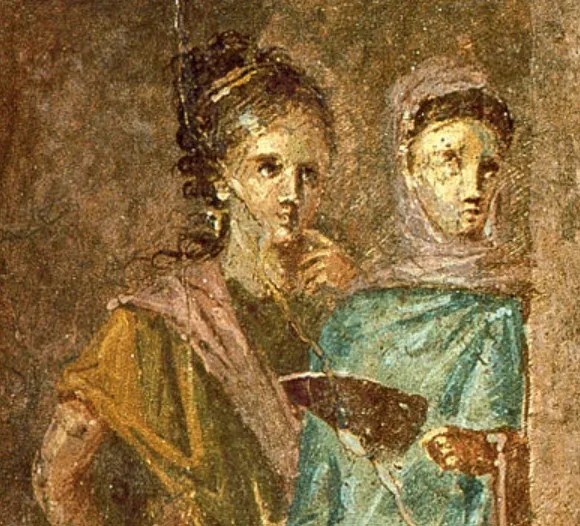

Agreement in the Lord
I appeal to Euodia and to Syntyche to agree in the Lord. Yes, I say also to you, true companion, help them. They have struggled together in the gospel ministry along with me and Clement and my other coworkers, whose names are in the book of life (Philippians 4:2-3).
Wherever there are people, there will be interpersonal conflicts. Sometimes it is manifest who is more in the “right” and more in the “wrong,” and sometimes not. Sometimes the best thing to do is to “bury the hatchet” and work for peace.
Philippi was a Roman colony in Macedonia (part of modern Greece); Paul first visited the area and preached Jesus around 51 (cf. Acts 16:11-40). Paul wrote to the Christians in Philippi most likely around 60-61 from Rome while living under house arrest there (cf. Philippians 1:1). In Philippians 1:1-26, Paul thanked the Philippian Christians for their joint participation in his work, prayed for them to abound in love and act wisely, and reported as favorably as possible regarding his circumstances. Paul then established his primary exhortation: they should live as faithful citizens of the Gospel together and suffer for Him well (Philippians 1:27-30). Paul then argued and reasoned on the basis of his primary exhortation (rhetorically called the probatio): the Philippian Christians should share the same mind and seek the best interests of one another, rooted in the example of Jesus in His humiliation and exaltation, as they saw embodied in himself, Timothy, and Epaphroditus, and to resist any “Judaizing” teachers and tendencies while striving to obtain the resurrection in Christ and to well represent their heavenly commonwealth/citizenship (Philippians 2:1-4:1).
Paul then turned to address a very specific situation in the Philippian church: he encouraged or appealed to Euodia and Syntyche to agree in the Lord (Philippians 4:2). He endorsed “Syzygus,” the “true yokefellow” or “true companion,” to help them (Philippians 4:3). He did commend Euodia and Syntyche (and perhaps the “true yokefellow” as well) as sunelthesan, “fellow strugglers” in the Gospel; he provided the same commendation to Clement and some others as sunergon, “fellow workers,” all of whom have their names in the book of life (Philippians 4:3).
Almost everything about this situation has attracted a lot of speculation over the years. We do well to humbly confess how little we actually know regarding what was transpiring in Philippi in this situation: after all, we are reading other people’s mail, and only one piece of the correspondence at that. We can maintain complete confidence in the Philippian Christians as knowing exactly what was going on between Euodia and Syntyche, their standing and work within the congregation as well as the identity and standing of “Syzygus,” Clement, and likely the other fellow workers Paul had in mind. We, however, do not, and we should be careful about how much we are willing to suggest in these matters.
Nevertheless, we can draw some conclusions with some confidence based on what Paul has revealed in Philippians 4:2-3. “Euodia” means “prosperous journey” and Syntyche means “fortunate”; both are Greek names, and we do have good evidence for the presence of some prominent Greek families in Philippi. Philippi might be a Roman colony, but it remained in Greece, and it would have been difficult to imagine Philippi remaining predominantly Roman in that kind of environment.
Euodia and Syntyche are both women; the KJV rendering of Euodia as “Euodias” remains without warrant. Euodia and Syntyche have a lot of prominence within and influence upon the church in Philippi; we cannot otherwise make sense of why Paul would feel both comfortable and compelled to directly and explicitly call them out and encourage them to agree in the Lord otherwise. Whatever the nature of their contention or disagreement, Paul held both women in high regard, characterizing them in ways which strongly suggest they worked actively in ministry with Paul during his time in Philippi. Many have spoken of Euodia and Syntyche as “leaders” among the Christians in Philippi; some have imagined them as among the “overseers” to which Paul wrote in Philippians 1:1, or have gone so far as imagining each woman was overseeing or in some other form of leadership in two different house churches which were therefore now in some kind of competition or disputation with each other or something of the sort. While such exercises might work to expand the imaginative horizons, none of them come with any concrete, substantive evidence to commend them. The Philippian Christians know the situation; we do not. Therefore, we will leave the situation as we can best understand it: there were two Christian women among the Philippians, Euodia and Syntyche, who had worked diligently with Paul in the work of ministry in the Gospel and who maintained sufficient prominence as to warrant Paul’s explicit interjection into the midst of their disagreement.
What was the nature of their disagreement? We know even less about this than about the women themselves. We can imagine all kinds of possibilities: perhaps one of them said something about or to the other which was misunderstood and the situation escalated. Maybe they disagreed about some matter of liberty before God. Maybe it was a situation which came about relatively recently; maybe they never got along all that well, and something happened which made it all worse. But again, all of this is entirely speculative: we are told nothing about the nature of what happened, only that Paul wants both of them to “be of the same mind in the Lord” (Philippians 4:2). We trust the situation is primarily interpersonal, did not involve unrepentant and pervasive sinfulness, and neither woman was teaching in ways contrary to the Gospel which they had received from Paul (cf. Romans 16:17-18, 1 Corinthians 5:1-13, Galatians 1:6-9).
But we can know the disagreement between Euodia and Syntyche was affecting far more Christians than just Euodia and Syntyche, because Paul explicitly called them out by name and wanted them to come to an agreement in the Lord. This was not Paul’s standard way of handling situations like these; many times we are left wondering who he might be talking about, because he often handles situations in correspondence obliquely, likely so as to not add to the shame or hurt feelings of those involved (e.g. 2 Corinthians 2:5-11, 7:8-13). Naming Euodia and Syntyche meant to call out the situation publicly, which means the situation was most likely already quite public. Considering the prominence of Euodia and Syntyche, and the proximity of the Philippian Christians to the situation, perhaps no Christians among them felt comfortable or authorized to adjudicate or mediate in the situations. It is an assumption Paul had heard about the whole situation from Epaphroditus (cf. Philippians 2:25-28), but the assumption is not unreasonable; it would also not be unreasonable to imagine the Philippian Christians charged Epaphroditus with bringing a report of the situation to Paul so he might be able to speak some word about the situation. Again, how Paul found out and how it was presented to him is not explicitly revealed and remains speculative. But we do know Paul was made aware, and Paul felt it needed to be addressed publicly.
Paul was not going to take a side. He simply encouraged both Euodia and Syntyche to “be of the same mind in the Lord,” very consistent with all he had been encouraging for all the Philippians to do throughout Philippians 1:27-4:1. In the eyes of some commentators, this situation between Euodia and Syntyche was so significant as to be what Paul had in mind throughout the letter every time he encouraged the Philippian Christians to work together and be of the same mind in the Lord. While such is possible – and even if it were not as significant, it would certainly be on Paul’s mind as he wrote Philippians 1:27-4:1 – we should also take care lest we blow up the situation all beyond proportion. Paul addressed the situation in two verses and provided as much commendation for the women as exhortation. He has worked long and well with Euodia and Syntyche, and has all confidence they will work their situation out. At this point in time, neither woman is either “in the right” or “in the wrong”; perhaps neither woman had ever really been in either of these positions. Their ability to work together in the Lord remained far more important and precious than whatever it was which was dividing them at the moment. Both women needed to reconcile with each other.
Paul did not expect this to happen without any kind of intervention; such is why he encouraged the “Syzygus” to help them in Philippians 4:3. While some translations and versions transliterate the Greek term, as here, to suggest it as a name like “Euodia” or “Syntyche,” we have no other evidence of anyone being named “Syzygus.” Especially since the word has the adjective gnesie (“genuine” or “true”) connected to it, we understand it better as a description of an otherwise unnamed person (probably a man): the “true yokefellow,” “true companion,” or “faithful fellow worker.” Again, Paul did not explicitly identify who this was, but we can have every confidence the Philippian Christians would all know regarding whom Paul was speaking. Many have speculated that Epaphroditus himself was the “Syzygus” Paul had in mind, and there would be much to commend this conclusion: he was well regarded by Paul and the Philippian Christians, had recently spoken with Paul, perhaps about these matters, and was manifestly sufficiently trusted by the Philippian Christians themselves since they had sent him with their financial gift to Paul (cf. Philippians 4:18). While Paul may have provided oral encouragement to Epaphroditus in terms of this task, this commendation was written for the benefit of the Philippian Christians so they would perceive and understand how Paul had commissioned him in this work and so they should accept and support him in doing so (especially Euodia and Syntyche themselves!).
Paul commended Euodia and Syntyche (and “Syzygus” perhaps as well) as fellow strugglers in the Gospel and as fellow workers, and as having their names in the book of life (Philippians 4:3). These are strong forms of commendation and recognition of joint participation in the work of the Lord, consistent with Romans 16:1-4 and similar passages. In the resurrection we can ask all of them regarding their work together in the Gospel. The “book of life” imagery is found elsewhere in Revelation (e.g. Revelation 3:5, 20:12, 15, 21:27, 22:19); its presence here testifies to the prevalence of the metaphor for those presently saved as recognized before God in Christ in heaven.
One other worker is called out by name in Philippians 4:3: Clement. Nothing else is ever said about this Clement in any other passage of Scripture. “Clement” is a Latin name, and there is evidence of its use in Philippi around this time. In antiquity, some early Christians considered this Clement to be the same Christian as the Clement who would become one of the elders of the church in Rome and the author of the letter from the church in Rome to the church in Corinth which we now call 1 Clement (cf. Eusebius, History of the Church 3.4.10). Clement was a fairly common name in the Roman world, however; while it remains possible the Clement Paul commended in Philippi would later become the Clement who became an elder in Rome and the author of 1 Clement, it is far more likely they are two different Christians who happened to share the same name.
As we have seen, all kinds of discussion and speculation have attended to Paul’s exhortations to and commendations of Euodia, Syntyche, and some of the Philippian Christians in Philippians 4:2-3. These discussions and forms of speculation often tell us much more about us than about these faithful Christians in the days of Paul. Nevertheless, we can appreciate how Paul felt compelled to address the situation while remaining confident the situation would be resolved well to the glory and honor of Jesus. All of this attests to the strong relationship Paul had with Euodia, Syntyche, and to many other Christians in Philippi, and should encourage us in our labors for the Lord. We also do well to make sure we agree in the Lord and to encourage Christians who have some kind of interpersonal disputes to resolve them and work well together to glorify Jesus. May we also be proven as struggling together for the Gospel and faithful fellow workers in Jesus whose names are written in the book of life, and may we share in the resurrection of life with Euodia, Syntyche, and our fellow Christians in the church in Philippi on the day when the Lord Jesus returns!
Ethan R. Longhenry




Leave a Reply