
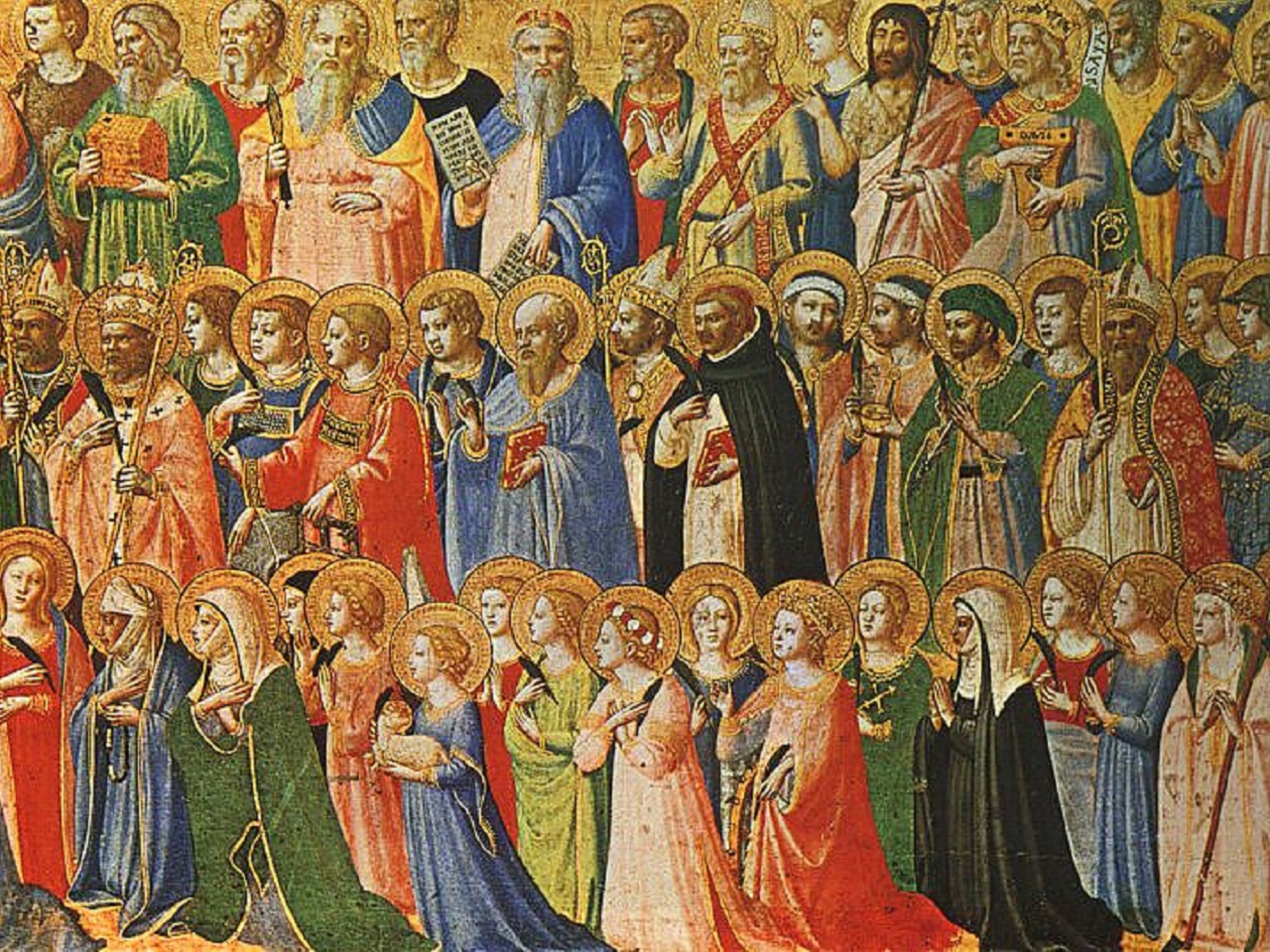

The Heavenly Commonwealth
Be imitators of me, brothers and sisters, and watch carefully those who are living this way, just as you have us as an example. For many live, about whom I have often told you, and now, with tears, I tell you that they are the enemies of the cross of Christ. Their end is destruction, their god is the belly, they exult in their shame, and they think about earthly things.
But our citizenship is in heaven – and we also eagerly await a savior from there, the Lord Jesus Christ, who will transform these humble bodies of ours into the likeness of his glorious body by means of that power by which he is able to subject all things to himself.
So then, my brothers and sisters, dear friends whom I long to see, my joy and crown, stand in the Lord in this way, my dear friends! (Philippians 3:17-4:1)
The Philippians valued their Roman citizenship and their standing as a Roman colony. Paul, therefore, did well to remind the Philippian Christians how they represented another commonwealth from a different source and a different Ruler to which they should maintain their ultimate allegiance.
Philippi was a Roman colony in Macedonia (part of modern Greece); Paul first visited the area and preached Jesus around 51 (cf. Acts 16:11-40). Paul wrote to the Christians in Philippi most likely around 60-61 from Rome while living under house arrest there (cf. Philippians 1:1). In Philippians 1:1-26, Paul thanked the Philippian Christians for their joint participation in his work, prayed for them to abound in love and act wisely, and reported as favorably as possible regarding his circumstances. Paul then established his primary exhortation: they should live as faithful citizens of the Gospel together and suffer for Him well (Philippians 1:27-30). Paul then argued and reasoned on the basis of his primary exhortation (rhetorically called the probatio): the Philippian Christians should share the same mind and seek the best interests of one another, rooted in the example of Jesus in His humiliation and exaltation, as they saw embodied in himself, Timothy, and Epaphroditus (Philippians 2:1-30).
Paul’s encouragement of the Philippian Christians to imitate his example in Philippians 3:17 may make us uncomfortable today, yet it represents both a common and expected rhetorical move in the context of his day as well as the appropriate conclusion of all he had spoken in Philippians 3:1-16: he had come to reckon the basis of his earthly standing within Judaism as trash in comparison to knowing Christ and sharing in His resurrection, a goal which he had yet to attain. The Philippian Christians should do likewise, as Paul would soon reinforce. But it was not just about Paul: they should imitate any example of those who well served Christ among them and from what they could see from Paul’s associates (Philippians 3:17).
We would do well, in fact, to reconsider our discomfort or even distaste at the idea of encouraging imitation. As social creatures, humans learn and behave much more on the basis of imitation than truly independent thinking. We should wonder less about whether we imitate other people and focus more on considering whom we should imitate. We should look toward faithful Christians after whom we can pattern our lives, and cultivate and develop a robust, mature faith which would be worthy of others to imitate and follow.
Paul certainly did not want the Philippian Christians, or anyone else, to imitate the examples of those who have become the enemies of the cross of Christ (Philippians 3:18). Paul described the end of such people as destruction, their god as their belly, their glory as their shame and their focus as on earthly things (Philippians 3:19). Paul did not say such things with glee or joy, but through many tears (Philippians 3:18).
But who, in particular, might these “enemies of the cross of Christ” might be? Paul had warned the Philippian Christians about the “dogs,” “evil workers,” and “flesh mutilators,” his less than endearing descriptions of prospective “Judaizing” Jewish Christians from Judea, in Philippians 3:1-3ff. Many believe these are the enemies regarding which Paul warned in Philippians 3:18-19, and would understand Paul as seeing them condemned, describing their focus on dietary restrictions as making a god of their belly, their circumcision as glorying in their shame, and their valuation of the customs of Moses as their focus on earthly things. It is certainly possible for Paul to have such “Judaizing” Jewish Christians in mind, but if so, his condemnation here would go well beyond anything he had written before to the point of standing at variance with other things he had written. He had never thus degraded the Jewish standing and practices of Jewish Christians; he told the Galatian Christians how neither circumcision nor uncircumcision counted for anything in Christianity (Galatians 5:6). Paul’s descriptions would prove a bit more apt for any Gentile Christian who would have heeded the message of the “Judaizers,” submitted to circumcision, and began honoring the customs of Moses than for the “Judaizing” Jewish Christians themselves.
On their face, Paul’s descriptions would seem to better describe a good number of the people of the nations who continued to serve their ancestral gods, many of whom would have been neighbors of the Philippian Christians who actively resisted the Gospel and its proclamation. Condemnation of those who did not obey the Gospel of Christ can be seen in Romans 2:5-11, 2 Thessalonians 1:6-9, and many other passages; people of the nations served the desires of the flesh, and would thus make a god out of their belly, participated in all kinds of shameful deeds in which they celebrated, and did not give much regard for spiritual matters. And yet Paul has not previously spoken at all regarding the libidinous pagans among whom the Philippian Christians lived.
In order to resolve these challenges, some have suggested Paul had some “Gnosticizing” Jewish believers in mind, those who held to the customs of Moses but were exploring the belief systems which elevated the value of the spirit and held the physical creation in contempt which would become quite popular in decades and centuries to come. But we do not have a lot of evidence for this belief system maintaining this kind of presence and strength in the 60s.
There is therefore no one easy answer to the identity of the specific “enemies of the cross of Christ” to which Paul referred. In the end, we do not need to posit one coherent set of opponents throughout Philippians 3:1-19; it would not be the first time Paul would provide exhortations to avoid a variety of difficulties which might come from different quarters yet all potentially influencing the Christians at once (e.g. Colossians 2:1-22). For that matter, it would also not be the first time Paul would bring up a challenge or concern seemingly out of nowhere, at least in contextual terms (cf. 2 Corinthians 6:14-7:1). We can affirm how the “Judaizers,” at least in what they desired for Gentile Christians, were opposing the work of Christ on the cross, and also affirm how the Philippian Christians would also see a lot of behavior contrary to God and His purposes in Christ in the people of the nations all around them, and to resist them and their influence.
Instead, Paul declared, Paul and the Philippian Christians had a politeuma in heaven, from which they eagerly awaited a Savior, the Lord Jesus Christ (Philippians 3:20). When the Lord Jesus Christ would return, He would transform the “body of [their] humiliation” so it might be conformed to the “body of His glory” by the same power by which He has subjected everything to Himself (Philippians 3:21).
Greek politeuma in Philippians 3:20 is generally translated as “citizenship,” which is what the term would come to mean, although evidence for it used as such in the middle of the first century is not strong. The term was also used to describe a colony, and this use would have had great meaning for the Philippian Christians since they lived in a Roman colony. “Colony” has some associations which do not seem to be in view here, as also would be true of “constitution.” Perhaps “commonwealth” would be the best way of understanding what Paul had in mind: a kind of state in which Paul and the Philippian Christians participated.
In more modern contexts, Philippians 3:20-21 is often used as an appeal toward an escapist kind of perspective; this was not at all Paul’s purpose in context. Yes, the origin of the “commonwealth” in which Paul and the Philippian Christian shared was heavenly, its Savior was presently in heaven, and yet they eagerly waited for their Savior to come to them more than for them to go to Him.
Paul thus described his confidence in Jesus’ return and the resurrection of believers in powerful detail in Philippians 3:21 after having waxed eloquently regarding the resurrection as his ultimate goal in Philippians 3:10-14. The enemies of Jesus might have the end of destruction, the belly as their god, their shame as their glory, and their mind on earthly things, but the Philippian Christians should have eternal life as their goal, God in Christ through the Spirit as their God, their mind on the heavenly commonwealth, and their glory as the transformation of the body subject to corruption, sin, and death which would be conformed to Jesus’ glorified resurrection body on that final day. The Philippian Christians should not have to wonder how God could do such a thing: God would raise the dead by the same power by which all things have been made subject to the Lord Jesus Christ. Therefore, if Jesus is Lord, then the body can be raised and transformed in glory for immortality!
Paul spoke thus in Philippians 3:20-21 in order to bring his probatio, the presentation of evidence regarding his main argument, to its conclusion, which he had begun all the way back in Philippians 2:1. This probatio was based on the propositio, or a kind of thesis statement, which he affirmed in Philippians 1:27-30: the Philippian Christians should live worthily as citizens of the Gospel of Jesus. To this end, Philippians 3:20 provides the finishing statement affirming this thesis: Paul encouraged the Philippian Christians, all of whom lived in a Roman colony and at least some of whom were likely Roman citizens, to privilege their allegiance to Jesus, His purposes, and His Kingdom. At no point did Paul suggest or expect the Philippian Christians to renounce their Roman citizenship, if they possessed it, or to somehow depart from Philippi. Paul himself was a Roman citizen, and he not only did not reject or renounce that citizenship in the name of Jesus, but in fact leveraged the privileges of his Roman citizenship so he might preserve himself and preach the Gospel in Rome (cf. Acts 22:22-29, 25:9-12). Therefore, yes, the Philippian Christians would continue to live in a Roman colony. Many of them would remain Roman citizens. But their Soter, Savior, a term Paul rarely used in his letters to churches, was not Augustus or Nero Caesar (who would frequently use that kind of term in their propaganda). Their Soter was the Lord Jesus Christ. To this end, they should live worthily as citizens of Jesus’ heavenly commonwealth, even and especially when those commitments would stand at variance with what Rome might desire from them.
Thus, the Philippian Christians should persevere and stand firm in Jesus Christ and His ways despite whatever kind of opposition or resistance they might experience, whether from Jewish Christians from Jerusalem, from those who would tempt them to again participate in various forms of idolatry or immorality as they had before they learned of Jesus, or from various authorities who might find them seditious because of their commitment to the commonwealth they shared in Jesus. And this is precisely what Paul told the Philippian Christians to do in Philippians 4:1, again speaking of them with great affection, twice calling them his dear friends, considering them his joy and stephanos, or laurel crown wreath of victory in an athletic contest, and whom he longed to see (Philippians 4:1).
We do not live in the Roman colony of Philippi. Nevertheless, we also have our share in the heavenly commonwealth; we should eagerly await our Savior, the Lord Jesus Christ, and maintain our confidence in the resurrection of our bodies when He returns. We are not called to renounce the citizenship of the nation in which we dwell, but we likewise must privilege our allegiance to Jesus’ heavenly commonwealth, and do well to live worthily as citizens of the divine Kingdom. We also do well to stand firm in the way of Jesus, imitating those who exemplify Him well, and resist anyone who would have us conform to the customs of Moses or who would justify and tempt us to participate again in the behaviors which would lead us to condemnation. May we uphold our commitment to Jesus’ heavenly commonwealth, eagerly waiting for Him to return so we might share in the resurrection of life!
Ethan R. Longhenry


Leave a Reply