

Gifts and Purification
The Book of Numbers is better understood in terms of its name in Hebrew: Bemidbar, “in the wilderness,” for it described Israel’s preparations to depart from Mount Horeb/Sinai and their wanderings in the wilderness afterward. The events described therein would have taken place sometime around either 1450-1410 or 1250 BCE, depending on one’s view of the Exodus; Moses would have written the original text while in the land of Moab across the Jordan River from Jericho.
In Numbers 1:1-10:10, Moses set forth the preparations necessary for Israel to travel. The Israelites and the Levites were numbered and organized (Numbers 1:1-4:49). Commandments had been given regarding purity and dedication to YHWH (Numbers 5:1-6:27). Moses, Aaron, and the Israelites had proven obedient to all which YHWH had commanded them.
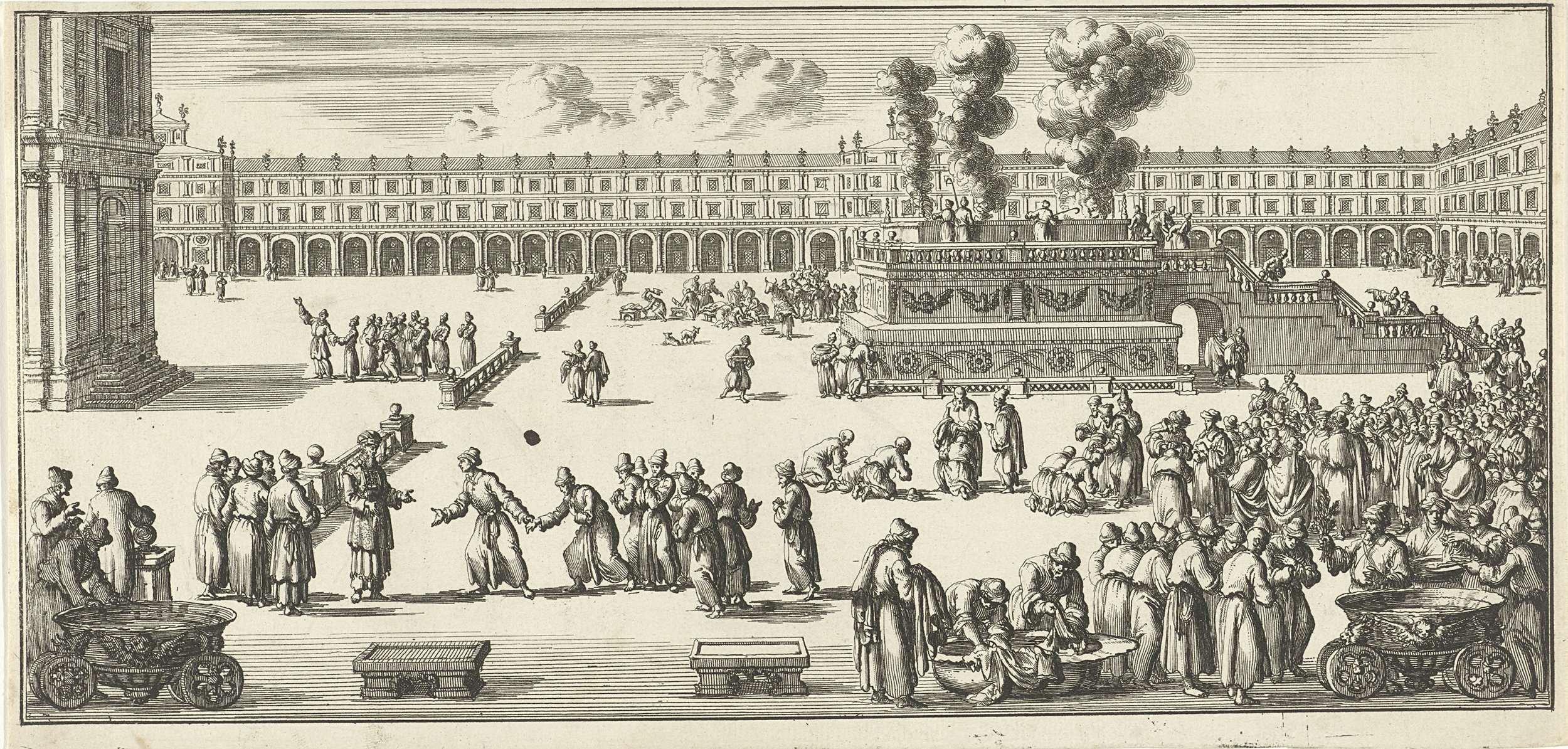
Moses had previously consecrated and dedicated the Tabernacle and all of its furnishings (Exodus 30:23-31); in Numbers 7:1-89, Moses set forth the gifts of the leaders of the twelve tribes of Israel, as their portion in the work of dedicating the Tabernacle of Israel and to make it their own.
The leaders brought their gifts on carts carried by oxen; the carts and oxen were given to the Levitical clans of the Gershonites and Merarites so they could use them to carry the materials of their service; the Kohathites received none since they were called upon to manually carry their burdens (Numbers 7:3-9).
Moses listed out in exact detail each leader from each tribe and what was given: each gave a silver platter and bowl full of flour mixed with olive oil, a gold pan full of incense, a bull, a ram, a lamb for burnt offerings, a goat for a purification offering, and two bulls, five rams, five goats, and five lambs for peace offerings (Numbers 7:12-83).
Why would Moses provide such an exact listing and repeat himself 12 times? The way the text has been presented emphasizes the equality of the tribes. Each tribe’s leader brings their offering, and each is listed in its fullness. None of the twelve are any closer to the Tabernacle than any other; none brings anything more or less than any other tribe. They each have the same share in YHWH and the Tabernacle. Thus the presentation of the leaders’ gifts seeks to demonstrate the equality of standing of the tribes of Israel before YHWH and His Tabernacle.
Thus all Israel by proxy participated in the dedication of the Tabernacle (Numbers 7:84-88). Moses would go into the Tent of Meeting to speak with YHWH, and he would hear the voice of YHWH speaking above the mercy seat between the cherubim (Numbers 7:89).
As Moses would enter the Most Holy Place to hear the Word of YHWH, the ministration of the Tabernacle would fall upon Aaron, his sons, and the Levites. Aaron and his sons had been consecrated in Leviticus 8:1-9:24; the time had now come to officially consecrate and dedicate the Levites for their service.
YHWH first made provision for the lampstand and its seven lamps, the menorah (Numbers 8:1-4). Then YHWH commanded Moses to separate out the Levites from Israel to purify them: they were to have purification water sprinkled on them, be completely shaven, and wash their clothes (Numbers 8:5-8). The Levites would be brought before YHWH: all Israel was to lay their hands on the Levites, and Aaron was to offer the Levites as a wave offering before YHWH (Numbers 8:9-11). How “all” Israel would lay hands on the Levites, or how Aaron would offer the Levites as a wave offering, was left unrevealed. The Levites were to lay their hands on the heads of the bulls of the grain and purification offerings to make atonement for them (Numbers 8:12).
YHWH again explained the reasoning behind the dedication of the Levites: they were chosen instead of the firstborn of every Israelite and so no plague would come upon the Israelites for improperly approaching the sanctuary of YHWH (Numbers 8:16-19; cf. Exodus 13:1-2, Numbers 3:12-13).
In this way the Levites were formally and officially separated out from among the twelve tribes of Israel and dedicated to the service of YHWH at the Tabernacle (Numbers 8:13-16, 20-22).
YHWH again set forth the career of the Levites: the Levite men would join the company of the work at the tent of meeting at twenty-five but must retire by fifty; after fifty they could assist in the tent of meeting and attend to various needs but not otherwise do the work (Numbers 8:23-26).
This exhortation stands at variance with what YHWH expected from Moses in the census of the three clans of the Levites in Numbers 4:1-49, in which the Levite men from thirty to fifty were counted. Why the change from thirty in Numbers 4:1-49 to twenty-five in Numbers 8:24? Some manuscripts of the Greek Septuagint seem to “correct” the text in Numbers 8:24 to read “thirty” as in Numbers 4:1-49, so manifestly some have concluded the Numbers 8:24 number to be a corruption. Some conclude we are witnessing divergent traditions about when Levites should begin working. A canonically more consistent but creative explanation would be progressive: perhaps there were not enough men from thirty to fifty to well serve in the Tabernacle, and so the age of service was expanded by five years between Numbers 4:1-49 and Numbers 8:24 so there would be a sufficient number of workers.
By the end of Numbers 8:26, Israel had been counted for military service and stationed around the Levites and the Tabernacle. The Levites had been counted, organized, and dedicated for service to YHWH. The people had dedicated their gifts for the Tabernacle of YHWH. Throughout it all, Aaron, Moses, and the Israelites had proven completely and entirely faithful to every command and dictate given by YHWH. May we learn from the example of Israel and seek to glorify and honor God in Christ through the Spirit!
Ethan R. Longhenry

Leave a Reply