
Working Out God’s Work | The Voice 15.45: November 09, 2025

posted in: The Voice | 0

The Voice

Working Out God’s Work

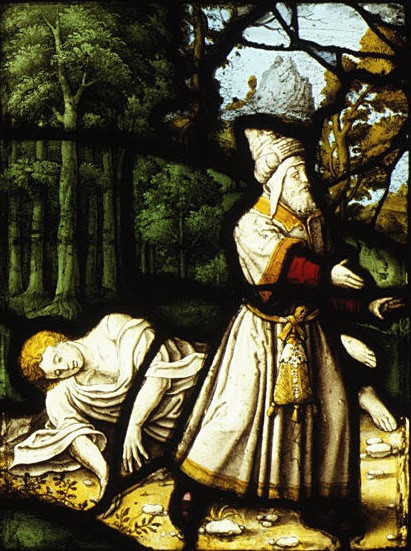
So then, my dear friends, just as you have always obeyed, not only in my presence but even more in my absence, continue working out your salvation with awe and reverence, for the one bringing forth in you both the desire and the effort – for the sake of his good pleasure – is God. Do everything without grumbling or arguing, so that you may be blameless and pure, children of God without blemish though you live in a crooked and perverse society, in which you shine as lights in the world by holding on to the word of life so that on the day of Christ I will have a reason to boast that I did not run in vain nor labor in vain. But even if I am being poured out like a drink offering on the sacrifice and service of your faith, I am glad and rejoice together with all of you. And in the same way you also should be glad and rejoice together with me (Philippians 2:12-18).

We are to work out our own salvation, yet God is the one empowering us to do so for His good pleasure? How can that be? Which is it?

Philippi was a Roman colony in Macedonia (part of modern Greece); Paul first visited the area and preached Jesus around 51 (cf. Acts 16:11-40). Paul wrote to the Christians in Philippi most likely around 60-61 from Rome while living under house arrest there (cf. Philippians 1:1). Paul thanked the Philippian Christians for their joint participation in his ministry and prayed for them to abound in love and make good decisions to share in Jesus’ praise at His return (Philippians 1:1-11). He explained how his circumstances had worked to advance the Gospel; if he were to die, he would go and be with Christ, but he was confident he would continue to faithfully serve God, and the Philippian Christians, while in the body (Philippians 1:12-26). Paul set forth his main exhortation: the Philippian Christians should live as citizens of the Gospel, standing firm together in it, and to suffer well for God in Christ (Philippians 1:27-30). Paul had begun establishing and defending this exhortation by encouraging the Philippian Christians to be of the same mind and to seek the interests of one another and not just themselves, and encouraged them to maintain the mind of Christ, to suffer humiliation in order to be exalted on the final day (Philippians 2:1-11). Paul continued the probatio, the main body of the letter detailing how the Philippian Christians might live as citizens of and to stand firm within the Gospel, with specific applications for the Philippian Christians in Philippians 2:12-18.

Paul continued with a message of confidence in the Philippian Christians as continuing in their obedience to Jesus even more in his absence as in his presence; he then challenged them to work out their salvation with fear and trembling, remaining confident God was willing and working within them for His good pleasure and purposes (Philippians 2:12-13).

Philippians 2:12-13 has represented a hotbed of dispute over the past fifteen hundred years on account of the divergence of views regarding the relationship between divine grace and human freedom. Those who tend to prove more deterministic emphasize and highlight Philippians 2:13 and seek to sublimate Philippians 2:12 under it; those who resist a strongly deterministic viewpoint tend to emphasize and highlight Philippians 2:12 and make much less of Philippians 2:13. Many commentators will go out of their way in their attempts to cast aspersions on either “work out your own salvation” or “God working within you to will and to work,” and such says far more about the commentators than it does about Paul or Philippians 2:12-13.

The challenge does not come from Paul or what he wrote in Philippians 2:12-13; the challenge exists because of how partisans have developed their theology in reaction to one another over the past millennium and a half. Paul himself found no contradiction in what he wrote in Philippians 2:12-13, and neither should we.

Therefore, as opposed to trying to emphasize one aspect of Philippians 2:12-13 over the other, we do far better to understand how everything Paul said in these verses remains true together. The Philippian Christians had heard the Gospel, accepted it as the life-giving message it represented, and began following and serving Jesus as Lord. Paul commended them for their continued obedience to Jesus Christ as Lord. He encouraged them to keep obeying Jesus, and in so doing they were “working out” their salvation. It was the work God had given them to do.

At the same time, God was working within the Philippian Christians to will and to work for His good pleasure. God was not violating their free will; instead, they freely submitted to Him and His purposes made known through the witness of Paul, and, no doubt, by heeding the promptings of His Spirit within them. God was working within the Philippian Christians; the Philippian Christians were working out their salvation. Both of these things can be true at the same time; as they were for the Philippian Christians, so also should it prove true for us today.

The New English Translation (NET) well represents Greek meta phobou kai tromon as “with awe and reverence,” shifting away from the more “literal” American Standard Version’s (ASV) rendering “with fear and trembling,” in Philippians 2:12. While the Hebrews author did speak of God as a consuming fire, and therefore should be served with reverence and awe in Hebrews 12:28-29, the emphasis within the New Testament seems more akin to John’s testimony regarding the perfect love of God casting out fear, as in 1 John 4:7-28. However we may have learned of God or proven terrified at the prospect of the consequences of disobedience in former times, God in Christ through the Spirit calls all Christians to grow in maturity in His love (cf. Ephesians 3:14-21, 1 John 4:7-28). Terror at the prospect of the consequences of disobedience can take us only so far; we do better to cultivate a proper awe and reverence for God for all He has done for us in the creation and in Christ, constantly overwhelmed by the unfathomable depths of the love God has displayed toward all of us in Jesus. We therefore best understand Paul encouraging the Philippian Christians, and us by extension, not as encouraging us to be constantly terrified of what God may do to us if we prove disobedient, but to grow and appreciate His majesty and love for us, and to respond accordingly.

Paul then exhorted the Philippian Christians to do all things without grumbling or arguing (Philippians 2:14). If they did so, they would remain pure and blameless children of God in a crooked and perverse society, shining as lights by holding onto the word of life (Philippians 2:15-16a).

As in all aspects of Paul’s probatio in Philippians 2:1-4:1, it remains possible he already has in mind whatever was going on between Euodia and Syntyche (cf. Philippians 4:2). Nevertheless, as with so much of what we have already seen in the Philippian correspondence, it would seem Paul was encouraging the Philippian Christians to continue doing what they were already doing: they already have been living as children of God, pure and blameless despite the perversity around them, shining as lights by means of how they held fast to the word of life.

Therefore, we probably do better to understand Paul as providing encouragement for the Philippian Christians to remain faithful to Jesus in these matters, highlighting an ever-present challenge and concern. We also do well to understand the story of the exodus generation of the Israelites behind Paul’s wording in Philippians 2:14: do not be grumblers like they were in the wilderness, condemned by God to suffer the very fate they complained about (cf. Numbers 14:26-28).

The example of the generation in the wilderness provides needed context and perspective for our understanding. Grumbling, complaining, and constant argument of the kind we can read about in the Book of Numbers represent works of the flesh and not manifestations of the fruit of the Spirit; they tear down community and well and successfully represent the incursions of the Evil One and his purposes among the people of God. They do not include providing critique of ways in which the people of God may have fallen short of God’s purposes and/or have accommodated themselves to the world, nor would they include standing firm for the truth of God in Christ through the Spirit before those who would resist or undermine it. As in all such things, the motivations and purposes of what is being said and done go a long way in determining whether one is being more like a member of the wilderness generation or maintaining a faithful “prophetic” like stance.

Grumbling, complaining, and constant bickering and arguing are things we should expect to find and see in the world; they existed in first century Philippi, and they remain in twenty-first century America. Yet they represent the crooked, perverse ways of the world; if we would be pure and blameless children of God, we should resist such things, and instead build one another up in our most holy faith.

By speaking of the Philippian Christians as shining as lights, Paul evokes Jesus’ message about disciples in Matthew 5:14-16, and its conclusion naturally followed: their fellow Philippians would base their understanding of the light of God in Christ through the Spirit in the Gospel by how the Philippian Christians lived. The Philippian Christians already were thus bearing witness for Jesus in their community, and they did so well by holding onto the word of life. Is that word of life the Word of God made known in Scripture or the Word of God made flesh in Jesus? As always in the New Testament, the answer is yes, for the written Word is consonant and consistent with Jesus, the embodied Word of God. And it is the word of life, as also described by John in 1 John 1:1-2: in Jesus was the light and life of humanity, and in God in Christ through the Spirit we can find life and have it abundantly, and outside of God in Christ through the Spirit there is no real life (John 1:4, 10:10).

Paul concluded he would have reason to boast he did not run or labor in vain when the Lord Jesus would return if the Philippian Christians thus behaved as he had encouraged in Philippians 2:14-16a (and, arguably, throughout Philippians 2:1-16a; Philippians 2:16bc). Even if Paul were being poured out like a drink offering on the sacrifice and service of the faith of the Philippian Christians, he was glad and rejoiced with all of them, and they also should be glad and rejoice with Paul (Philippians 2:17-18).

In this way Paul returned to his themes in Philippians 1:15-25: he remained under house arrest in Rome. While he maintained strong confidence in his imminent vindication and deliverance, he was not naïve in understanding the vagaries of Roman politics: he might well find himself soon executed for his witness for Jesus. While Paul always lived in light of Jesus’ imminent return, the prospect of his demise, even if remote, certainly focused Paul’s thinking all the more on the day of Jesus.

Drink offerings were generally wine or beer poured on top of animal and grain sacrifices before YHWH at the Tabernacle or Temple (e.g. Exodus 29:40-41, Leviticus 23:13, 28). There was something about the drink offering which struck Paul as well reflecting his own experience in serving and glorifying Jesus at the end, for he returned to the same theme in 2 Timothy 4:6. Perhaps the drink offering was the final step in making the offering; perhaps Paul saw something in the pouring out of the beverage which strongly resonated with his experience in serving the Lord Jesus and dying for Him. Whatever the reason behind it, the image has proven compelling and potent throughout the years, and many servants of the Lord Jesus have strongly identified with it.

While Paul could speak of how he was poured out, and would have every reason to imagine this pouring out as the end of his own sacrifices, he very consciously and deliberately brought the Philippian Christians into the metaphor: Paul imagined himself as the drink offering poured out on the sacrifice and service of their faith. Paul had exhorted the Roman Christians to consider themselves as living sacrifices in Romans 12:1; the Philippian Christians already were embodying this living, sacrificial faith, and Paul wanted them to imagine it as well honoring and glorifying God, with his own ministry and sacrifice providing the final or finishing touch. Throughout his letter to the Philippians Paul will emphasize their joint participation together in the faith and work of ministry in Christ, and he did not neglect this emphasis in his imagery. Paul did not make it all about himself, and neither should we; God is glorified by the servants of Jesus jointly participating in the faith, as living sacrifices individually and collectively for the Lord Jesus Christ.

All of this talk from Paul about standing before Jesus when He returned, and being poured out as a drink offering, could be easily seen as dark, depressing, and distressing. It certainly sounds like the reflections of a man who found himself in dire straits and without much time left in the world. But Paul did not want to leave the Philippian Christians, or us, in such distress: he was glad and rejoiced in the Philippian Christians, and he wanted them to be glad and rejoice in him (Philippians 2:17-18). We tend to look toward his similar exhortation in Philippians 4:4 to a similar end, and for understandable reasons. Yet, in many ways, Paul’s emphasis on joy and rejoicing at this moment in the context proves all the more compelling. Yes, he was in dire straits. Yes, he might die for Jesus. Even if he did not yet die for Jesus, he was in a disadvantaged and socio-culturally shameful position. There was very little in his fleshly situation which would make a person happy. But he rejoiced in their shared faith in Jesus and their hope of vindication in the resurrection. He did not want them to focus on his distress, although he also did not downplay or minimize the challenges he was experiencing. Instead, he wanted them to rejoice and be glad along with him because of how Jesus strengthened and sustained them all in what they were enduring, and they would be able to share in the resurrection in Him because of it all.

We are not Philippian Christians living in a Roman colony under the skeptical, watchful eye of Roman authorities. But we do well to share in the life and faith of God in Christ through the Spirit with Paul and the Philippian Christians, working out our salvation in awe and reverence, and confident God is willing and working through us according to His good pleasure. We should avoid grumbling and arguing, prevalent in the world, but live in the light and life of the Word of God in a crooked and perverse society. And may we live our lives as living sacrifices for God, pouring ourselves out for Jesus and one another by God’s strength through His Spirit, and be glad and rejoice in and with one another for all we share in the Lord Jesus Christ. May we share in the faith of God in Christ through the Spirit as made known through Paul so we might share in the resurrection of life as well!

Ethan R. Longhenry
Gospel in General Letters | The Voice 15.44: November 02, 2025

posted in: The Voice | 0

The Voice

The Gospel in the General Letters

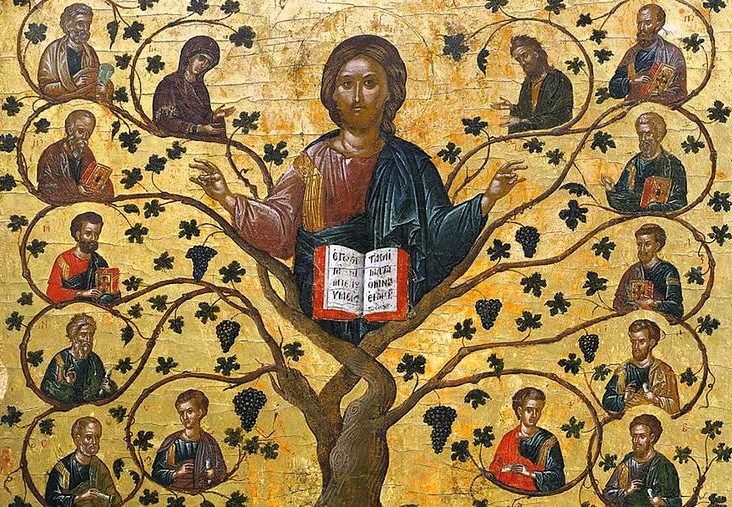
The Hebrews author, James, Peter, John, and Jude all wrote to various groups of Christians at various points in the first century. They may have addressed different issues and challenges, but they all grounded everything they taught in the life, death, resurrection, ascension, lordship, and imminent return of Jesus of Nazareth, and what it all meant for those who believe in Him.

For convenience, we often characterize Hebrews, James, 1 and 2 Peter, 1, 2, and 3 John, and Jude as the “General,” or “Catholic/Universal” Letters of the New Testament, since they all seemingly wrote to a wider audience than one specific congregation or individual like Paul did. We should never let this categorization, however, obscure the distinctions and variety among these letters. The letters were most likely written across the whole of the second half of the first century: James wrote no later than 60, perhaps as early as the 40s, and we believe John wrote his letters in the 80s or 90s, with the rest likely somewhere in-between. James wrote to the Jewish Christians of the Diaspora; Peter’s first letter was written to Christians in the Roman provinces of much of modern-day Turkey; we assume John’s letters had particular relevance to Christians in the area of Ephesus and the province of Asia; despite its name, the letter to the Hebrews’ audience cannot be manifestly discerned from the material within the letter, but much of the circumstantial evidence seems to point to Christians in Rome; the specific audience of 2 Peter and Jude knew who they were, but little evidence remains for us to discern who they might be. James, Peter, and John bore witness as having personally seen and experienced Jesus in His life, death, and resurrection; the Hebrews author and Jude both speak as if one level removed from the Apostles, although as James’ brother, and thus Jesus’ half-brother, we presume Jude had eyewitness experience of Jesus himself (cf. Hebrews 2:4, Jude 1:17-18).

Jesus’ life featured quite prominently in many of these letters. While John spoke of Jesus as the Word of life and the Light in whom Christians should walk, and both 1 and 2 John were written in large part to insist upon Jesus as having lived in the flesh, the Hebrews author well explicated what it meant: Jesus was truly the new and living way, the Pioneer of our salvation, having been tempted in all points without sin, learning obedience in what He suffered, and embodying the faithful high priest in all He suffered (cf. Hebrews 2:5-18, 4:14-10:25, 1 John 1:1-6, 2:18-27, 4:1-4, 2 John 1:6-9). James and Peter both make much of the expectation and willingness to suffer since Jesus suffered (James 1:2-4, 1 Peter 2:21-25, 4:1-19). Furthermore, their instruction to Christians was strongly shaped by what Jesus taught and embodied (James 1:27, 2:1-26/Matthew 25:31-46, James 4:10, 1 Peter 5:6/Matthew 23:12, James 5:12/Matthew 5:37, 1 Peter 5:1-4/Mark 10:42-45). Peter even made explicit appeal regarding his witness of Jesus’ life: he appealed to his experience of Jesus and God the Father in the Transfiguration to assure Christians their faith was not based on myths and fables (2 Peter 1:16-19; cf. Mark 9:2-13). We do well to remember the ancient testimony regarding the Gospel of Mark as Mark’s compilation of Peter’s witness of Jesus’ life, death, and resurrection, and we can see the points of continuity between that witness and what Peter wrote in his letters.

The Hebrews author, James, Peter, and John grounded much of their exhortations in Jesus’ death. Jesus had spoken of His death as providing atonement for sin and representing the new covenant in His blood; the Hebrews author would provide the fullest exposition on Jesus’ sacrifice, as the fulfillment of what had been spoken regarding David’s Lord as the high priest in the order of Melchizedek in Psalm 110:1, 4 (and going all the way back to Genesis 14:17-24 for context), Jeremiah’s expectation of a new covenant in Jeremiah 31:31-34, and the satisfaction of the heavenly reality behind the earthly copy of the Tabernacle and Temple so central to Israelite religion (cf. Hebrews 4:14-10:25). Peter likewise made much of Jesus’ death as providing atonement and healing, and encouraging Christians to prove willing to likewise suffer (1 Peter 1:2, 19, 2:19-25, 3:18, 4:1, 12-13). John well grounded his exhortations to Christians to love one another in the love Jesus displayed toward us in dying for us and being the propitiation of our sins (1 John 3:16, 4:10).

Jesus’ resurrection on the third day proved a very major theme in the Book of Acts and Paul’s letters, yet not nearly as much within these general letters. The Hebrews author considered instruction regarding the resurrection as “elementary” and something he was passing over in order to focus on other themes (Hebrews 6:1-2), and did make reference to Jesus’ resurrection in his doxology in Hebrews 13:20. Thus the Hebrews author presumed Jesus’ resurrection throughout his explication, and chose instead to focus his meditations on Jesus’ life, death, ascension, lordship, and imminent return. Peter strongly affirmed how both the Christian hope of eternal life and the efficacy of baptism were anchored in Jesus’ resurrection in 1 Peter 1:3, 3:21. While John never explicitly mentions Jesus or the resurrection in his letters, 1 John 3:2 seems to be an encouragement to Christians to recognize how they will be like Jesus in the resurrection when He appears in His return. We should not assume a lack of explicit mention or emphasis on Jesus’ resurrection in the general letters means its authors do not find it important or somehow would deny it; instead, they all presumed the truth of Jesus’ resurrection in what they taught and encouraged, and did not feel the need to place as much emphasis on the resurrection in these letters as proved necessary in the Book of Acts and among Paul’s letters.

In general, as with Jesus’ resurrection, so with His ascension: James, John, and Jude may not mention it, but they presume it as part of how they exhorted and encouraged their fellow Christians. Peter spoke of Jesus as ascending into heaven in 1 Peter 3:22. The Hebrews author made much of Jesus’ ascension as the means by which He could purify the heavenly places and present Himself as the offering for sin in Hebrews 7:1-10:18, thus becoming the high priest in the order of Melchizedek and fulfilling Psalm 110:4. Furthermore, Jesus’ resurrection and ascension both undergird the elided but necessary conclusion to all of the exhortations to endure suffering by the Hebrews author, James, and Peter: Christians should prove willing to endure suffering like Jesus so they might share in Jesus’ vindication and victory, manifest in His resurrection and ascension (more fully seen in Philippians 2:5-11).

All of the authors of the general letters affirm Jesus as Lord and Christ, the Son of God (Hebrews 13:20, James 1:1, 2:1, 1 Peter 3:22, 2 Peter 1:11, 1 John 5:20, 2 John 1:3, Jude 1:4, 25). The Hebrews author’s exposition on Jesus as the high priest in the order of Melchizedek rooted in Psalm 110:4 always had the natural association and connection with Psalm 110:1 in mind: Jesus offered Himself for sin, (was raised from the dead), ascended to the Father, and now sits at the right hand of God, reigning as Lord and Christ (cf. Hebrews 10:12-14). Peter used the same language from Psalm 110:1 in 1 Peter 3:22, as he had in Acts 2:34-35. Everything written in these letters was done so under the recognition Jesus is Lord and Christ, and humanity can only find life and truth by following and serving Him. Thus the Hebrews author, James, Peter, John, and Jude all encouraged Christians to faithfully serve Jesus as Lord, and all of their specific concerns and exhortations were directed to this end, whether to continue to serve Jesus faithfully after many years and trials (Hebrews), in how they treated one another and approached various challenges in life (James, 1 John, 3 John), to prove willing to suffer hostility or worse and doing good anyway, entrusting themselves to a faithful Creator (1 Peter), or to stand firm in the apostolic witness against false teachers (2 Peter, 1 John, 2 John, Jude).

The expectation of Jesus’ imminent return also featured prominently among the general letters. The Hebrews author earnestly looked forward to Jesus’ return bringing salvation and encouraged Christians to endure a little longer to that end, but warned regarding a fearful expectation of judgment for those who persist in sin (Hebrews 9:27-28, 10:26-39). Peter could only expect the Christians of Asia Minor to endure suffering by entrusting themselves to God in Christ and their beautiful hope of salvation and confidence in judgment of those who mistreated them (1 Peter 1:3-9, 4:5, 12-19); he also set forth expectations about the Lord’s return and a new heavens and new earth so Christians might not be dismayed at those who scoffed at the prospect of Jesus’ return (2 Peter 3:1-14). John wanted to encourage Christians in the eternal life they would share in Christ, and they would be as Jesus is (1 John 3:1-3, 5:11-13). Jude made a similar appeal to the testimony of the Apostles regarding the end time as did Peter, and exhorted Christians to anticipate the mercy of the Lord Jesus Christ which would provide life (Jude 1:17-23; cf. 2 Peter 3:2-3).

Hebrews, James, 1 and 2 Peter, 1, 2, and 3 John, and Jude have their various purposes and provide various forms of exhortation and instruction to Christians. The life, death, resurrection, ascension, and lordship of Jesus undergirded everything written in these letters. Their authors would often make the associations and connections between their messages and the Gospel explicit: the Hebrews author brilliantly set forth much of the meaning of Jesus’ life, death, ascension, and lordship in his exposition, James and Peter made much of Jesus’ instruction in their own exhortations, and everything John was about was founded on Jesus having come in the flesh, fully God, fully man, suffering and dying, so we might share in love and eternal life in God. They all encouraged and warned Christians regarding their conduct in light of Jesus’ imminent return. Yet even when they did not explicitly speak of aspects of the Gospel, their teaching and exhortation only made sense in light of Jesus’ life, death, resurrection, ascension, lordship, and imminent return.

Thus we can perceive how thoroughly the Gospel is enmeshed in the Letter to the Hebrews, the Letter of James, the First and Second Letters of Peter, the First, Second, and Third Letters of John, and the Letter of Jude. However much they may make appeal to aspects of the Hebrew Bible or make specific references to various issues bedeviling the Christians to whom they wrote, the life, death, resurrection, ascension, lordship, and imminent return of Jesus remained foundational and pivotal for all their messages and exhortations. They all, in their various ways, exhorted Christians then and now to “get rid of every weight and the sin that clings so closely, and run with endurance the race set out for us, keeping our eyes fixed on Jesus, the pioneer and perfecter of our faith” (Hebrews 11:1b-2b). May we recognize the importance of the life, death, resurrection, ascension, lordship, and imminent return of Jesus of Nazareth to the “general” letters of the New Testament, well follow Jesus, and obtain the resurrection of life in Him!

Ethan R. Longhenry

Psalm 4 | The Voice 15.43: October 26, 2025

posted in: The Voice | 0

The Voice

Psalm 4

Psalm 4:1-8, ASV translation, as prose:

For the Chief Musician; on stringed instruments. A Psalm of David. Answer me when I call, O God of my righteousness; Thou hast set me at large when I was in distress: have mercy upon me, and hear my prayer. O ye sons of men, how long shall my glory be turned into dishonor? How long will ye love vanity, and seek after falsehood? Selah.
But know that YHWH hath set apart for himself him that is godly: YHWH will hear when I call unto him. Stand in awe, and sin not: commune with your own heart upon your bed, and be still. Selah.
Offer the sacrifices of righteousness, and put your trust in YHWH.
Many there are that say, “Who will show us any good?”
YHWH, lift thou up the light of thy countenance upon us. Thou hast put gladness in my heart, more than they have when their grain and their new wine are increased. In peace will I both lay me down and sleep; for thou, YHWH, alone makest me dwell in safety.

Psalm 4:1-8 ASV according to Hebrew parallelism (as marked in BHS):

A Psalm of David.
Answer me when I call / O God of my righteousness
Thou hast set me at large when I was in distress / have mercy upon me, and hear my prayer.
O ye sons of men, how long shall my glory be turned into dishonor? / How long will ye love vanity, and seek after falsehood? Selah.
But know that YHWH hath set apart for himself him that is godly / YHWH will hear when I call unto him.
Stand in awe / and sin not / commune with your own heart / upon your bed and be still. Selah.
Offer the sacrifices of righteousness / and put your trust in YHWH.
Many there are that say, “Who will show us any good?” / YHWH, lift thou up the light of thy countenance upon us.
Thou hast put gladness in my heart / more than they have when their grain and their new wine are increased.
In peace will I both lay me down and sleep / for thou, YHWH, alone makest me dwell in safety.
For the Chief Musician; with the Nehiloth [or “flutes”].

Psalm 4 in the Scottish Metrical Psalter of 1650:

1 Give ear unto me when I call,
God of my righteousness:
Have mercy, hear my pray’r; thou hast
enlarged me in distress.

2 O ye the sons of men! how long
will ye love vanities?
How long my glory turn to shame,
and will ye follow lies?

3 But know, that for himself the Lord
the godly man doth choose:
The Lord, when I on him do call,
to hear will not refuse.

4 Fear, and sin not; talk with your heart
on bed, and silent be.
5 Off ‘rings present of righteousness,
and in the Lord trust ye.

6 O who will show us any good?
is that which many say:
But of thy countenance the light,
Lord, lift on us alway.

7 Upon my heart, bestowed by thee,
more gladness I have found
Than they, ev’n then, when corn and wine
did most with them abound.

8 I will both lay me down in peace,
and quiet sleep will take;
Because thou only me to dwell
in safety, Lord, dost make.

Psalm 4 as Poetry

Psalm 4, like Psalm 3, has a few parallel lines featuring amplification or restatement but primarily denotes progression in the petition. The psalm is for flutes (the Nehiloth) and features an A B A format: Address to God (Psalm 4:1), address to men (Psalm 4:2-5), and address again to YHWH God (Psalm 4:6-8); it could instead be read as a “dialogue” of “complainer moving to one trusting” (Psalm 4:1, 6-8) and “instructor” (Psalm 4:2-5). Each word of the appeal of Psalm 4:1 ends in the first person singular suffix and thus with the similar “i” sound. The “light of your face” in Psalm 4:6 is the closest thing in Psalm 4 to a metaphor and it is a way of requesting the return of favor and benefit from God (cf. Numbers 6:25). Nevertheless much in the Psalm is spoken of in elision or in generalities (“vanity,” “falsehood,” “good”), allowing for varied applications.

Psalm 4 in Context and Canon

The superscription of Psalm 4 identifies it as a psalm of David. Psalm 4 has the hallmarks of a psalm of lament.

There are many textual issues with Psalm 4, many of which may have some bearing on interpretation. The verbs of Psalm 4:1-2 in MT are imperatives but are perfective in the LXX and Vulgate (“answer me” vs. “you answered me,” etc.). “Tremble” or “be agitated” (MT rigzu) is translated “be angry” in the LXX (orgizesthe), and in Ephesians 4:26 as well; the MT makes better contextual sense. “Lift up” in Psalm 4:6 is rendered “make manifest” in LXX (likely in error). LXX, Syriac, and DSS read “their new wine and oil” in Psalm 4:7; “oil” may have dropped out of MT.

David begins by pleading with God to answer him when he prays and to give relief in distress (Psalm 4:1; “God of my righteousness” is either referring to God as righteous or God as the one granting righteousness, thus, success). An appeal is then made either to humanity or the nobility in particular to cease turning honor to shame, loving vain words and seeking after lies (Psalm 4:2). YHWH, on the other hand, sets apart His godly ones, including David, whose invocations YHWH hears (Psalm 4:3). Psalm 4:1-3 thus sets up an antagonistic situation which leads to the exhortation of Psalm 4:4-5: tremble (in fear) yet sin not, meditate in bed but be silent; offer appropriate sacrifices; trust in YHWH. Some people still want to see some blessing and favor from YHWH; David wants to be filled or has been filled with more joy in his heart from YHWH than the people have when they have grain and wine (and oil; Psalm 4:6-7). David ends the psalm with a declaration of confidence in YHWH: he can lie down and sleep in peace since YHWH is his safety, in contrast with the impious who tremble and must give thought in their beds (Psalm 4:8; cf. Psalm 4:4).

Psalm 4:7b seems to identify the context: a drought, or a period of less than optimal harvests. In that light Psalm 4:2 is most likely a comment from God to Israel chastising them for pursuing after Canaanite fertility gods in their distress and not giving Him the glory; Psalm 4:6 would thus be a petition to YHWH to provide rain and thus an end to the drought and famine. Some have associated the context of Psalm 4 with the famine of 2 Samuel 21:1 but there is no way to be sure of this.

Thus David makes a petition to God and also rebukes the people for their lack of faith in both God and himself in Psalm 4 on account of a drought or famine. God promised to provide rain, dew, and fertility; the king was to pray to YHWH for this to be made sure (Genesis 27:28, Deuteronomy 11:11-14, 28:12, 1 Kings 8:35-36), and David has taken that responsibility seriously. Nevertheless the famine persists. Many have turned to the Canaanite gods for relief, and of course none is forthcoming. So it is that David’s petition implores YHWH to bring the rain while he chastises Israel for its unbelief, and in the end he expresses his confidence and joy in YHWH. Those who persist in pursuing useless false gods and undermine the king’s authority will experience the fear and humiliation due them on account of their error; they should take thought in private to how they have transgressed and make things right. In the end all ought to trust YHWH and His favor to His people.

In Psalm 1 the righteous were compared to a tree beside the waters, always prospering because they were rooted in YHWH. In Psalm 2 YHWH blesses the Davidic king and establishes his rule. Yet in Psalm 4 the prosperity is not there and doubt overshadows the Davidic ruler. Psalm 4, like Psalm 3, provides a realistic foil to the introductory Psalms: yes, YHWH has promised good to Israel and its Davidic ruler, and that promise ought to be trusted even when things are not going as well.

Psalm 4 Throughout History

While it makes sense to read the contest of Psalm 4 in the context of famine and drought, and thus whether to trust in the Canaanite deities or in YHWH, the way Psalm 4 is written is vague enough to allow for other uses even during the monarchy. Psalm 4 could give voice to any distressed Israelite who found himself opposed by people in general, and especially people in high places, who did not trust in YHWH but in other gods.

Whether in generic terms or in terms of fertility Psalm 4 would have continued to give voice to Israelites in later generations to affirm their faith in YHWH and to censure their own or the Gentiles who put their trust in idols.

One can read Psalm 4 in Christological terms: Jesus embodying the situation envisioned by David in Psalm 4, ultimately “laying down” His life in death in the confidence that God would raise Him from the dead in victory (cf. John 10:18, 1 John 3:16).

In the New Testament Paul quotes the LXX of Psalm 4:5 in Ephesians 4:26, exhorting Christians to truth and faithfulness in relationship with one another and not giving place to the Devil (Ephesians 4:24-26); thus Paul uses the text to warn against undisciplined venting of or meditation upon anger which can destroy relationships.

Much early Christian exegesis of Psalm 4 is based on a mistranslation of what is most likely the postscript for Psalm 3 that was formatted as part of the superscript of Psalm 4; Hebrew lamenatzeah, “to the choirmaster,” was rendered as eis tos telos in the Septuagint, meaning “unto the end” (and so in finem in the Latin Vulgate as well). This became the basis of all sorts of Christological speculation since they saw “the end” of the Law and all sorts of other things as embodied in Christ (Romans 10:4). With a few exceptions this line of interpretation continued until the Reformation.

Augustine notably used Psalm 4 as a cipher for his own existence; in the Confessions he writes of how he saw the progression of his own life in the Psalm, from loving the emptiness and falsehood of paganism and Manichaeism to faith and confidence in God in Christ. Many expositors made the same type of contrast between those of the world in paganism versus those who have found rest and safety in God in Christ.

As Psalm 3 was used in the monasteries in the morning prayer office on account of its emphasis on rising, Psalm 4 was used in the evening prayer office on account of the emphasis on meditating in bed in Psalm 4:4 and sleeping in Psalm 4:8.

Psalm 4 Today

For better or worse people tend to trust meteorologists and other scientists today when it comes to rain and finding ways to make sure we all have food. Nevertheless the essential contrast of Psalm 4 remains to this day.

As with Psalm 3, we all recognize God’s promises of sufficiency now and glory to come in Christ (Matthew 6:33, Romans 8:17-25). Yet all of us, at some time or another, have gone after what is truly “vanity and falsehood” (Psalm 4:3). In past days those were forces of nature divinized as idols; these days we often pursue “-isms” and various lusts, pleasures, and desires, from self to scientism to sex. In a real sense all of us have needed to move from service of vain things to service and trust in YHWH in Christ (Ephesians 2:1-18)!

Yet we can see even in our culture today the essential disconnect fueling Psalm 4. What happens when the story told by YHWH in Scripture no longer seems to conform to reality? It is tempting to try out other alternatives; as many wondered what the harm was to give a sacrifice or two to Baal, so people today wonder what the harm is in accepting a generically secular worldview, allow the scientific perspective to dominate how one envisions their environment, or to honor other ways of considering the world. Yet all such perspectives are vain and false; the day will come when all such persons will be given reason to tremble, and so they should right now consider themselves and what they are doing (cf. Acts 17:30-31, Romans 2:5-11, 2 Thessalonians 1:6-9, etc.).

Believers are often afflicted with the same discomfort and “dis-ease” as seen so prevalently in our culture that has been abandoning the Christian worldview over the past two hundred years. Yet when those moments of distress and difficulty come we should turn to Psalm 4. YHWH is the Creator God of Israel; He has worked to save all who would come to Him through Jesus Christ. If we put our trust in Him we can rest peacefully, both at night and in the sleep of death before the resurrection. Even in the midst of trial we can have joy and peace in our hearts in Christ, but only if we turn aside from the vain falsehoods of this life and put our confidence in the power of God in Christ. True security can only be found in God in Christ; let us seek Him no matter what!

Ethan R. Longhenry

Settling in Transjordan | The Voice 14.42: October 19, 2025

posted in: The Voice | 0

The Voice

Settling in Transjordan

They had conquered the land on which they stood. It seemed to be a good land. They would settle here. But would it go well for them?

The Book of Numbers was aptly named bemidbar in Hebrew, for it bore witness to Israel’s experiences “in the wilderness.” Numbers 1:1-25:11 bore witness to the experience of the generation which YHWH delivered from Egypt: preparation of the camp and Tabernacle for entry into Canaan, persistence in rebellion, its condemnation, and the fulfillment of that condemnation. After the new census of Numbers 26:1-65, much of the focus in Numbers shifted to the new generation and preparing them to finally entering the land of Canaan in Numbers 27:1-36:13, as well demonstrated in the legislation regarding offerings and payment of vows in Numbers 27:1-30:16 and the ideal military campaign of Numbers 31:1-54.

According to Numbers 32:1-5, the Israelites of the tribes of Reuben and Gad had a lot of cattle, and perceived all of the land in which they were occupying, the Transjordanian territory of Jazer and Gilead, to be good for raising cattle. They therefore asked Moses, Eleazar the high priest, and the leaders of Israel if they could obtain the lands of Sihon and Og as their possession, and not cross the Jordan River with the rest of the Israelites.

Moses was not a fan of this proposal. He laid into the Gadites and Reubenites, asking them if they were trying to frustrate the conquest of Canaan, and insinuated they were rebelling against YHWH and His purposes like their fathers did when the spies brought back a bad report, and would cause another generation to be abandoned in the wilderness (Numbers 32:6-15; cf. Numbers 13:1-14:45).

Was Moses overreacting? We could definitely understand if he had been not a little traumatized by all he had experienced with the former generation of the Israelites, and proved overly fearful of yet another instance of an unfaithful or rebellious spirit arising in the Israelites. Perhaps Moses also had in mind a historical experience of looking upon the lands to the east of the Jordan River, believing them good for livestock, and choosing to live there as opposed to the western lands: Lot’s choice of the lands around Sodom (Genesis 13:1-18). Abraham’s descendants, the Israelites, would inherit the lands west of the Jordan River; Lot’s descendants, the Ammonites and Moabites, would inherit and live in the Transjordan lands (cf. Genesis 13:8-17, 19:30-38).

Nevertheless, in Numbers 21:21-35, YHWH had given Israel victory over the Amorite kings Sihon and Og, who had controlled a significant amount of the Transjordan, from the Arnon (which emptied into the middle of the Dead Sea) all the way up to around Mount Hermon (roughly east of Sidon of Phoenicia). Sihon and Og had no doubt conquered this land from the Moabites and Ammonites, respectively, but since the Israelites had defeated them, the land could be possessed by the Israelites.

The Gadites and Reubenites worked to allay Moses’ fears and suspicions in Numbers 32:16-19. They would not abandon their fellow Israelites in the conquest of Canaan: they would first build sheepfolds and cities, establish some fortified towns to protect themselves, and then send the (vast majority of) their men equipped for battle to go and fight with the Israelites on the western side of the Jordan River. They would not return until the conquest had been satisfactorily completed, and they would not expect an inheritance on the western side of the Jordan River.

Moses seemed satisfied by this: if they would indeed fight with their fellow Israelites on the western side of the Jordan River until the land was subdued, then they could obtain the Transjordanian territories as their inheritance; if they rebelled and did not do so, however, they would sin against YHWH, and their sin would find them out (Numbers 32:20-24). The Gadites and Reubenites confirmed the word of Moses in Numbers 32:25-27.

Moses then gave orders and communicated the situation to the rest of Israel: the Gadite and Reubenite forces would cross over and fight with the Israelites to conquer Canaan, and all Israel would then affirm the Transjordanian territories as their possession; if they would not cross over and fight, they should be given a land possession in Canaan, west of the Jordan River (Numbers 32:28-30). The Gadites and Reubenites affirmed this, and it was established (Numbers 32:31-32).

In Numbers 32:33, the narrator related how Moses thus had given the Gadites, Reubenites, and half of the tribe of Manasseh the lands of the Amorite kings Sihon and Og. He detailed the cities the Reubenites rebuilt in the more southerly lands north of the Arnon and Moabite territory, and the cities rebuilt by the Gadites to the north of Reuben, which would also include the area in which Israel was presently encamped, in Numbers 32:34-38. The narrator then explained how the descendants of Manasseh, Machir, Jair, and Nobah, took Gilead, the territories north of Gad, ostensibly all the way to Mount Hermon, and dispossessed the Amorites there, in Numbers 32:39-48.

But was it not merely the Gadites and Reubenites who requested the Transjordanian territories in Numbers 32:1-32? Where did some of the descendants of Manasseh come from? The text in Numbers provided no explicit answer. When Joshua called upon the Transjordanian Israelites to remember their vow and to cross over with the Israelites to conquer Canaan, he appealed to Gad, Reuben, and half of Manasseh, thus presuming the half tribe of Manasseh had already established their possession of Gilead before the other half conquered and received its share west of the Jordan (cf. Joshua 1:12-18). According to Joshua 17:1-9, Manasseh was allotted Gilead, Bashan, and a good amount of the territory immediately to their west across the Jordan River, all the way to the Mediterranean Sea.

Numbers 32:1-38 thus explained for later Israelites how two and a half Israelite tribes ended up with territorial allotments in the Transjordan. The Gadites, Reubenites, and Manassites who lived across the Jordan River seemed to maintain some anxiety regarding whether the Israelites of the future would consider them part of Israel, as would be made evident in the affair of the altar of witness narrated in Joshua 22:1-34.

Thus Israel considered Gilead, Bashan, and Jazer in the Transjordan as part of its territories. When Israel was strong and faithful, the Israelites possessed the land strongly; but whenever Israel was weaker or less faithful, the Ammonites, Moabites, and Aramaeans would assert their claims and overrun the land (cf. Joshua 21:27, Judges 11:1-28, 1 Kings 4:13, 2 Kings 10:33, 13:25). Yet Israel would only maintain these lands until 732 BCE, when Tiglath-pileser III king of Assyria conquered the Transjordan territories of Israel and exiled its inhabitants (cf. 2 Kings 15:29). The territory was considered the Decapolis and Perea in the time of the New Testament, and was primarily Gentile and pagan in population (cf. Mark 4:25, 5:20, 7:31). Today, most of this Transjordanian territory is part of the Hashemite Kingdom of Jordan, but the uppermost parts of Gilead extend into the Golan Heights, occupied by the State of Israel yet still claimed by the Syrian Arab Republic.

The settling of the Gadites, Reubenites, and some Manassites in the Transjordan territories in Numbers 32:1-38 exemplified all the transitions taking place toward the conclusion of the Book of Numbers. The memory of the past remained vivid, reflected in Moses’ biting and fearful response to the request of the Gadites and Reubenites. The new generation, however, was not like their fathers: they wanted to prove faithful to YHWH and the commitment to conquering the land of Canaan. At no point in the witness of the Hebrew Bible are the Reubenites, Gadites, or some Manassites deemed as somehow less faithful because their possessions were east of the Jordan River. They wanted to share in Israelite identity and to benefit from the good land upon which they found themselves. In this way the Gadites, Reubenites, and some Manassites were the first to obtain their land and portion in Israel, and by the decree of Moses no less. It would not be long before the rest of Israel would cross over the Jordan and receive their inheritance as well. May we learn from the examples of the people of God who came before us, and prove faithful to God in Christ through the Spirit in order to obtain the resurrection of life in Him!

Ethan R. Longhenry

A Challenging Declaration | The Voice 15.41: October 12, 2025

posted in: The Voice | 0

The Voice

A Challenging Declaration

So whoever knows what is good to do and does not do it is guilty of sin (James 4:17).

When human beings think about sin, they normally think about “sins of commission”: doing wicked things. We recognize those who commit sexual sins, murder, lie, cheat, steal, or do other such things as “bad” or “evil” people. If we are able to avoid committing such sins, we often pride ourselves on being “good, moral people.” Many people believe that as long as they are these “good, moral people,” avoiding these terrible acts of sin, God will accept them as they are and save them.

This is nothing new. In the days of Jesus, the Pharisees also defined themselves in this way. They prided themselves on their “righteousness,” which meant that they did not commit acts of wickedness and they scrupulously held to many of the laws that God had made (Luke 18:11-12). Their fellow Jews certainly respected them and accepted the notion that this righteous exterior was acceptable to God. The Pharisees and others were the “good, moral people” of their day and age.

But is God pleased when people just avoid acts of wickedness?

Jesus condemns those very Pharisees who considered themselves to be good and righteous people. He did not condemn them for the things they did in accordance with God’s will; they were condemned for not accomplishing the “weightier aspects” of the Law (Matthew 23:23). How can this be?

In James 4:17, James demonstrates that the definition of sin and morality that many people accept is quite flawed. Yes, it is true that sins of commission are wrong, and will condemn a person if they do not repent of them (1 Corinthians 6:9-10). Nevertheless, James indicates that there are also sins of omission– to fail to do the right thing is sinful!

This is a much more challenging definition of sin, and Jesus exemplifies it in the story of the Good Samaritan in Luke 10:25-37. The priest and the Levite would be reckoned as “good, moral people,” and yet they sinned by violating the command to love your neighbor as yourself when they did not help the man in need (vv. 31-32; cf. Leviticus 19:18). The Samaritan, who would not fit the Jewish definition of a “good, moral person,” nevertheless proves himself by helping the man in need (vv. 33-37). The priest and the Levite would have abhorred the sins of the robbers who beat the man. In the end, however, they are just as guilty of sin by not helping the man in need as the robbers for beating him!

It is not enough for us just to avoid terrible sins; we must also seek to do the right thing. We must not only avoid hate; we must also show love. We must not just steer clear of conflict; we must work to make peace. We should not do anything to harm our neighbor; we should also love him as ourselves. We must avoid the works of the flesh of Galatians 5:19-21; we must also strive to manifest the fruit of the Spirit in Galatians 5:22-23. Doing the wrong thing and not doing the right thing are equally sinful before God! Let us strive not to only avoid evil but also to do good when we have opportunity, and exhibit true righteousness!

Ethan R. Longhenry

Gospel in Paul’s Letters | The Voice 15.40: October 05, 2025

posted in: The Voice | 0

The Voice

The Gospel in the Letters of Paul

Saul of Tarsus saw the Risen Lord Jesus on the road to Damascus and then devoted his life to the proclamation of His Gospel. He would have much to say and teach regarding the life, death, resurrection, ascension, lordship, and imminent return of Jesus of Nazareth in all the correspondence he maintained with the Christians and churches with whom he was associated.

Saul of Tarsus, better known as Paul, descended from Benjamin in Israel, and was educated as a Pharisee under the feet of Gamaliel (Acts 22:3, Philippians 3:5). He proved quite zealous for the customs of Moses and was motivated by that zeal to persecute the earliest Christians (cf. Acts 22:3-5). While traveling to Damascus to round up any Christians there, he saw Jesus in heaven in the resurrection (Acts 9:1-8). Paul would receive the Gospel by means of revelation from Jesus, who sent him to preach that Gospel primarily among the people of the nations, often called the Gentiles (Acts 9:15-16, Galatians 1:11-12). After spending a few years in Tarsus and Antioch of Syria, Paul began traveling to proclaim the Gospel in Asia Minor, Greece, and ultimately Rome for a period of around twenty years (ca. 46-65 CE; Acts 13:1-28:31, 2 Timothy 4:1-22). Paul would help those who heard his message and accepted it organize into local congregations, and he would often visit them and encourage them (e.g. Acts 18:22-23, 20:1-2). But Paul could not be everywhere at all times; therefore, he also maintained correspondence with both churches and individual Christians, and many of Paul’s letters have been preserved for us in the New Testament.

Jesus’ life did not feature prominently in Paul’s letters. It is not as if Paul denied Jesus’ life or considered it without meaning or value: Paul spoke of Jesus as an Israelite and descendant of David in the flesh in Romans 1:2, Galatians 4:4, and His willingness to take on flesh and the humiliation thereof in Philippians 2:5-8. Paul also made reference to Jesus’ instruction regarding divorce in 1 Corinthians 7:11-13 and the institution of the Lord’s Supper in 1 Corinthians 11:23-26 (cf. Luke 16:18, 22:17-20); in 1 Timothy 5:8, Paul quoted and called Scripture what Jesus said in Luke 10:7, the only explicit quotation of a New Testament writing in another part of the New Testament and considered Scripture. Paul’s exhortations toward Christian living may not feature direct quotes of Jesus’ teaching, but they do demonstrate having been profoundly shaped by what Jesus had taught (e.g. Romans 12:1-21, Galatians 2:10, 6:10, etc.). While some have tried to make much of Paul’s lack of emphasis on Jesus’ life, we do well to remember how Paul was not a witness to Jesus’ life, bearing witness primarily to His resurrection and receiving the Gospel by revelation from Jesus Himself (cf. 1 Corinthians 15:8-11, Galatians 1:11-12), and how his correspondence did not represent the sum of all he taught within the churches. We should not assume a lack of emphasis on Jesus’ life in Paul’s letters means Paul did not put much emphasis on Jesus’ life or should cast aspersions on us doing so.

In his correspondence Paul reflected much on the death of Jesus, and he invested significant efforts into making sense of what God accomplished in it: he would go so far as to say he came to Corinth knowing only Christ and Him crucified in 1 Corinthians 2:2, and how he had been crucified with Christ in Galatians 2:20. Paul did speak of Jesus’ death as vicarious and sacrificial for our sins, considering Jesus the new Adam, able to atone for sin through His death on the cross (cf. Romans 5:12-21, 2 Corinthians 5:21). Paul would make much of the degradation and humiliation inherent in death on a cross, and very much wanted Christians to understand how they should humble themselves and expect suffering likewise (e.g. 1 Corinthians 1:18-31, Galatians 2:20, Philippians 2:5-9). To Paul, Jesus’ death on the cross represented His victory and triumph over the powers and principalities (cf. Colossians 2:15). Paul did not shy away from understanding Jesus’ death as redemptive, as seen in Galatians 3:13, 4:4-5, Colossians 1:14. Paul also made much of Jesus’ death as conciliative, reconciling God and mankind, Israelite and Gentile, and ultimately as redemptive for the entire cosmos, the great and powerful testimony of God’s love for us (Romans 5:6-11, Ephesians 2:1-22, Colossians 1:19-22).

Yet the resurrection of Jesus was as important as His death, if not more so, in Paul’s messages for the churches. In Romans 1:4, Paul understood Jesus as having been empowered as the Son of God in His resurrection (cf. Psalm 2:7-9): Jesus is the Christ not only because He suffered and died but also because He was raised from the dead. Resurrection from the dead would be a hard sell in a Greco-Roman milieu heavily influenced by Platonism and therefore hostile to the material creation, and Paul marshaled all his rhetorical skill to persuasively argue for the resurrection of Jesus, and the resurrection in general, to the Corinthians in 1 Corinthians 15:1-58. In that exhortation Paul insisted on Jesus’ resurrection as according to the Scriptures and certified by eyewitness testimony (1 Corinthians 15:1-11); presented the counterfactual if Christ were not raised, including the confession we all would remain in our sins if Jesus had not arose from the dead (1 Corinthians 15:12-19); again portrayed Jesus as a second Adam, the basis for the hope of our own resurrection and to be made alive in the body forever (1 Corinthians 15:20-22, 45-49; cf. Romans 5:12-21); and introduced the illustration of the firstfruits to explain how Jesus arose first and now how we all await our resurrection at His return (1 Corinthians 15:23-29; cf. Exodus 23:16-19). A similar confidence regarding our resurrection in terms of Jesus’ resurrection animated Philippians 3:20-21; according to Philippians 3:4-10, Paul considered everything he had obtained as trash so he might strive to know Jesus in His suffering and death so as to also know His resurrection.

Nevertheless, if we attempt to pit Paul’s understanding of Jesus’ death and resurrection against each other, we have not well discerned his purposes in his messages to the churches. Paul was thoroughly transformed by the good news of how the Jesus the Christ lived, died, suffered, but then arose by the power of God in the Spirit: his consistent message featured sharing in Jesus’ humiliation, suffering, and death in order to share in His life. Thus Paul understood and described baptism as a spiritual death and resurrection in Romans 6:1-11; so Paul summarized his own life and hope, and the expectation for Christians to do likewise, in Romans 8:9-11, 17-18, Philippians 2:5-11, 3:4-16, etc.

Jesus’ ascension, like Jesus’ life, did not feature prominently in Paul’s letters. Paul was well aware Jesus had ascended; he had seen Jesus as the Risen Lord in heaven (cf. Acts 9:3-6). Paul did speak of Jesus’ ascension in Ephesians 4:8-10, likely alluding to Psalm 68:18 in the Greek Septuagint, and doing so in order to explain how Jesus was able to fill all things in the church. Paul thus did confess Jesus as having ascended to the Father and did take opportunities to explain its purpose and relevance for Christians when necessary.

Paul’s letters display Paul working out for Christians what Jesus’ lordship meant for their lives. Paul referred to Jesus as Lord around 250 times in all of his correspondence, and he manifestly primarily understood Jesus as his Lord (e.g. 2 Timothy 1:8, 1:18). Paul also well understood “Christ” as the Anointed One, the Messiah, and thus the King, receiving power and authority (e.g. Romans 1:4). He meditated on Jesus’ cosmic power and authority over all things in Colossians 1:15-18, and always understood how Jesus’ lordship was part and parcel of His life, death, and resurrection (cf. Colossians 1:13-14, 19-23). Few passages better illustrate how Paul expected Christians to consider and work out what Jesus’ lordship meant for their lives than Romans 14:1-15:7: Christians should receive one another as Jesus received them, always remembering how He is the Lord, He will judge, and how we should do all things for the Lord and not judge the servant of another. To this end all of Paul’s letters feature his instruction and exhortation in how Christians and churches can well serve Jesus as Lord by means of emulating His life, suffering, and death, so they might share in His resurrection.

As we have seen, Paul’s strong hope was in sharing in Jesus’ resurrection, and Paul expected Jesus to return soon in judgment and to inaugurate the resurrection. Paul made much of Jesus’ return to judge the living and the dead, manifest in Romans 2:1-11, 16, 2 Corinthians 5:10, and 2 Thessalonians 1:6-9. He meditated at length regarding what the day of resurrection and the resurrection body would be like in 1 Corinthians 15:20-58, very much expecting Christians to look then like Jesus does now in His resurrection body in Philippians 3:21. But much of what Paul had to say about the expectation of Jesus’ return was to counter false narratives suggested about it, manifest in 1 Thessalonians 4:13-5:11, 2 Thessalonians 2:1-2, and perhaps even over-enthusiasm about it in 2 Thessalonians 3:6-15. We have every reason to believe Paul had confidence Jesus would return soon, but such should not mean we have any right to suggest Paul would perceive some kind of failure in what he taught since Jesus has not yet returned after almost two thousand years. “We” in 1 Thessalonians 4:13 are “we who are alive” when the Lord returns; in 1 Thessalonians 5:1-11, Paul emphasized the importance of always being prepared and always encouraging one another, maintaining the confidence we would all receive the resurrection of life somehow or another. Even after almost two thousand years, Paul’s words in Romans 13:11 remain true: our salvation is closer now than when we first believed. Maranatha (Our Lord, come) indeed (cf. 1 Corinthians 16:22!

Paul’s letters, therefore, remain saturated with the Gospel of Jesus Christ regarding which Paul proved unashamed (Romans 1:16). In Jesus’ life, death, resurrection, ascension, lordship, and imminent return, Paul perceived the demonstration of God’s grace, love, and righteousness, fulfilling all He promised to Israel, and making known His righteousness and essential characteristics (Romans 1:17). Paul sought to model his own life after Jesus’ life, sufferings, and death, and encouraged his fellow Christians to do likewise, so they might all share in the exaltation of His resurrection (Romans 8:17-18, 2 Corinthians 4:16-5:10). Paul made much of how God reconciled Himself to His people Israel, to all people, and in fact the whole cosmos in Jesus’ life, death, resurrection, ascension, and lordship, and accordingly exhorted Christians to receive and welcome one another, living in shared faith as the body of Christ, whether Jewish or Gentile, rich or poor, male or female, free or slave (Romans 1:1-15:7, Galatians 3:1-5:16, 1 Corinthians 11:1-14:40, Ephesians 1:1-6:18, Colossians 1:1-4:1). Paul very much lived according to his hope in Jesus’ return, the judgment, and the resurrection of life, and encouraged Christians to imitate him to the same end (2 Corinthians 4:1-5:10, Philippians 3:1-21, etc.).

We do well to consider how Paul spoke of the Gospel, in each component and as a whole, in all of his letters. He had worked to understand how his life needed to change because of what God accomplished in Jesus’ life, death, resurrection, ascension, lordship, and would accomplish in His return, and worked out what it all meant for the various people to whom he preached and ministered in the Mediterranean world of the late Second Temple Period Jewish and Greco-Roman milieu. We should seek to imitate Paul as he imitated Jesus by deeply considering how the Gospel should profoundly affect and shape our lives, and proving willing to humble ourselves, suffer, and perhaps even die like Jesus so we might share in Jesus’ resurrection!

Ethan R. Longhenry

Psalm 3 | The Voice 15.39: September 28, 2025

posted in: The Voice | 0

The Voice

Psalm 3

Psalm 3:1-8, ASV translation, as prose:

A Psalm of David, when he fled from Absalom his son.
YHWH, how are mine adversaries increased! Many are they that rise up against me.
Many there are that say of my soul, “There is no help for him in God.” Selah.
But thou, O YHWH, art a shield about me; my glory and the lifter up of my head. I cry unto YHWH with my voice, and he answereth me out of his holy hill. Selah.
I laid me down and slept; I awaked; for YHWH sustaineth me. I will not be afraid of ten thousands of the people that have set themselves against me round about. Arise, O YHWH; save me, O my God: for thou hast smitten all mine enemies upon the cheek bone; Thou hast broken the teeth of the wicked. Salvation belongeth unto YHWH: Thy blessing be upon thy people. Selah.

Psalm 3:1-8 ASV according to Hebrew parallelism (as marked in BHS):

A Psalm of David, when he fled from Absalom his son.
YHWH, how are mine adversaries increased! / Many are they that rise up against me.
Many there are that say of my soul / “There is no help for him in God.” Selah.
But thou, O YHWH, art a shield about me / my glory and the lifter up of my head.
I cry unto YHWH with my voice / and he answereth me out of his holy hill. Selah.
I laid me down and slept / I awaked for YHWH sustaineth me.
I will not be afraid of ten thousands of the people / that have set themselves against me round about.
Arise, O YHWH / save me, O my God /
For thou hast smitten all mine enemies upon the cheek bone / Thou hast broken the teeth of the wicked.
Salvation belongeth unto YHWH / Thy blessing be upon thy people. Selah.
For the Chief Musician on stringed instruments.

Psalm 3 in the Scottish Metrical Psalter of 1650:

A Psalm of David, when he fled from Absalom his son.

1 O Lord, how are my foes increased?
against me many rise.
2 Many say of my soul, For him
in God no succor lies.

3 Yet thou my shield and glory art,
th’ uplifter of mine head.
4 I cried, and, from his holy hill,
the Lord me answer made.

5 I laid me down and slept; I waked;
for God sustained me.
6 I will not fear though thousands ten
set round against me be.

7 Arise, O Lord; save me, my God;
for thou my foes hast stroke
All on the cheek-bone, and the teeth
of wicked men hast broke.

8 Salvation doth appertain
unto the Lord alone:
Thy blessing, Lord, for evermore
thy people is upon.

Psalm 3 as Poetry

Psalm 3 is fairly straightforward. Only the first set of versets features intensification; most versets in Psalm 3 simply denote progression. Psalm 3:1-6 prepare for the exhortative petition of Psalm 3:7, expressing the number of foes and the dire situation so as to justify the demand for action and deliverance; as is consistent with lament Psalm 3:8 concludes with affirmations of confidence and faith in YHWH. YHWH as shield in Psalm 3:4 is the only metaphor of note; the shield is the Hebrew magen, a small shield for light infantry to ward off attack (cf. Genesis 15:1, Deuteronomy 33:29, 2 Samuel 22:2-3). In context Psalm 3:4 “holy hill” is to be taken quite literally, since David is confident that YHWH maintains His presence on Zion in Jerusalem. “Save me” in Psalm 3:7 shares the same root as “no help” in Psalm 3:3 along with “salvation” in Psalm 3:8; David calls for YHWH to do the very thing his foes are convinced will not take place, and since we can read this Psalm and know that David’s rule continued, we know that YHWH has answered and vindicated him.

In Psalm 3:2, 4, 8 we are introduced to selah. We do not know the precise meaning of selah; the Septuagint renders it as diapsalma, an interlude of strings; Jerome in the Vulgate rendered it as “always”. Some wish to emend the term to a Hebrew word meaning “raising the voice to a higher pitch.” Of all the possible variants the Septuagintal understanding would make the most sense but we cannot know for certain.

Psalm 3 in Context and Canon

Psalm 3 is a psalm of lament.

Psalm 3 is the first Psalm with a superscription and also a context: David wrote Psalm 3 and did so when fleeing from his son Absalom (ca. 1000-970 BCE; 2 Samuel 15:1-16:23). As David learns of all of his former associates who have turned to Absalom he speaks of how his enemies have multiplied; they taunt him with confidence that God will do nothing for him (Psalm 3:1-2; “soul” should not be understood in new covenant terms but as the whole person). Meanwhile David believes YHWH is a shield around him; he has the confidence that if he asks, God will answer, and will do so from His dwelling place in Jerusalem even if it is now in physical possession of Absalom (Psalm 3:3-4). David maintains trust in YHWH: he went to bed and arose again since YHWH sustained him, and he does not fear even ten thousand people who arrayed themselves against him (Psalm 3:5-6). David implores YHWH to arise and save Him, for He will overcome David’s wicked foes [Psalm 3:7; the use of the perfective denotes confidence that it will be done and does not imply it has already been done (grammatically “precative perfective”); “break the teeth” involves “rendering harmless,” if not literal in its expected execution (Job 29:17, Psalm 58:6-7)]. David closes with a benediction of faith in YHWH, for salvation belongs to Him, and he asks for YHWH’s blessings on His people (Psalm 3:8). In context we must remember how physical and concrete the words and expectations remain: David is looking for political rescue, the defeat of Absalom and his forces, and restitution to his throne in Jerusalem.

Immediately after the confidence of the wisdom of trusting in YHWH and YHWH’s affirmation of the Davidic king in Jerusalem in Psalms 1 and 2 the Psalter continues with five psalms of lament, as if juxtaposing the great power and confidence one can have in YHWH with moments of trial, distress, and pleading for His salvation. YHWH has made promises yet sometimes in life they seem remote and distant; the Psalter already expresses the vagaries and difficulties of life as truly experienced in reality. In Psalm 2 YHWH installs the king on the throne; in Psalm 3 the son of the king dethrones the anointed father. In Psalm 2 the Davidic king has power; in Psalm 3 he must be delivered from those over whom he used to rule. In Psalm 2 the king is installed in Jerusalem; in Psalm 3 the king has run away from Jerusalem, and yet trusts in YHWH to arise from His holy hill there in Jerusalem to rescue him. Yet throughout it all confidence in YHWH is maintained, for such faith in YHWH and His blessings for His people is the high concern for the Psalter.

Psalm 3 Throughout History

Psalm 3 originates with David in response to a dire threat to his crown and his life; he trusted in YHWH and YHWH delivered him. Psalm 3 would have been relevant at other times during the period of the monarchy and for the Davidic king: when the Assyrians invaded Judah the Rabshakeh taunted Hezekiah and Judah with a similar message to Psalm 3:1 (701 BCE; 2 Kings 18:35). Hezekiah and Judah responded by maintaining their trust in YHWH and were vindicated (2 Kings 19:35-37).

In terms of the Temple cult Psalm 3 would have given voice to any Israelite petitioner who felt ostracized and/or betrayed by his fellow man. Psalm 3 would serve to remind the petitioner that his sustenance and confidence comes from YHWH and YHWH would make sure righteousness was upheld and wickedness punished.

During the exile and in the Second Temple period Psalm 3 would serve as the necessary reality check after Psalms 1 and 2: YHWH has promised much, the Messiah will break those who rage against YHWH, but until then, Israel is surrounded by enemies who are confident of victory. Psalm 3 would give voice to those in such distress, especially those directly encountering persecution by the pagan powers of the time, and sustain the hope and faith of the Israelites in YHWH.

As David felt surrounded by enemies and trusted in God for his salvation and rescue, so Jesus likewise was surrounded by enemies when He was betrayed, tried, and crucified (Matthew 26:1-27:56). As David called for YHWH to “arise” and “save” him, YHWH vindicated Jesus by raising Him from the dead in triumph over death and His foes and thus He is able to save all who trust in Him (Romans 1:4, 5:6-11, 8:1-3). In turn the followers of Jesus would suffer at the hands of their enemies all around them and took comfort in Psalm 3, seeing in it the solidarity of Jesus with His followers and using it as a prayer for the people of God. They meditated on Psalm 3:5 and understood it Christologically, and by extension, of their own hope: they would “lay down” in death and would “arise” in the resurrection (cf. Romans 8:17-25)!

In the monastic era Psalm 3 would become part of the morning office of prayer. “Pseudo-Bede” marked the appropriateness that this is the third psalm, understood as speaking of resurrection as Jesus was raised on the third day (1 Corinthians 15:4). Many commentators spoke of the parallelisms between David and Absalom and Jesus and Judas in light of Psalm 3.

Throughout the generations believers have taken strength and confidence from Psalm 3 when they felt as if beset and under siege by enemies all around them, be they political or spiritual or both.

Psalm 3 Today

We may live in different times in different environments and under a different covenant, yet Psalm 3 can maintain great power for the Christian. We have heard, as Israel did, that YHWH prospers the righteous and makes it go well with him while the wicked suffer and will experience torment. We trust that YHWH has established His Anointed on the throne and has given him power over the rebellious, just as Israel did. And yet, as with Israel, our earthly reality oftentimes can overcome our hope. The righteous should prosper and the wicked should suffer, and yet there are times when the people of God suffer persecution from the hand of those of the world. Those of the world may mock and deride the people of God, confident that they have no justifiable hope in their God. In such a time and place it may seem that God’s rule is a joke, or cruel, or not really present; where did He go? Why is He not acting according to His promises?

If one observed the life of Jesus of Nazareth as He entered Jerusalem and then found Himself betrayed, tried, scourged, and crucified, one would easily wonder the same thing. This is how God allows the righteous to be treated? This is YHWH’s “deliverance”?

Yet, as we know, at that particular juncture the story was incomplete. Yes, Jesus was betrayed, tried, scourged, and crucified, but God raised Him from the dead on the third day in triumph (Romans 6:1-11, 8:1-3). Through suffering Jesus gained the victory; through suffering and tribulation His followers will enter His Kingdom (Acts 14:22, Romans 8:17-18, 2 Timothy 3:12). John saw this in graphic detail in Revelation 12:1-19:21.

Whenever the people of God have suffered on account of their faith they have been reminded to trust in God on account of what He has done, past and present, and what He has promised in the future (e.g. 1 Peter 1:3-12). For Israel it was the Exodus; for Christians, Jesus’ death and resurrection. God is faithful; God knows what He is doing.

Psalm 3 stands at the intersection of promise and trial and points the believer to faith. There are times when we feel that the world is full of foes standing against us, mocking and deriding our confidence in God. They exist. But YHWH God of Israel, the Creator God, is stronger than they; He will vindicate His righteous ones in His good time. We can go to sleep and awake again through God in Christ in confidence of His sustenance; if we are called upon to sleep in death, then we have confidence that we will rise again in the resurrection. Salvation continues to belong to YHWH, and He will bless His people. Let us stand firm in faith and confidence in God, always aware of His care and provision, especially when foes beset us, and obtain the resurrection in Christ!

Ethan R. Longhenry

Ideal Military Campaign | The Voice 15.38: September 21, 2025

posted in: The Voice | 0

The Voice

The Ideal Military Campaign

YHWH had not forgotten the matter of Baal of Peor. He had judged the Israelites who had compromised themselves there. Now would come vengeance against those who induced the Israelites into doing so.

The Book of Numbers was aptly named bemidbar in Hebrew, for it bore witness to Israel’s experiences “in the wilderness.” Numbers 1:1-25:11 bore witness to the experience of the generation which YHWH delivered from Egypt: preparation of the camp and Tabernacle for entry into Canaan, persistence in rebellion, its condemnation, and the fulfillment of that condemnation. After the new census of Numbers 26:1-65, much of the focus in Numbers shifted to the new generation and preparing them to finally entering the land of Canaan in Numbers 27:1-36:13, as well demonstrated in the legislation regarding offerings and payment of vows in Numbers 27:1-30:16.

In Numbers 31:1-2, YHWH commanded Moses to exact vengeance on the Midianites in order to begin fulfilling the vow YHWH had made to this end in Numbers 25:16-18 on account of the matter of Baal of Peor; Moses would not be gathered to his people in death until he did so. Moses thus commanded Israel to prepare, and they did so: from each tribe an ‘eleph of soldiers (generally translated “thousand”; it might have a more ancient meaning of just a military contingent), with twelve thousand soldiers in all, with Phinehas ben Eleazar in charge of the holy articles and trumpets (Numbers 31:3-6). Why Phinehas was chosen rather than his father was not explicitly stated: some suggest it was to make sure Eleazar would not come into contact with anything defiling, while most believe it probably has something to do with Phinehas having shown such zeal in the matter of Zimri and Cozbi, turning away YHWH’s anger in the matter of Baal of Peor (cf. Numbers 25:6-15).

Moses sent the army out, and they achieved phenomenal success: they slaughtered every man of Midian, including Evi, Rekem, Zur, Hur, and Reba, the five Midianite “kings,” as well as Balaam ben Beor; they took all the women, children, herds, flocks, and goods as plunder; and they burned all the Midianite cities and encampments (Numbers 31:7-11). Since there would be Midianites alive to oppress Israel in Judges 6:1-8:21, we do best to understand “every man of Midian” as “every man of Midian with whom they came into contact”; likewise with the women, children, and destruction of cities and camps. The text calls the rulers of the Midianites “kings,” but they were more like chieftains than rulers over some kind of centralized nation-state. The death of Balaam ben Beor seems surprising since Balaam was last seen returning to his home, ostensibly away from the Midianites, in Numbers 24:25; the text provides no basis upon which to speculate what might have changed, but we have every reason to believe Balaam ben Beor was again among the Midianites and thus met his demise.

The victorious Israelites brought back all they had plundered to the Israelite camp in the plains of Moab; Moses, Eleazar, and the leaders met them outside the camp (Numbers 31:12-13). Moses burned with anger against the military leaders, wondering why they allowed the women who had seduced them into serving Baal of Peor at Balaam’s instigation to live, even though they suffered a plague on account of it (Numbers 31:14-16). Moses thus commanded them to kill every male child and every woman who had been intimate with a man; the virgin women would become the possession of the Israelites, whether to take as wives or maintain as slaves (Numbers 31:17-18).

Only at this point did Moses finally provide the crucial detail which connected the Balaam cycle of Numbers 22:1-24:25 with the matter of Baal of Peor in Numbers 25:1-18. From his blessings, Balaam knew YHWH would always take Israel’s side against external threats. If he were truly pious and oriented toward God, he would have left well enough alone. But for the sake of his reputation and fee, and recognizing YHWH’s anger could be stirred up against His people if they served other gods, Balaam had given counsel to the Moabite and Midianite leaders to encourage their women to seduce Israelite men to this very end. No wonder YHWH wanted Moses and Israel to avenge themselves on the Midianites for following Balaam’s advice, and why Balaam was singled out for death. While Balaam might well have been honored in many Levantine cultures as a pious and wise prophet, we now better understand why he would become a by-word for treachery and greed among the people of God (cf. 2 Peter 2:15, Jude 1:11, Revelation 2:14).

Moses also gave commands regarding seven days of purification outside the camp for anyone who had killed anyone or touched a dead body, consistent with the provisions previously made for purifying those who had come into contact with the dead (Numbers 31:19-20; cf. Numbers 19:1-22). Eleazar the priest added further instructions regarding purifying metallic objects with fire and water and non-metallic objects with water (Numbers 31:21-24).

YHWH then commanded Moses regarding all the spoils of war which the Israelites had obtained: they were to be divided into two parts, one for the soldiers who participated in the battle, and the other for the community of the people (Numbers 31:25-27). A tribute was to be taken from each share for YHWH: one life from every five hundred from the spoils given to the soldiers to be given to Eleazar as a raised offering to YHWH, and one life from every fifty given to the community for the benefit of the Levites (Numbers 31:28-30). A raised offering, or a heave offering, was lifted before YHWH but then given for the benefit of the priests; thus, the animals given to priests and Levites would be for their use and consumption, and the women for slaves, not human sacrifices.

The list of plunder and the dedicated tribute was then enumerated in Numbers 31:31-47: 675,000 sheep, 72,000 cattle, 61,000 donkeys, 32,000 virgin women, appropriately divided as YHWH had commanded. “Thousand” in Numbers 31:31-47 is also ‘eleph in Hebrew, as in Numbers 31:4-6, and may be subject to the same kind of ambiguity. Questions are asked regarding numbers like 32,000 virgin women not because of any lack of confidence in YHWH’s ability to give overwhelming victory to the Israelites, but simply on account of the sheer population size it would require relative to what we currently understand about the population of the Levant in the Late Bronze and Early Iron Ages.

The military officers then approached Moses: they had taken a census of the men who had gone out to fight Midian, and not one was missing (Numbers 31:48-49). They had felt compelled to bring an offering of all the gold ornaments they had seized to make atonement for themselves before YHWH; it weighed 16,750 shekels and it was brought into the tent of meeting as a memorial before YHWH (Numbers 31:50-54).

For what sins did the military officers believe they needed atonement? Perhaps they felt they sinned when Moses was angry at them for having not killed the women and male children (cf. Numbers 31:14-18). Whereas the text did not come out and explicitly speak of Israel as thus putting Midian “under the ban,” or herem in Hebrew, it would nevertheless have been understood as a kind of holy war since YHWH commanded them to take vengeance on Midian (Numbers 31:2); in these instances, everything would be dedicated to YHWH, and YHWH would make provision for how all the spoils would be managed. We can therefore understand why the military officials would bring everything, including the women who had been intimate with men, back as part of the spoils. While the text does not explicitly say the military officers fulfilled Moses’ commands, it provides every reason to believe they did so.

But it is also possible the military officials wanted to atone for the sin of the census itself, since any such census was supposed to be done at the command of YHWH to prepare for a military campaign, and to take such a count in any other context was presumptuous and rebellious (cf. 2 Samuel 24:1-25). But the astonishing result of the census was to demonstrate the extraordinary faithfulness of YHWH and His manifest endorsement of the entire affair, since not one soldier was killed.

As modern readers, our attention in a passage like Numbers 31:1-54 gravitates toward the military action and its immediate effects, primarily set forth in Numbers 31:1-17. We might wonder why such a small force would be marshaled; we certainly have a lot of moral and ethical qualms regarding the wholesale slaughter of ostensibly thousands of men, women, and children, let alone regarding the forced marriages or slavery for the women who were not killed. We are tempted to pass over the rest of the text more lightly as just more legislation for Israel which can make our eyes glaze over when reading or studying. But we do well to step back from our modern biases and emphases and consider well the text in its context, for then we can perhaps better understand what this passage really set forth for Israel, and why it was placed here.

Numbers 31:1-54 was not presented in the immediate wake of the matter of Baal of Peor and YHWH’s command for vengeance in Numbers 25:1-18. Instead, another census is called, demonstrating how all the former generation had died in the wilderness as YHWH had promised; matters of inheritance and Moses’ ultimate demise were set forth; what offerings Israelites were to present when in their land, and when, were described, as well as how vows should be managed (Numbers 26:1-30:16). While Numbers 26:1-30:16 did address past matters in some way or another, the legislation given primarily looked forward to life in the land of Israel, and especially so in terms of Numbers 28:1-30:16.

The military campaign against the Midianites very much looked back to the past: it represented the settling of the final score regarding the former generation and one which no doubt impacted the younger generation as well (Numbers 25:16-18, 31:1-2). Yet consider well how the military campaign against Midian was narrated: each tribe provided an ‘eleph, a military contingent, no more, no less, and not one soldier was lost in the contest (Numbers 31:1-6, 48-49); the Israelite army met with complete success, killing all the men, burning down villages and encampments, and taking the spoils (Numbers 31:6-12); the soldiers purified themselves and their gear according to the commandments (Numbers 31:19-24); the spoils were divided according to YHWH’s command, with half going to the soldiers, half to the community, with relatively small portions of each going to YHWH and thus the priests and Levites as tribute (Numbers 31:25-47); and the military officers dedicated their golden plunder to YHWH (Numbers 31:48-54). The only “transgression” featured Moses’ anger at the military officers for having not already executed the women who had been intimate with men, and we have every reason to believe Moses’ purposes were accomplished and his anger turned away (cf. Numbers 31:14-18).

We can therefore consider Israel’s vengeance against Midian as essentially the ideal military campaign, set forth in great detail in Numbers 31:1-54 as a paradigm for Israel to remember and follow once they entered the land of Canaan and fought the battles YHWH commanded them to fight. An ‘eleph from each tribe symbolized the equality of the tribes in this kind of shared action. Slaughtering all the men and enslaving the women and children were a matter of course for ancient Near Eastern warfare; the additional slaughter of the women who had been intimate with men and male children was explained as unique punishment for Midian because of the matter of Baal of Peor. Soldiers would need to purify themselves and their gear because they had spilled blood and become ritually impure by coming into contact with dead bodies. Spoils were to be divided equally among soldiers and the community, with only a small percentage dedicated to YHWH: this proved quite anomalous in the ancient Near East, for we have many examples in which the vast majority of the spoils would go to the king, the gods, and/or the soldiers who fought. At the same time, those who wanted to offer their spoils to YHWH were recognized and honored for doing so.

Therefore, even though the military campaign against Midian by necessity looked backward to fulfill YHWH’s vow of vengeance, the narrative of the events was presented to provide Israel with a paradigm for how all future military campaigns should be managed. While we today might focus much more on the battle itself, the narrative in Numbers placed the focus much more on the legislation YHWH provided in the wake of the battle and how the Israelites obeyed that legislation. Many more men would be cut down by the Israelites, and women and children enslaved by them, as the narratives in Joshua and beyond would make known, and it would all follow the pattern set forth with Israel against Midian in Numbers 31:1-54.

It is therefore not for us to attempt to resolve today the discomfort we experience when we see the command to kill and enslave carried out by Israel so many centuries ago. Our hope today is in Jesus the Christ as Lord, who suffered, died, and was raised again in power; we hope and trust if we suffer for Him, we will share in a resurrection like His (cf. Romans 8:17, Philippians 3:20-21). In Christ we are called to love our enemies and pray for them, and not try to kill them or inflict violence upon them in any way, shape, or form (cf. Luke 6:27-36, Romans 12:16-21). We do well, however, to seek to understand what God made known to Israel in its appropriate context, and appreciate how God provided His legislation and purposes to His people. May we also seek to understand the ways in which God would have us serve Him in Christ, and follow after those patterns, and share in the resurrection of life!

Ethan R. Longhenry

Humiliation and Exaltation | The Voice 15.37: September 14, 2025

posted in: The Voice | 0

The Voice

Humiliation and Exaltation

You should have the same attitude toward one another that Christ Jesus had, who though he existed in the form of God did not regard equality with God as something to be grasped, but emptied himself by taking on the form of a slave, by looking like other men, and by sharing in human nature. He humbled himself, by becoming obedient to the point of death – even death on a cross! As a result God highly exalted him and gave him the name that is above every name, so that at the name of Jesus every knee will bow – in heaven and on earth and under the earth – and every tongue confess that Jesus Christ is Lord to the glory of God the Father (Philippians 2:5-11).

Philippians 2:5-11 is most likely the most commented upon passage within Paul’s Letter to the Philippians, and would also rank highly in Paul’s entire corpus and even the whole New Testament. We should never allow all the questions it might raise to distract us from its core powerful message: we must humble ourselves if we would have God exalt us in the end.

Philippi was a Roman colony in Macedonia (part of modern Greece); Paul first visited the area and preached Jesus around 51 (cf. Acts 16:11-40). Paul wrote to the Christians in Philippi most likely around 60-61 from Rome while living under house arrest there (cf. Philippians 1:1). Paul thanked the Philippian Christians for their joint participation in his ministry and prayed for them to abound in love and make good decisions to share in Jesus’ praise at His return (Philippians 1:1-11). He explained how his circumstances had worked to advance the Gospel; if he were to die, he would go and be with Christ, but he was confident he would continue to faithfully serve God, and the Philippian Christians, while in the body (Philippians 1:12-26). Paul set forth his main exhortation: the Philippian Christians should live as citizens of the Gospel, standing firm together in it, and to suffer well for God in Christ (Philippians 1:27-30). Paul had begun establishing and defending this exhortation by encouraging the Philippian Christians to be of the same mind and to seek the interests of one another and not just themselves (Philippians 2:1-4).

Paul continued the probatio, the main body of the letter detailing how the Philippian Christians might live as citizens of and to stand firm within the Gospel, by exhorting the Philippian Christians to share the mind of Christ, and what it would demand, in Philippians 2:5-11.

No contextual division exists between Philippians 2:1-4 and Philippians 2:5-11: for the Philippian Christians to complete Paul’s joy and to be of the same mind, each and every one of them would need to manifest the “mind of Christ.” To “have the mind” translates Greek phroneistho, which suggests having the same thought process; such a process would be reflected in attitude and disposition toward oneself and others. The mind, attitude, or disposition they should have “among [them]selves was “that which” was “in Christ Jesus”: it can be well understood either as “the attitude among yourselves which was in Christ Jesus” or as “the attitude among yourselves which you have in Christ Jesus.”

In 1 Corinthians 2:16, Paul spoke of Christians as having the “mind of Christ”; this instruction was therefore neither new nor novel. Paul would certainly encourage and expect Christians to seek and embody the mind of Christ in all things; nevertheless, he has a specific aspect to the mind, attitude, or disposition of Jesus Christ in mind for the Philippian Christians.

The mind, attitude, and disposition of Jesus Christ which Paul wanted the Philippian Christians to manifest was set forth in poetic form in Philippians 2:6-11. Almost everything about this passage has engendered some kind of argument or dispute.

Disputes attend to what kind of poem Philippians 2:6-11 represents. Many have suggested it is an ancient “Christ hymn,” something written and sung well before Paul wrote to the Philippian Christians, which Paul quoted here to connect his exhortation to a powerful message they already well knew and understood. Others shift away from this perspective and consider the poem to be a composition of Paul himself for this particular context and moment. The arguments will continue because either position remains tenable and can marshal evidence from Paul’s writings to make their case. 1 Timothy 3:16 could certainly represent an early Christian statement of belief or perhaps a kind of hymn. Paul exhorted Christians to sing psalms, hymns, and spiritual songs (Ephesians 5:19, Colossians 3:16); by 112 even pagans attested to Christians coming together and singing hymns to Christ as a god (cf. Pliny the Younger, Epistulae X). Therefore, the suggestion Paul might be quoting an already existing hymn in Philippians 2:6-11 should not be deemed outlandish; it would go a long way to explain the presence of a few words Paul used nowhere else, and the lack of emphasis on Jesus’ resurrection, contrary to what one might expect from Paul. Whether Paul composed the poem for the benefit of the Philippian Christians, or he quoted a hymn well known to both Paul and the Philippian Christians, Paul powerfully affirmed the sentiment and substance of the message for the Philippian Christians, and by extension, for us as well.

The poem or hymn first meditated on Jesus’ humiliation: Jesus existed in the morphe of God, but did not consider being treated as God a thing He should seize or grasp firmly (Greek harpagma); instead, Jesus “emptied Himself” (Greek ekenosen), taking on the morphe of a slave, fully partaking of humanity; in so doing He profoundly humbled Himself and proved obedient to the point of death on a cross (Philippians 2:6-8).

Philippians 2:6-8 remains most assuredly one of those passages regarding which Peter warned about the unstable and ignorant twisting in 2 Peter 3:16. When Paul insisted Jesus did not consider equality with God a thing to be grasped, but He instead emptied Himself, Paul did not speak ontologically, as if Jesus divested Himself of some or all of His divinity when He took on flesh and dwelt among us. Paul had already confessed Jesus existing before His incarnation in the form of God: not merely image, but form. Instead, and for very good contextual reasons, Paul spoke of honor and privilege: as God the Son, Jesus had every right to expect and insist upon enjoying all the privileges, honor, and glory which would attend to such a lofty standing. But Jesus did not insist on seizing this privilege and honor for Himself: instead, He emptied Himself of all such privilege and honor, humbling Himself profoundly not only by becoming human, but living as a peasant in the backwoods of Galilee during the Second Temple Period. Therefore, Paul did not suggest Jesus only “seemed” to be human, or was ontologically a slave.

Paul, either in his own composition or by means of a hymn appreciated by all, wanted to deeply focus on the humiliation Jesus willingly experienced: fully God, yet setting aside all glory, honor, and privilege to live among humans as a human being, experiencing the deprivations of human life as the least among humans, proving obedient to the point of death on a cross.

The power of the cross has been severely diminished by its idolization by well-meaning Christians. Death by crucifixion was agonizing, an inhumane and degraded form of execution. Crucifixion was designed to humiliate the victim and terrify all spectators into compliance. In the first century Roman world, one would not speak of crosses or crucifixion in polite society; no Roman citizen would ever be subjected to such a humiliating fate, and anyone who would speak about such a thing among the elite would commit a serious faux pas.

Thus, the One who should have enjoyed all the benefits of privilege and standing instead chose to endure the most despicable and shameful form of life and sentence of execution. Whether in existing song or a fresh poem from Paul, we can only imagine how deeply the Philippian Christians would have been impacted by how Paul spoke of the mind, attitude, or disposition of Christ which they should have among themselves in Philippians 2:6-8.

But the poem or hymn did not end there, just as Jesus’ story did not end there. Because Jesus so profoundly and deeply humbled Himself, God comparatively exalted and glorified Him: Jesus was given the name above every name, and every knee would bow and tongue confess Jesus as Lord to the glory of God the Father, whether in heaven, on earth, or under the earth (Philippians 2:9-11).

Arguments regarding whether God was exalting the name of Jesus over the name of God Himself would seem to miss the point: the poem or hymn bore witness to God’s complete endorsement and elevation of Jesus. Jesus’ humiliation and suffering were not accidents or some kind of “Plan B”: they reflected the will of God and the fulfillment of all which had been promised. Jesus gained His rule, authority, power, and all the glory, honor, and privilege due Him, because God granted it to Him because of all He endured and suffered.

We emphasize these things so that we may not get so lost in all the arguments, contentiousness, and disputes regarding Philippians 2:5-11 that we miss Paul’s point and purpose.

Paul wrote to the Christians who were dwelling in, and at least many of whom were citizens of, Colonia Augusta Iulia Philippensis, the Philippian Colony of the Augustus Julius. The name made reference to Augustus Caesar, since he settled Philippi with many veterans and other Roman citizens in the final years of the first century BCE. The Philippian Christians, therefore, had been raised and enculturated in the Roman world and the Roman way of things. The Romans prided themselves on their military prowess and organization. Advancement in society was reserved for the elites and followed the cursus honorum, the series of political offices which would eventually lead to the consulship and governor of a province. The Roman world was quite hierarchical: everyone had their place and knew their place; if anyone presumed beyond their station, they would be quickly reminded of where they belonged. We have every reason to believe the Roman colonists who remained in Philippi in the middle of the first century still highly regarded Augustus Caesar, and most likely considered him as divine.

In Philippians 2:5-11, Paul therefore exhorted the Philippian Christians to cultivate a mindset, attitude, and disposition entirely contrary to almost everything they had been taught as good Romans. The Roman system “worked” by making sure those who deserved glory and honor enjoyed it; Jesus could have insisted on those kinds of privileges, but instead divested Himself of all of them. The Roman gods were fickle, capricious, and terrifying, demanding sacrifice and living like super-powerful humans; Jesus maintained full divinity and yet took on human form and humbled Himself. Slaves were barely human and had no social identity or standing; Jesus was God and took on the form of a slave. It would be humiliating and degrading enough for a Roman to be compelled to commit suicide in order to avoid execution and to save face; Jesus endured the comparatively unimaginably degrading and shameful death on a cross. Jesus’ life and death was everything the Romans abhorred and despised.

But God exalted Jesus and gave Him the name that is above every other name, and every knee would be compelled to bow, and tongue to confess, Jesus Christ is Lord, to the glory of God the Father. No Philippian Christian of any sense or sound mind would have missed the implication: if Jesus Christ is thus Lord, then Augustus Caesar and his descendants were not as powerful as they claimed to be. All the elites and “great men” of the Greco-Roman world would likewise be compelled to bow the knee before Jesus and confess Him as Lord and Christ. Augustus Caesar himself, victor in the Roman civil wars, the great propagandist and administrator who made the Roman Empire what it would be, would therefore be compelled to bow the knee before Jesus and confess Him as Lord and Christ. Alexander “the Great”, against whom Augustus judged himself, and upheld as the great paragon of what people thought a great conqueror and ruler looked like, would likewise be compelled to bow the knee before Jesus and confess Him as Lord and Christ.

What Paul was expecting from the Philippian Christians, therefore, was no little thing. Whether in a new composition, or by using well known words in a familiar hymn, Paul exhorted the Philippian Christians to a completely different way of thinking, feeling, and acting than they had been raised to believe. If they wanted to share in Jesus’ exaltation, they would have to first live according to Jesus’ humiliation. In Christ it would no longer matter who was poor or rich, a slave or among the elite; all were called upon to humble themselves and to be of one mind with one another in Christ. In Christ none would become great because of birth or impressive striving; in Christ only God can and will exalt those who have deeply humbled themselves and served one another like Jesus served us all (cf. Matthew 20:25-28). The Philippian Christians would likely earn the suspicion and hostility of their neighbors who would rightly perceive how everything the Christians believed, lived, and stood for would undercut and overthrow the Roman world and way of life.

What Paul might expect from Christians to this very day in Philippians 2:5-11 remains no little thing. He calls all of us to a completely different way of thinking, feeling, and acting than we have been enculturated by our culture and society to believe. Every President of the United States, every highly regarded general and soldier, the greatest titans of industry, and the most popular celebrities and influencers will be compelled to bow the knee before Jesus and confess Him as Lord and Christ. In Christ it still no longer matters who is poor or rich or where they fall in the social hierarchy; we are all called upon to humble ourselves and be of one mind with one another in Christ. None of us will find greatness through our accident of birth or our impressive striving in worldly, or even spiritual, affairs; we will only find greatness if and when God exalts us with Christ because we have profoundly humbled ourselves and have served and suffered as Christ did.

Jesus is the Way, the Truth, and the Life (John 14:6). What is His Way? He was, is, and ever will be God; He humbled Himself, becoming fully human, fully experiencing humanity, serving, and suffering a most despicable and humiliating death. The Father exalted Him and gave Him the name above every name, and everyone, however willingly or unwillingly, will be compelled to humble themselves before Him and confess His name to God’s glory. If we want to share in Jesus’ exaltation, we must have the mindset He has given us, and share in His humiliation and suffering. May we humble ourselves like Jesus so we might share in His exaltation on the day of the resurrection of life!

Ethan R. Longhenry

Gospel in Acts | The Voice 15.36: September 07, 2025

posted in: The Voice | 0

The Voice

The Gospel in the Book of Acts

Jesus had lived, suffered, died, and had been raised from the dead. The Book of the Acts of the Apostles would set forth how Jesus ascended to the Father, was made both Lord and Christ over His Kingdom, and the proclamation of all these things to Israel and the Greco-Roman Mediterranean world.

In Acts, testimony regarding the life of Jesus was not the primary focus and was essentially taken for granted, especially at the beginning. When Peter spoke before the Israelites on Pentecost, he expected his audience to already be well aware of how Jesus was manifestly commended by God through the signs and wonders He had done over the previous few years (Acts 2:22). Before Cornelius and his associates, Peter characterized Jesus as anointed with the Holy Spirit, going about doing good, and healing those oppressed by the devil (Acts 10:38-39). While Paul was not recorded as testifying much regarding Jesus’ life in Acts, he did refer to a saying of Jesus unattested in the Gospel narratives in Acts 20:35 (“it is more blessed to give than to receive”).

Testimony about Jesus’ death also did not feature very prominently in Acts. No one attempted to suppress the information; Peter and Paul both forthrightly spoke of how Jesus had been “hung upon a tree” and crucified (cf. Acts 2:23, 36, 4:10, 5:30, 10:39, 13:29). Peter indicted the Israelites (especially the members of the Sanhedrin) for handing Jesus over, condemning Jesus to death, and having Him crucified (Acts 2:23, 36, 3:13-16, 4:10, 5:29-30). Peter would also stress how Jesus’ death was no accident, but was part of the predetermined plan according to the foreknowledge of God (Acts 2:23); Paul emphasized the injustice of the trial and its result in Acts 13:28 in order to stress Jesus’ righteousness despite being condemned as a criminal. Paul did speak of God having purchased the church with the blood of His Son in Acts 20:28, yet as part of his charge and exhortation to the elders of the church in Ephesus. While we might fairly assume Philip the Evangelist would have spoken of Jesus’ death as featuring His vicarious suffering and for the forgiveness of sins based on Isaiah 53:7-8 to the Kushite eunuch, Luke did not explicitly record any such witness in Acts 8:31-35.

Jesus’ ascension was both narrated and somewhat explained in Acts. Luke bore witness to Jesus’ visitation of the disciples many times in the forty days between His resurrection and ascension, and described how Jesus was taken up before His disciples in Acts 1:1-11. Before the Israelites in the Temple, Peter spoke of Jesus’ ascension to heaven as the fulfillment of the Scriptures (Acts 3:19-24; cf. Deuteronomy 18:15, Psalm 110:1, 4, Daniel 7:13-14).

The moment of Jesus’ ascension featured the first promise of His return in Acts: as Jesus ascended to heaven, so one day He would return in the same way (Acts 1:11). Peter would bear witness to a similar association in Acts 3:19-21: Jesus ascended to heaven and would remain there until the promised restoration would take place when He returned. Before the Athenians Paul warned about the judgment to come, a moment assured by Jesus’ resurrection from the dead, and Paul exhorted Felix the governor in a similar way (Acts 17:30-31, 24:25). The Apostles certainly did not shrink away from proclaiming the imminent judgment and return of Jesus in Acts, but it was certainly not their predominant theme.

Instead, it is the establishment and proclamation of Jesus’ resurrection and lordship which defined the Book of Acts and the witness and work of the Apostles described therein. Pentecost in either 30 or 33 was described as the day on which Jesus baptized His disciples in the Holy Spirit before the assembly of Israel (Acts 2:1-9). Peter explained to the Israelites what they were seeing: they handed Jesus over to be crucified by the Gentiles, but God raised Him from the dead; they presented their eyewitness testimony which was confirmed by the prophetic testimony of David in the Psalms; God had made Jesus both Lord and Christ; the Spirit was poured out as Jesus promised and Joel had prophesied in Joel 2:28-32 (Acts 2:1-36). After the crowd bore witness to their belief by asking what they needed to do, Peter charged them to repent and for each to be baptized in the name of Jesus for the forgiveness of sins so they might receive the Holy Spirit (Acts 2:37-39). Over three thousand would do so and be added to the church on that day (Acts 2:40-41).

And so it would continue throughout Acts. After healing a man born lame, Peter preached Jesus as the Source of his healing, crucified but whom God raised from the dead, the fulfillment of all which God had promised Israel, and therefore they should change their hearts and minds (Acts 3:1-26). Peter twice castigated the Sanhedrin for unjustly executing Jesus, solemnly testifying to how God raised Him from the dead, made Him Lord and Christ, and who gave the Holy Spirit to those who obeyed Him (Acts 4:8-12, 5:29-32). Philip preached the good news about the Kingdom of God and the Name of Jesus the Christ in Samaria and to the Kushite eunuch, and they were baptized (Acts 8:12, 26-39).

Eventually Paul would establish a similar pattern in his ministry: he would enter a place and try to find a synagogue or gathering of Jewish people to testify about Jesus as the Risen Lord and Christ, the fulfillment of the hope of Israel; he would continue to bear witness among the Jewish people until they excluded him; he would then proclaim similarly before the people of the nations, called Gentiles, in those places; he would continue to proclaim Jesus in the community and encourage the Christians in the church there until compelled to leave by some catalyst; and he would go somewhere else and do likewise. So it began at Antioch of Pisidia in Acts 13:52; so it would continue in Iconium, Lystra, Derbe, Philippi, Thessalonica, Berea, Athens, Corinth, Ephesus, and eventually Rome (Acts 14:1-28, 16:6-19:41, 28:17-31). Paul would find himself imprisoned, but used the opportunity to proclaim Jesus’ resurrection, his own experience with Jesus the Risen Lord, and Jesus as the Lord of all, fulfillment of the hope of Israel, and his confidence in resurrection before Jewish people in Jerusalem, the Sanhedrin, Roman governors, and King Herod Agrippa II (cf. Acts 21:37-26:32).

All aspects, therefore, of the good news of Jesus’ life, death, resurrection, ascension, lordship, and imminent return can be found in the Acts of the Apostles. And yet the strong emphasis and priority was placed on Jesus’ resurrection and lordship in the narratives presented by Luke.

We must remember how the Acts of the Apostles is best understood as (some of the) Acts of (a couple of the) Apostles: Luke had no intention of comprehensively setting forth everything done and proclaimed by any of the Apostles, let alone all of them. We mentioned how Philip almost certainly spoke of the reasons behind Jesus’ death, and certainly about responding in faith by means of baptism, when preaching Jesus to the eunuch (Acts 8:34-38). Paul’s speech to the elders in Ephesus presupposed a lot of understanding about things Jesus taught in life and the redemptive nature of His death (Acts 20:17-35). We therefore have every reason to believe the Apostles spoke at far greater length regarding all aspects of Jesus’ life, death, ascension, resurrection, lordship, and imminent return among Christians, and perhaps even in their preaching before Jewish and Gentile communities, than what has been explicitly preserved in Acts.

Therefore, Luke’s decision to emphasize how the Apostles bore witness to Jesus’ resurrection and lordship was a deliberate decision. But why?

We often look to Acts, as we have done here, to see how the Apostles bore witness to Jesus’ life, death, resurrection, ascension, lordship, and imminent return, and for good reason. But we must also remember how what Jesus’ resurrection and lordship meant for the Apostles, Israel, and the world at large was being revealed and played out in real time in the middle of the first century.

We already saw how this took place on Pentecost, 30 or 33: the Holy Spirit came upon the Apostles, and they were empowered to bear witness to Israel what they had seen and heard and to make known what Israel was supposed to do about it (Acts 2:1-40). Saul of Tarsus had been a vicious persecutor of the faith, but he saw the Risen Lord while on the road to Damascus at some point between 30/33 and at least a couple of years before 42 as described in Acts 9:1-18.

But perhaps no event would prove as transformative, or, at the time, as controversial, as Peter’s proclamation of the Gospel before Cornelius the Roman centurion in Acts 10:1-48. An angel visited Cornelius and told him to send for Peter in Joppa (Acts 10:1-8); Peter meanwhile was praying and received a vision from the Lord Jesus of unclean animals on a sheet and was told to not call unclean what God had cleansed (Acts 10:9-16); when Cornelius’ men soon arrived, the Holy Spirit assured Peter he should go with them (Acts 10:17-22). When Peter and some fellow Jewish Christians arrived at the house of Cornelius and heard his testimony regarding the angelic visitation, Peter recognized from the witness of Jesus, the Holy Spirit, and the angels how God desired for the Gospel to be preached to Cornelius and his associates; he thus preached the Gospel; the Holy Spirit fell on Cornelius and his associates as He had on the Apostles on Pentecost; Peter then had Cornelius and his associates baptized (Acts 10:23-48).

Today most Christians come from among the nations and are not Jewish by birth, and we often take our inclusion into the work of God in Christ for granted. Yet before a Canaanite woman, Jesus declared He was sent only to seek and save the lost sheep of Israel (Matthew 15:24); as the fulfillment of all God promised to Israel, it was natural to expect the good news of Jesus’ life, death, resurrection, ascension, lordship, and imminent return to be spread among the Israelites and for the Israelites alone (e.g. Acts 3:1-26).

And so we should not be surprised when Peter was strongly criticized for associating with Gentiles when he returned to Jerusalem, but was able to demonstrate by means of all which had taken place how God had granted the Gentiles to receive the repentance leading to life (Acts 11:1-18).

But what about circumcision and observing the customs of the Law of Moses? Some Jewish Christians would insist upon Gentile Christians observing all these customs (cf. Acts 15:1-2). The Apostles and elders of the church in Jerusalem met about this question, and on the basis of the testimony of Peter in terms of what happened with Cornelius, Barnabas’ and Paul’s testimony of how God had worked in their ministry to the Gentiles in modern-day Turkey, and James the Lord’s brother’s application of the witness of Amos 9:11-12 LXX to the situation, they determined God was not compelling Gentile Christians to observe the customs of the Law of Moses in order to be saved. Paul would later be compelled to work out the theology and implications of God’s welcoming of Gentiles in Christ as Gentiles in much of his correspondence which has been preserved in the New Testament (e.g. Romans, Galatians).

In this way, all of the aspects and implications of the good news of Jesus’ life, death, resurrection, ascension, and imminent return were not fully worked out as Acts began; God was still revealing His purposes in Christ throughout the narrative presented in Acts. But we should not be terribly surprised at this if we recognize the implications of the way Luke framed the beginning of Acts:

I wrote the former account, Theophilus, about all that Jesus began to do and teach until the day he was taken up to heaven, after he had given orders by the Holy Spirit to the apostles he had chosen (Acts 1:1-2).

Luke thus characterized what we call the Gospel of Luke as “all that Jesus began to do and teach” (Acts 1:1, emphasis mine). By inference, the Acts of the Apostles would therefore represent the continuation of what Jesus did and taught.

We often consider the Acts of the Apostles primarily in terms of the preaching and witness of the Apostles, primarily of Peter and Paul. But the Apostles were not acting merely on their own impulse and initiative; the Lord Jesus was actively and directly encouraging, exhorting, and guiding them throughout. Jesus directly spoke with Peter in Acts 10:9-16, Ananias in Acts 9:10-16, and Saul or Paul in Acts 9:4-6, 23:11. Paul discerned how the Spirit of Jesus hindered him from continuing to spread the Gospel in modern-day Turkey, and, along with a vision of a Macedonian asking for help, understood God as calling him to preach in Greece in Acts 16:6-10.

Therefore, the emphasis on Jesus’ resurrection and lordship in Acts can be appropriately understood. Luke recorded how Jesus was still teaching and working as Lord and Christ in heaven through the Apostles and the work surrounding the Apostles. The proclamation of the Gospel would certainly still include Jesus’ life, death, ascension, and imminent return, but Luke was inspired to set forth how God worked in Christ through the Spirit and by means of the Apostles to proclaim Jesus’ resurrection and lordship and what it meant first for Israel and then for all people.

In Acts of the Apostles, Luke set forth how the promise of Jesus found its fulfillment: the Apostles bore witness to Jesus in Jerusalem, throughout all Judea and Samaria, and to the ends of the earth, to the heart of the empire in Rome (Acts 1:8). Luke ended his witness without ending the story in Acts 28:31, which proves appropriate. The good news of Jesus’ life, death, resurrection, ascension, lordship, and imminent return never ends. Yes, Jesus of Nazareth came to live, suffer, die, and be raised from the dead only once; only a select few were witness to His life, death, and resurrection (cf. Acts 10:41). Only those few were granted the authority to thus establish the ground of the faith delivered once for all (cf. Matthew 18:18, Jude 1:3). Yet Jesus remains Lord to this day; to this day we must work out what it means to faithfully serve Jesus and to proclaim what God accomplished in His life, death, resurrection, ascension, and lordship, and exhort people to godliness and faithfulness in light of His imminent return. May we continue to live according to the Gospel and make the Gospel known by means of our words and deeds, and share in the life of God in Christ through the Spirit!

Ethan R. Longhenry