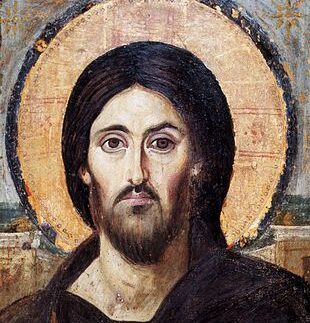

Confession and Repentance | The Voice 13.30: July 23, 2023

posted in: The Voice | 0

The Voice

Popular Beliefs: Confession and Repentance

Because if thou shalt confess with thy mouth Jesus as Lord, and shalt believe in thy heart that God raised him from the dead, thou shalt be saved: for with the heart man believeth unto righteousness; and with the mouth confession is made unto salvation (Romans 10:9-10).

And when they heard these things, they held their peace, and glorified God, saying, Then to the Gentiles also hath God granted repentance unto life (Acts 11:18).

Christianity features many beliefs and practices that prove very popular; many of them are accepted and perpetuated without much thought or consideration to what is said in the Scriptures. We do well to test the spirits and prove all things so that we may be able to do all things in good conscience by Jesus’ authority (Colossians 3:17, 1 John 4:1).

Both confession and repentance are important elements of Christian faith and practice. Both are enjoined upon Christians according to the Scriptures (Acts 2:38, 11:18, Romans 10:9-10). Nevertheless, many maintain misapprehensions about the nature of confession and repentance on account of religious confusion and incomplete definitions.

Confession translates the Greek term homologeo, which means “to speak the same thing as.” In confession, therefore, we are verbalizing what we recognize to be true.

When most people think about confession they immediately think about confession of sin. When we speak about the need to confess in order to be saved, as in Romans 10:9-10, it becomes very easy and understandable to assume that such confession involves confession of sin. And so it is that many believe and teach that we must confess that we are sinners or even our specific sins in order to satisfy the need for confession in Romans 10:9-10.

For Christians who are already in Christ, confession of sin is necessary if we would be forgiven of sins we have committed while in Christ (1 John 1:9). We must confess our sins before God; we do well to have at least one fellow Christian with whom we feel comfortable confessing our sin (James 5:16, 1 John 1:9). Honest grappling with our sins before God and among trusted Christians proves necessary for a healthy faith and walk in life; if we prove unwilling to speak out our sins, we allow them to fester and grow toxic within us, leading us to greater sin, alienation from God and His people, and we risk condemnation. David spoke well regarding this situation in Psalm 32:1-11.

Confession of sin is important and necessary for Christians, but it is not the confession spoken of in Romans 10:9-10. By coming to belief in Christ we already demonstrate our recognition that we are sinners (Romans 3:23); we see no indication in the New Testament of God requiring the one who would come to Christ to confess all of their sins beforehand. Instead Paul speaks of confessing that Jesus is the Christ, the Son of the Living God, the good confession which Simon Peter made in Caesarea Philippi and that Jesus made before Pilate (Matthew 16:15-20, Luke 23:1-3; cf. 1 Timothy 6:13). Without a doubt Timothy made this confession before many witnesses (1 Timothy 6:12); while Acts 8:37 may be textually in dispute, the Ethiopian eunuch would have most likely made a confession similar in substance before he was baptized.

Western Christians may take confession of Jesus as the Christ for granted, but it remains an important moment in our faith. Belief and faith is something which only God and the believer can see; for anyone else to know it, the believer must say what they believe. Such a statement at many times and in many places comes with significant risk to life and limb, and yet it remains necessary as an encouragement to fellow believers and for the confessor him or herself to verbally identify with Jesus and thus with His people. This confession of Jesus as the Christ is the confession of the Gospel message and remains the basis for our faith and continued participation in the purposes of God (cf. 2 Corinthians 9:13, Hebrews 3:1, 4:14, 10:23, 13:15).

When we come to faith in Jesus, we must confess that He is the Christ, the Son of the Living God; once in Christ, we then must hold fast to that confession and live according to it, confessing our sins when we fail to live up to the standard of the Gospel of Christ.

Confusion exists regarding confession on account of its multiple applications in definition. Many are confused about repentance on account of different meanings between English and Greek. In English, repentance involves expressing regret or sorrow for past behavior: being sorry for having committed sin. The Greek term translated by repentance is metanoia, which means “a change of mind,” generally for the better.

Repentance is a major element of the Gospel message; Jesus’ proclamation to Israel can be summarized as, “repent, for the Kingdom of Heaven is at hand” (Matthew 4:17). On Pentecost Peter expected the Israelites who believed in Jesus to repent (Acts 2:38); when Jewish Christians perceived the hand of God in the conversion of Cornelius, they declared that God had granted to the Gentiles the repentance that leads to life (Acts 11:18). God expects those who would come to Christ to repent; Christians are to live so as to make good on that repentance and repent whenever they turn aside from following Jesus (Acts 26:20).

By necessity such repentance involves sorrow for past sin and the past trajectory of one’s life; by deciding to make a change and to follow Jesus, we demonstrate recognition of the error of our past deeds. We are to be ashamed of the things we did in the past which led us to death (Romans 6:21); we must never forget what we were before we came to Jesus, and resolve to never be like that again (Ephesians 2:1-10, Titus 3:3-8).

But Biblical repentance is much more than just being sorry for what we did in the past: it is the mental resolution and commitment to follow the ways of Jesus wherever they lead. We come to Jesus when we recognize that He is the Christ, the Son of the Living God; we are to declare that confidence before others. It is in repentance that we make good mentally on that faith: we have come to know that Jesus is Lord, so we now are committing to do what He says. The resolution is mental; Jesus emphasized that what we feel and do is an expression of what we believe and think, and so if we wish to change our feelings and actions, we must first change our beliefs and thoughts (Mark 7:14-23; cf. Philippians 4:8). If we change our thoughts and mind, our feelings and actions should follow.

Peter manifests an excellent commitment to repentance in John 6:68-69. He trusts that Jesus is the Holy One of God and that He has the words of eternal life. We know that Peter will experience many trials and difficulties because his understanding of Jesus and His mission were not entirely consistent with who Jesus really was and what He was actually doing (cf. John 13:36-38); nevertheless, Peter maintained his confidence in Jesus as the Holy One of God and proved willing to change his mind and behavior to align with Jesus’ will (John 21:15-19, Acts 1:1-12:25).

Both confession and repentance are necessary for salvation yet remain important behaviors with significant implications throughout our lives in the faith. To come to Jesus we must declare with our mouths that He is the Christ, the Holy One of God; we must change our minds, deciding to follow Jesus wherever He may lead us. We must then continue to live our lives in light of that confession and repentance, continually confessing our failings and wrongdoing before God and trusted Christians, continually changing our minds when necessary so as to pursue righteousness and avoid immorality, manifesting our confession and repentance in our lives. May we put our trust in Jesus as Lord, confess Him, and repent, and obtain salvation!

Ethan R. Longhenry

Futile Frustrations | The Voice 13.29: July 16, 2023

posted in: The Voice | 0

The Voice

Futile Frustrations

Not only that, but I have seen the wicked approaching and entering the temple, and as they left the holy temple, they boasted in the city that they had done so. This also is an enigma.
When a sentence is not executed at once against a crime, the human heart is encouraged to do evil.
Even though a sinner might commit a hundred crimes and still live a long time, yet I know that it will go well with God-fearing people – for they stand in fear before him. But it will not go well with the wicked, nor will they prolong their days like a shadow, because they do not stand in fear before God.
Here is another enigma that occurs on earth: Sometimes there are righteous people who get what the wicked deserve, and sometimes there are wicked people who get what the righteous deserve. I said, “This also is an enigma.”
So I recommend the enjoyment of life, for there is nothing better on earth for a person to do except to eat, drink, and enjoy life. So joy will accompany him in his toil during the days of his life which God gives him on earth.
When I tried to gain wisdom and to observe the activity on earth – even though it prevents anyone from sleeping day or night – then I discerned all that God has done: No one really comprehends what happens on earth. Despite all human efforts to discover it, no one can ever grasp it. Even if a wise person claimed that he understood, he would not really comprehend it (Ecclesiastes 8:10-17).

We have some unanswerable questions about the way things seem to work in the world. These questions display our frustrations with the capriciousness and unfairness we see in the world. The Preacher addresses them, but few will appreciate his “answer.”

Throughout Ecclesiastes 1:1-6:12 the Preacher meditated upon the hevel of life under the sun: all is vain, futile – truly absurd. He compares most human endeavors toward meaning as “chasing after wind”: people pursue pleasure, wealth, wisdom, or other things looking for ultimate purpose and satisfaction and will be disappointed and frustrated by all of them. To rage against such truths is itself futile and striving after wind. God understands better than we do. In Ecclesiastes 7:1-8:9 the Preacher seemed to have set forth a series of aphoristic exhortations not unlike the proverbs for which he is well known loosely organized around the theme of wisdom. In Ecclesiastes 8:1-9 the Preacher would continue in the same aphoristic vein and loosely organized his exhortations around wisdom in terms of the exercise of and submission to power.

The Preacher made a series of “observations” regarding life “under the sun” and drew some conclusions about it all in Ecclesiastes 8:10-17. Our understanding of the first observation is complicated by textual ambiguity in Ecclesiastes 8:10. A good number of translations try to make sense of the Masoretic Text as is, reflected in the ASV: “so I saw the wicked buried, and they came to the grave; and they that had done right went away from the holy place, and were forgotten in the city: this also is vanity.” The NET follows a slight emendation of the Masoretic Text, as above. Thus the Preacher has either observed how wicked people were buried while righteous people would go to the temple and enjoyed no regard; or he has observed how the wicked enter the temple and would then boast in the town, ostensibly justifying themselves in their wickedness by claiming God’s provision, protection, and thus justification. Either way the Preacher observed how the wicked could justify themselves and rationalize their behavior and the righteous would receive no such benefit. People then and now have become quite frustrated with such a miscarriage of justice and perpetuation of oppression. The Preacher considered it hevel, futility or absurdity, here well understood as an enigma, something which we cannot and will not be able to understand.

The Preacher followed up with an apt observation in Ecclesiastes 8:11: when justice is not meted out quickly, the human heart can easily rationalize evil behaviors. This is a premise few would dispute; people everywhere can point to examples of people behaving badly in flagrant ways, and the lack of punishment emboldened them, and perhaps others, to continue in such behaviors. There will always be people who will push the envelope regarding the kinds of behaviors with which they can get away; if such people receive no consequences for what they do, they will keep doing it until consequences are thus meted out.

Ecclesiastes 8:10-11 would be enough to leave almost everyone in despair regarding righteousness and wickedness. The Preacher might have sensed as much and would not allow this to be the last word. In Ecclesiastes 8:12-13 the Preacher conceded the strong likelihood of some among the wicked living long and peaceful lives despite their flagrant sinfulness yet still maintained greater confidence in the righteous who stand in fear before God. We do well to hold firmly to all dimensions of the Preacher’s words here. There will be some people who flagrantly sin and disregard God and who do not get struck down immediately. But those who fear God will be vindicated at some point or another; the lack of a fear of God will eventually cause great pain, distress, and downfall for the wicked, whether in this life or in the hereafter.

The Preacher then set forth his second “observation”: he has seen how some people suffer despite or even for being and doing good, while others live in wicked and sinful ways yet seem to prosper and succeed as God had promised for the righteous, or, as we would put it, good things happened to bad people while bad things happened to good people (Ecclesiastes 8:14).

Such is one of the most pressing questions for many modern people, part and parcel of the challenge of theodicy: how can a good God allow such evil to take place? Many might imagine such a question and challenge would be thoroughly examined and explained in Scripture, but the matter is only addressed in such terms in Ecclesiastes 8:14 and in the book of Job.

And modern man, in his quest for knowledge unto mastery, cannot help but be all the more frustrated with the Preacher’s “answer”: yes, good things happen to bad people, and bad things happen to good people, and it also is hevel; futile, absurd, an enigma. It seems to be the “non-answer answer,” yet there is great and profound wisdom in it. The Preacher understood two important premises: there is a Creator God who shows covenant loyalty to His people, and bad things happen to good people while good things happen to bad people. How the former could allow for the latter is beyond our understanding. Why it all is the way it is remains well beyond our pay grade. In no way, shape, or form is the Preacher justifying or commending wickedness; he pointed out how we cannot get any of the answers we seek.

As a result, the Preacher commended enjoying life: under the sun we do well if we can eat, drink, and to enjoy life and the work we do (Ecclesiastes 8:15). We will easily drive ourselves to despair and defeat if we obsess over the questions we cannot know and understand. A better life can be enjoyed by coming to grips with our finite, limited understanding and ways and to find enjoyment in what we can in life. Such is not a call for epicurean hedonism; remember well how the Preacher has commended righteousness in the fear of God. But it is a reminder we can drive ourselves to despair by trying to figure out the things we were never meant to understand.

And such ultimately represents the conclusion from the Preacher’s “observations”: in trying to obtain wisdom and to understand the way of all activity on earth, even though to do so would mean to never sleep, he could see the hand of God since there was no way he or any other human being could understand it all (Ecclesiastes 8:16-17). The “wise” person who claims to understand it all must be deluded, for it is beyond him.

If there has been anything our modern scientific and technological advancements have demonstrated regarding the wisdom of the Preacher, this is it. Yes, indeed; we have a far better and greater understanding of the way things work than the Preacher could ever imagine. And yet every time we learn more about how something works, we open up new questions and horizons for consideration. Our scientific and technological advancements are like climbing the foothills of a mountain range: every time we reach a new height, an even greater mountain will appear before us. We keep reinforcing Socrates’ maxim, which is very consistent with the Preacher’s wisdom: the more we learn, the more we recognize we know nothing.

If such is the case in terms of how the material universe operates, how much more then in terms of the ways of cosmic justice and morality? Our frustrations regarding matters of theodicy and injustice are understandable, and we are not the first to express them. We do well to cry out to God in lament regarding the injustice of the prosperity of the wicked and the suffering of the righteous. Yet in the end, as in the Psalms, we do well to confess God is our Creator and is faithful, and to humbly submit to Him, recognizing we do not and cannot understand how everything works, but remain confident that He does, and that He will strengthen and sustain us until we can share in the resurrection of life.

Ethan R. Longhenry

Every Spiritual Blessing in Christ | The Voice 13.28: July 09, 2023

posted in: The Voice | 0

The Voice

Every Spiritual Blessing in Christ

Blessed be the God and Father of our Lord Jesus Christ, who hath blessed us with every spiritual blessing in the heavenly places in Christ (Ephesians 1:3).

The Apostle Paul felt compelled on many occasions to set forth various doctrinal truths about God in Christ to his fellow Christians to warn against false teaching. The time had come to provide a full, coherent picture of his understanding into the mystery of the Gospel; we find such a portrayal in Paul’s letter to the Ephesians.

While Paul’s letter to the Ephesians features the same doctrinal positions seen in other letters, it seems very impersonal. Ephesians does not contain the same kind of personal details about Paul or the Christians to whom he wrote as can be found in all of his other correspondence; “in Ephesus” in Ephesians 1:1 is not found in all copies of the manuscripts. For these reasons Ephesians is often considered an “encyclical” letter, intended to be distributed among many local churches. Regardless, it is hard to assume much about the condition of the church in Ephesus on the basis of what is written in Ephesians.

After his standard greeting (Ephesians 1:1-2), Paul began his letter with a broad, sweeping, and majestic sentence glorifying God for all the spiritual blessings with which He blessed us in Jesus (Ephesians 1:3-14). Ephesians 1:3-14 is the longest sentence in the New Testament: while English translations generally wisely break it down into many sentences for clarity, we must remember they all represent the spiritual blessings with which God has blessed the Ephesian Christians, and by extension all Christians, in Christ (Ephesians 1:3).

God has chosen Christians in Jesus before the foundation of the world to be holy before Him; God predestined Christians to adoption to the praise of His grace freely bestowed on us in Christ (Ephesians 1:4-6). Paul had no desire to deny human freedom or volition; Augustinian Calvinist notions of God predetermining who would be saved and condemned arbitrarily must be imposed on the text. Paul instead sought to encourage Christians: their standing in Christ is no accident. Jesus’ death, resurrection, and inauguration of His Kingdom were not a hastily concocted “plan B” when everything else failed. Instead, from before the beginning, God had determined to create the universe, redeem mankind through His Son, and provide a way of holiness in Him. Paul would also speak of adoption as sons of God in Romans 8:11-15; a man or woman submits to adoption in order to gain the inheritance of the father, and in this way Christians gain standing in order to inherit the eternal promises God has made in Jesus.

God secured redemption for Christians in Jesus according to the riches of His grace; God’s grace abounds for Christians, who have learned of the mystery of God’s will now manifest in Jesus and His Kingdom (Ephesians 1:7-10). Jesus’ sacrifice for our sins represents the ultimate gift God has given mankind (cf. 1 John 4:7-11); God continues to bestow gifts of grace upon His people in Jesus and yearns for Christians to consider His presence and life as the greatest gift of all (cf. Revelation 21:1-22:6). We think of “mystery” as something unknown, a problem to be solved; in the New Testament it is an “unveiling,” something manifest only through the revelation of God. Later in Ephesians Paul would elaborate more upon the mystery (cf. Ephesians 3:1-11); here he centered the story on God’s good purpose in Jesus whom He made the sum of all things.

Whereas Christians inherit the blessings of life and salvation in Christ, God obtains Christians as His heritage, having predetermined them as His praise in His glory, and who has given them the Holy Spirit as a guarantee of their inheritance until the final day of redemption (Ephesians 1:11-14). Paul began to make a contrast between “we who had hoped in Christ” and “you” his Ephesian audience, perhaps as between Jewish Christians and Gentile Christians. We would again be remiss to impose Augustinian Calvinist views on the text; in Ephesians 3:1-11 Paul will explain how God manifested His wisdom and eternal purpose by bringing Jews and Gentiles into one body in Christ in the church. Paul instead stepped back to appreciate the beauty of what God has accomplished in Jesus. God is praised in the redemption of Jewish Christians in Christ who had hoped in the coming Messiah and proved willing to recognize him in Jesus; God is praised in the redemption of Gentile Christians who are welcomed in Jesus. The Holy Spirit was given to Christians both as a seal of their redemption and as a down payment on their salvation; throughout Ephesians Paul will speak of how God worked through His Spirit to build up and strengthen Christians.

Having set forth the spiritual blessings with which God has blessed Christians in Jesus, Paul gave thanks and prayed for the Ephesian Christians in another lengthy sentence (Ephesians 1:15-23). Paul gave thanks for the Ephesian Christians, having heard of their faith in Jesus and love for their fellow Christians whom he calls “saints” (Ephesians 1:15-16). Christians do well to be encouraged by Paul’s example: we should never take the faith of others for granted, but ought to thank God for them.

Paul prayed for God to give the Ephesian Christians a spirit of wisdom and revelation of knowledge to enlighten their hearts to know the hope of God’s calling in Jesus, the riches of the glory of His inheritance in the saints, and the great power of God working on behalf of Christians (Ephesians 1:17-19). Paul did not pray for God to give the Ephesian Christians head knowledge; he already recognized their faith in Christ, and expected them to have intellectual recognition of the truth of these things. Instead Paul prayed for God to give them heart knowledge, confidence in the hope of salvation in the resurrection, the majesty of the glorification of the Kingdom by God on the final day, and the great power which God presently would work for, in, and through them. It has been said that the greatest distance in the universe is between the head and the heart; we Christians intellectually recognize the truths of God in Christ, but have they been imprinted on our hearts so that we trust deeply and are strengthened to overcome any trial by keeping our faith fixed on the glory awaiting us?

God’s power is manifest in Jesus, raised from the dead, ascended to the right hand of God, ruling over everything, made head over all things to the church, the body of Christ, the fullness of Him who fills all in all (Ephesians 1:20-23). God has great power and He has given it over to Jesus. Jesus’ authority over heaven and earth is the foundation of the Gospel call to obedience to His purposes and empowers the Christian’s resistance against the idolatrous claims of the forces of darkness and the nation-states empowered by them (cf. Daniel 7:13-14, Matthew 28:18, Ephesians 6:12, Revelation 13:1-15:4). Yet all of this power has been given to Jesus for the sake of His body, the church, the people who assemble to praise and glorify His name and encourage each other (1 Corinthians 12:12-28, 14:26, Ephesians 4:11-16). How many great and powerful things could God do through us if we would only trust extravagantly in Him and pray for Him to accomplish His glorious and majestic purposes in us?

Adoption, redemption, an inheritance, the Holy Spirit, access to God, participation in God’s work in Christ: all these blessings, and many more, Christians receive through Jesus Christ. May God give all of us in Jesus Christ a spirit of knowledge and wisdom to enlighten our hearts so we may know the hope of His calling, the riches of the glory of His inheritance in the saints, and the exceeding greatness of His power toward us who believe!

Ethan R. Longhenry

Categorization | The Voice 13.27: July 02, 2023

posted in: The Voice | 0

The Voice

Categorization

In the Western world we have inherited a significant predilection for categorization.

This impulse likely derives all the way from our Greek philosophical progenitors who attempted to ascertain how things work and why things are the way they are in a systematic way. Any kind of attempt toward a systemization will almost invariably lead to the impulse to categorize; otherwise, how can one make sense of the data one is systematizing?

And yet the Greek philosophers still sought to understand their environment in more cohesive and coherent terms. As we have expanded our understanding and insights into the world we have encouraged the move toward specialization. Specialization can only really exist when people have strictly circumscribed various disciplines, and this is being done to ever narrower degrees as our knowledge and understanding expands.

Yet this impulse toward categorization in the Western mindset goes well beyond knowledge and its disciplines. Modern Westerners have established categories for seemingly everything. We categorize different groups of people based on our experiences and prejudices. We categorize our lives based on various events, milestones, or experiences. We even categorize ourselves, looking at ourselves and conducting ourselves differently in various environments and contexts.

This Western impulse to categorize has become so thoroughly enmeshed in our understanding that we cannot imagine the world otherwise. We assume everyone everywhere has participated in such categorizations. The way we lump ourselves, others, and all things into various categories is so normal for us we assume it must be the case for others as well.

It is not as if categorization is inherently a bad thing. We have been able to advance human knowledge and understanding in significant ways on account of establishing and maintaining categories and standards for exploring and learning in those categories. We all very much want specialists to be very well versed in their specialties. Many insights and connections can be made within the disciplines of various categories which may not have been as evident or perceptible otherwise.

Nevertheless, despite Western conceit, such levels of categorization are not inherent or intrinsic to all humanity. Many other cultures have envisioned their world in different ways and did not feel the impulse to categorize to the extent manifest in modern Western thinking. And from those cultures we can obtain and appreciate some critique of our impulse toward categorization.

We are only beginning to grapple with the ugly, sinful, and abhorrent heritage inherent in the Western categorizations of various people. From the beginning the Scriptures indicate all humans derive from Adam and are made in the image of God (Genesis 1:1-2:3, Acts 17:26); people may be part of different nations, but none are intrinsically better or worse than any other. Those in the West saw themselves as the “superior” and “master” race and opined on the “subhuman” origins of other races; within living memory the superiority and supremacy of the white race was still held as “common sense” which “everyone understood.” Plenty of people today presume themselves superior to others on account of the category of people in which they have placed themselves and look down on those whom they have placed in other, “lesser” categories.

Categorization breeds such dehumanization and depersonalization. Much has been built regarding various forms of stereotyping masquerading as categorizations. People are defined by their generation, their place of ancestry, their current geographic location, their political proclivities, their income level, their education level, their religious affiliations, and such like. People then assume they know all about others based on the alignment of these various categorical boxes. While it is likely many people in a similar stage of life or framework may have many beliefs and feelings in common, few people fit entirely neatly in any individual box or category. Have you ever felt alienated or dismissed because someone identified you as fitting into a given category and thus assumed you thus must affirm or believe a given set of ideas or perform a given set of practices? Furthermore, how many people shift their views in order to fit within these categories because they have been pigeonholed into such categories? How much better might our discourse and interpersonal relations be if we did not assume we understood what people believed or practiced merely based on certain demographic categories?

Our impulse to categorize often leads to a failure of imagination in an inability to perceive a greater whole. While Western categorical and specialist approaches in medicine have led to significant advancements in understanding, the “silo effect” is very real, and many people have endured great suffering because their difficulties cross different specialties and their medical practitioners seem incapable of seeing the whole picture. Many times, great advancements and developments in one specialized field could well illuminate others, yet there is no generalist who can be found to make such connections. Advancements in specialties generally outpace ethical and moral considerations. Such is how we now have many technological advancements which involve a nontrivial chance of the devastation of human life on the planet that seem to continue to advance without any sort of check or restriction.

Personal categorization remains the breeding ground of hypocrisy. We can easily fall prey to the temptation to separate out our “work lives” from our “personal lives,” and especially our “Christian” lives from either or both, despite the exhortation to bring the Reign of God in Christ to bear in every aspect of our lives (cf. Ephesians 5:21-6:9, etc.). The impulse to specialize has also led many Christians to justify themselves in their lack of experience and effort in many aspects of the faith: they have become used to leaving various specialties to “the professionals,” and thus imagine they can leave the work of the faith to the “religious professionals” and just keep paying them and all will be well, even though the work of the “religious professionals” is really to equip said Christians so they can also jointly participate in the work of faith (Ephesians 4:11-16)!

Obsessions with categorizations have often led many to fall prey to category errors in the interpretation of Scripture. Far too often we are tempted to invent categories, impose them on the Scriptures, and then come to conclusions quite foreign and strange to the Biblical text on account of them. This temptation exists across all the various spectra of belief and faith. The premise of same-sex sexual relationship affirmation can only be sustained by imposing on the Scriptures the Victorian-era categorizations of sexuality in terms of “homosexuality” and “heterosexuality” and then presuming since Paul could not have conceived of a “loving same sex sexual relationship,” such are not condemned. At no point in these conversations is the conceit of the legitimacy of the new categorizations ever questioned despite the fact queer theory would completely undermine the Victorian framework, and this remains true even of those who are on the other side of the spectrum, who have normalized the same framework and thus find ways to commend “heterosexuality” over “homosexuality.” It is worth noting how the Roman framework of understanding the honor/shame of sexual behavior in terms of penetrator/penetrated is also not assumed, commended, or justified in Scripture. Instead, Scripture speaks regarding sexual conduct, not exhorting anyone to “heterosexuality” or any specific kind of “-sexuality” but chastity (1 Corinthians 6:12-20, 1 Thessalonians 4:3-8).

Sometimes these categorizations may even be based on distinctions witnessed in Scripture and yet too much can be made of them. A notable example of this regards the nature of the church. In Scripture we can discern uses of ekklesia which speak of what we call the “church universal,” the one body of all believers (e.g. Romans 12:3-8), and other uses of ekklesia which speak of what we call the “local church,” an individual congregation or a group of individual congregations (e.g. Romans 16:16). Much effort is then expended regarding the attempt to distinguish between these two categories and to systematize the portrayal of each. And yet the Apostles throughout use ekklesia for both and do not make explicit distinctions, most likely because individual congregations of the Lord’s people should reflect the universal body at a given place and time. Thus, even when our categorizations retain some merit, we must be careful lest we make much more of those categorizations than the inspired authors ever intended.

Considering things in terms of categories is not merely a Western phenomenon, and it is not inherently or intrinsically bad. Yet as with all things involving humanity, we can easily make categories absolute or view or use categories in corrupt ways. Such abuses and corruption in categorization have led to many disastrous results in human history and have been part of how horrible atrocities have been rationalized and executed. We do best to hold to categories lightly, recognizing their utility while cognizant of their limitations. We must resist the failure of imagination which comes from uncritical acceptance and clinging to categories and categorization. We do best when we subject all things to God in Christ and seek to bring His reign to bear in all things so we can obtain the resurrection of life!

Ethan R. Longhenry

“Once Saved, Always Saved”? | The Voice 13.26: June 25, 2023

posted in: The Voice | 0

The Voice

Popular Beliefs: “Once Saved, Always Saved”

“My sheep hear my voice, and I know them, and they follow me: and I give unto them eternal life; and they shall never perish, and no one shall snatch them out of my hand. My Father, who hath given them unto me, is greater than all; and no one is able to snatch them out of the Father’s hand” (John 10:27-29).

Christianity features many beliefs and practices that prove very popular. People hear about them frequently; their legitimacy is often taken for granted. The Scriptures commend and justify many such beliefs and practices, but we cannot assume that merely because a belief or practice is popular that it is authorized by and pleases God in Christ. We must test all the spirits (1 John 4:1); we must prove all things in Christ (Colossians 3:17).

A very popular belief among Evangelicals can be summarized as “once saved, always saved,” and is sometimes spoken of in terms of eternal security. According to this view once a person has obtained salvation in Christ there is no way in which that person can lose their salvation. This view is often defended by an appeal to John 10:27-29 or Romans 8:31-39; it is also often suggested that since we have done nothing to earn or obtain salvation, there is nothing we can do to lose salvation. Are these claims consistent with what is revealed in the New Testament? Do the Scriptures teach that once we are saved, we are always saved?

Christians can maintain confidence they are in Christ even though outside circumstances prove challenging. It would be easy for Christians to wonder if God had abandoned or forsaken them while they endured trial on the earth; Jesus and Paul seek to reassure Christians in such circumstances, for earthly authorities and spiritual powers of darkness need not triumph, and they cannot separate the Christian from the love of God in Christ Jesus (John 10:27-29, Romans 8:31-39).

Yet the New Testament does not extend this same confidence to those who persist or return to sin without repentance.

“Not every one that saith unto me, ‘Lord, Lord,’ shall enter into the kingdom of heaven; but he that doeth the will of my Father who is in heaven.
Many will say to me in that day, ‘Lord, Lord, did we not prophesy by thy name, and by thy name cast out demons, and by thy name do many mighty works?’
And then will I profess unto them, ‘I never knew you: depart from me, ye that work iniquity'” (Matthew 7:21-23).

Now the works of the flesh are manifest, which are these: fornication, uncleanness, lasciviousness, idolatry, sorcery, enmities, strife, jealousies, wraths, factions, divisions, parties, envyings, drunkenness, revellings, and such like; of which I forewarn you, even as I did forewarn you, that they who practise such things shall not inherit the kingdom of God (Galatians 5:19-21).

Take heed, brethren, lest haply there shall be in any one of you an evil heart of unbelief, in falling away from the living God: but exhort one another day by day, so long as it is called To-day; lest any one of you be hardened by the deceitfulness of sin: for we are become partakers of Christ, if we hold fast the beginning of our confidence firm unto the end (Hebrews 3:12-14).

For as touching those who were once enlightened and tasted of the heavenly gift, and were made partakers of the Holy Spirit, and tasted the good word of God, and the powers of the age to come, and then fell away, it is impossible to renew them again unto repentance; seeing they crucify to themselves the Son of God afresh, and put him to an open shame (Hebrews 6:4-6).

For if we sin wilfully after that we have received the knowledge of the truth, there remaineth no more a sacrifice for sins, but a certain fearful expectation of judgment, and a fierceness of fire which shall devour the adversaries. A man that hath set at nought Moses’ law dieth without compassion on the word of two or three witnesses: of how much sorer punishment, think ye, shall he be judged worthy, who hath trodden under foot the Son of God, and hath counted the blood of the covenant wherewith he was sanctified an unholy thing, and hath done despite unto the Spirit of grace?
For we know him that said, “Vengeance belongeth unto me, I will recompense.”
And again, “The Lord shall judge his people.”
It is a fearful thing to fall into the hands of the living God (Hebrews 10:26-31).

For if, after they have escaped the defilements of the world through the knowledge of the Lord and Saviour Jesus Christ, they are again entangled therein and overcome, the last state is become worse with them than the first. For it were better for them not to have known the way of righteousness, than, after knowing it, to turn back from the holy commandment delivered unto them. It has happened unto them according to the true proverb, The dog turning to his own vomit again, and the sow that had washed to wallowing in the mire (2 Peter 2:20-22).

These passages, in no uncertain terms, warn the Christian that the one who persists in sin without repentance will not be saved but will have fallen away. Many may seek to claim that such people were never saved, and might appeal to 1 John 2:18-20; Jesus spoke of the great deeds done and even spiritual gifts manifest by such people, the Hebrews author declared they were sanctified by Jesus’ blood of the covenant, and Peter considered them as having escaped the defilements of the world through the knowledge of Jesus (Matthew 7:22, Hebrews 10:29, 2 Peter 2:20). If it is true that such people were never actually saved, then none of us can have any real confidence that we are saved! And yet the Hebrews author, Peter, and John have greater confidence in the standing of such Christians before God as would be demanded by this understanding (Hebrews 6:9-12, 1 Peter 1:3-9, 1 John 2:1-6). Many may attempt to protest, and suggest that such people are still saved but have lost their testimony, or are saved but will not enter heaven; in so doing they would render “salvation” meaningless. If one can be saved without entering heaven, what hope can we maintain? From what are we “saved,” and to what end?

The doctrine of “once saved, always saved” is highly dependent on other doctrines. It originates in the Calvinist concept of “perseverance of the saints,” which logically follows from the four other points in the TULIP system. If a person is so sinful they cannot in any way turn to God (T – total depravity), and God has specifically chosen some for salvation and others for condemnation (U – unconditional election), then the blood of Christ is only effective for those who will be saved (L – limited atonement), God will inexorably call the saved (I – irresistible grace), and those who are saved will be saved no matter what (P – perseverance of the saints). Nevertheless, the full Calvinist TULIP system, while internally and logically coherent, is not consistent with what God has revealed in Scripture about the nature of election, predestination, or salvation. Those who adhere to “once saved, always saved” would agree, since many in Evangelicalism have jettisoned limited atonement and many elements of unconditional election and irresistible grace while still attempting to insist on total depravity and perseverance of the saints.

And so, if the other doctrines on which “once saved, always saved” depends prove inconsistent with Scripture, then “once saved, always saved” itself falls apart as a consequence. The Scriptures do not teach total depravity, unconditional election, or irresistible grace; they are extremist positions not consistent with the words or behavior of God or Jesus. Even sinners love sinners and do good to those who do good to them (Matthew 5:46-47); we may not earn salvation by works, but we must prove obedient in our faith if we will be saved (Romans 1:5, 6:1-23, James 2:14-26, 1 John 2:3-6); condemnation in Scripture is based on works, not God’s sovereign choice (Romans 2:5-11, 2 Thessalonians 1:6-9); God is love, and love, by its very nature, does not coerce or compel (1 Corinthians 13:4-8, 1 John 4:8).

If we must work out our salvation with fear and trembling, endure to the end, and do the commandments of Jesus if we would be saved, then it cannot be true that we cannot do or neglect anything so as to lose our salvation (Matthew 10:22, Philippians 2:12, 1 John 2:3-6). Jesus and Paul powerfully affirm that no external force can separate us from the love of God, but they nowhere suggest that we ourselves cannot decide to turn away from the salvation offered to us and fall from grace. If God is love, why would we expect Him to force a person who rejected Him to be saved and enter into His glory?

“Once saved, always saved” is a doctrine derived from the ideas of men and is not rooted in what God has revealed through Jesus Christ. While “once saved, always saved” distorts what God has promised believers, its opposite, “if saved, barely saved,” would put far too much emphasis on our obedience and works as they relate to our standing in Christ. The Christian is not to be lulled into a sense of complacency, believing their salvation secure no matter what they do; and yet to live in a constant state of fear and paralysis, constantly doubting one’s salvation, is no better.

Both extremes fail to grapple with our salvation in Christ as based in relationship. In Christ God seeks to reconcile the world to Himself (Romans 5:6-11); we are to become one with God and each other as God is One in Himself (John 17:20-23). Relationships are based in love and trust: we know the love God has for us in Christ, and He has demonstrated His faithfulness over and over again (John 3:16, 1 Peter 1:3-9). We love, trust, and obey in relationship; the relationship is damaged but not obliterated when we transgress God’s standard, and we are called to confess that wrong, ask for forgiveness, and maintain confidence we have received it (1 John 1:8-10). God recognizes our limitations and weaknesses; that is why provision for forgiveness is given (1 John 2:1). But if we turn away from the relationship and reject God in Christ, we will suffer the consequences of separation from God for eternity; God will not force us back into relationship if we reject Him by word and/or deed (Matthew 7:21-23, 2 Thessalonians 1:6-9). Christians can outrage the Spirit of grace and profane the covenant by which we have been sanctified; Christians can turn back and no longer follow the Lord Jesus. Nevertheless, let us determine never to do so, but seek the way of God in Christ to obtain the resurrection of life and obtain the glory the Father seeks to give us on the final day!

Ethan R. Longhenry

Wisdom and Power | The Voice 13.25: June 18, 2023

posted in: The Voice | 0

The Voice

Wisdom and Power

Who is a wise person? Who knows the solution to a problem? A person’s wisdom brightens his appearance, and softens his harsh countenance.
Obey the king’s command, because you took an oath before God to be loyal to him. Do not rush out of the king’s presence in haste – do not delay when the matter is unpleasant, for he can do whatever he pleases. Surely the king’s authority is absolute; no one can say to him, “What are you doing?” Whoever obeys his command will not experience harm, and a wise person knows the proper time and procedure. For there is a proper time and procedure for every matter, for the oppression of the king is severe upon his victim.
Surely no one knows the future, and no one can tell another person what will happen. Just as no one has power over the wind to restrain it, so no one has power over the day of his death. Just as no one can be discharged during the battle, so wickedness cannot rescue the wicked.
While applying my mind to everything that happens in this world, I have seen all this: Sometimes one person dominates other people to their harm (Ecclesiastes 8:1-9).

It is wise to obey the king. But the king must remember why it is important to exercise power well.

Throughout Ecclesiastes 1:1-6:12 the Preacher meditated upon the hevel of life under the sun: all is vain, futile – truly absurd. He compares most human endeavors toward meaning as “chasing after wind”: people pursue pleasure, wealth, wisdom, or other things looking for ultimate purpose and satisfaction and will be disappointed and frustrated by all of them. To rage against such truths is itself futile and striving after wind. God understands better than we do. In Ecclesiastes 7:1-29 the Preacher seemed to have set forth a series of aphoristic exhortations not unlike the proverbs for which he is well known loosely organized around the theme of wisdom. In Ecclesiastes 8:1-9 the Preacher would continue in the same aphoristic vein and loosely organized his exhortations around wisdom in terms of the exercise of and submission to power.

Yet the Preacher introduced this portion of his exhortation by speaking of how a person’s wisdom can brighten and soften their appearance (Ecclesiastes 8:1). Perhaps the Preacher considered this a matter of fact; or perhaps it is an aspiration, an exhortation to those with wisdom to loosen up a little bit and not look so harsh once in a while. When we feel we have come to an understanding of something, a “eureka” moment, we do generally exult in it and such can be seen on our faces. So there is likely something to what the Preacher has declared here.

Then the Preacher considered how a person should conduct himself around a king in Ecclesiastes 8:2-6. A subject should obey the king’s command because he swore an oath of loyalty before God to do so. A subject should not leave the presence of the king quickly nor should he delay to come when he knows it will not be a fun time, since the king has great power. Who has the power to ask the king about what he is doing? Those who obey the king will not be harmed by him, and a wise person knows the appropriate time and protocol for matters. It is good to know as much since the oppression of the king is strong against anyone to whom it is directed.

Such insight, knowledge, and wisdom would prove most apt for the king’s advisers, counselors, officers, and staff; the average subject would rarely, if ever, receive an audience with a king. It might seem somewhat self-serving for Solomon the Preacher, as king of Israel, to encourage such deference; nevertheless, as a king with such power, his exhortation comes somewhat from experience, and yet also somewhat from aspiration. Ancient kings did tend to rule with absolute authority over their subjects, but plenty of intrigue was generally afoot in the court, and just as familiarity breeds contempt, so too the intimates of the king could easily fall prey to not providing him with due deference and honor.

As Christians we do well to appreciate the Preacher’s wisdom about honoring the king in terms of the ways of the world. Christians have been called upon to provide appropriate honor and subjection to the earthly authorities (Romans 13:1-7, 1 Peter 2:11-25), and they recognize their power over earthly life and death. No Christian should find him or herself providing undue offense to the dignity of governmental authorities. At the same time our primary loyalty is to the ways of God in Christ; and we might well be called upon to prioritize our higher loyalty (Acts 5:28-29). No one will be justified before God in Christ in doing heinous evil in the name of “just following orders.” Christians will generally find it difficult to navigate the tension between honoring God as God and proving subject to earthly authorities who tend to arrogate for themselves the prerogatives of God.

The Preacher then meditated some on the future. No one knows what will happen (Ecclesiastes 8:7). We do not have power over the wind, and likewise we do not have control over the day upon which we die (Ecclesiastes 8:8). As no soldier is dismissed in the heat of battle, so wickedness cannot rescue the wicked (Ecclesiastes 8:8).

Few things cause modern humans as much distress as their inability to know the future, especially since modern life is very future oriented. How much of our entertainment imagines what our lives would be like if we had insight into our future? How often have we lived more for the hope of a better future so we can endure the trials of the present? And yet we do not really know what will happen. We hope tomorrow will be better than today; perhaps today will prove better than tomorrow.

The Preacher has hit modern humanity right where it hurts: we do not have control over the day of our death. Modern life is all about mastery and control; we constantly strive to gain greater mastery over the forces of this creation which beset us. But our control will always be limited, and we rail against anything over which we cannot maintain control. We do better to heed the Preacher’s wisdom and accept our finite, created nature, and to live well as opposed to railing against the coming darkness.

The Preacher rounded out this section of his exhortation by an observation he has made in the world: people can dominate others to their own harm (Ecclesiastes 8:9). Certainly oppressed people primarily suffer from the oppression of those with power over them, but the Preacher here has the harm of the person with the power in view. This observation is an important counterweight to Ecclesiastes 8:2-6: a king has great power, and kings have been known to abuse their power, and in the process, the person most degraded and dehumanized is the king himself. Thus it goes with all who abuse their power; they are made less human as a result.

Few of us think about the amount of power we exercise in our lives; we tend to take it for granted until our power is threatened or we are deprived of it. We should all seek in wisdom to glorify God in Christ in all of our relationships, to subject our influence and power to His will and purposes, and in Christ seek to obtain the resurrection of life!

Ethan R. Longhenry

1 John: Conclusion | The Voice 13.24: June 11, 2023

posted in: The Voice | 0

The Voice

Conclusion | 1 John 5:18-21

We know that whosoever is begotten of God sinneth not; but he that was begotten of God keepeth himself, and the evil one toucheth him not. We know that we are of God, and the whole world lieth in the evil one. And we know that the Son of God is come, and hath given us an understanding, that we know him that is true, and we are in him that is true, even in his Son Jesus Christ. This is the true God, and eternal life. My little children, guard yourselves from idols (1 John 5:18-21).

Thus John concludes his first letter: perhaps not in a way we would expect, and certainly not according to conventions of the day. Yet the letter began in unconventional ways, and it should not surprise us that it would end in a similar way.

John continues to discuss matters of sin as he began in 1 John 5:16-17. Those who are born of God do “not sin,” are kept by God, and the Evil One does not touch him (1 John 5:18). But did not John say in 1 John 1:8 that we all continually sin? Are we not to be wary of the Evil One (1 Peter 5:8)?

We must not create contradiction in Scripture by making false inferences based on 1 John 5:18. Christians are not to be in the habit of sinning; thus, “does not keep on sinning,” as in the ESV.

The Scriptures make a distinction between the believer who seeks to follow God and stumbles occasionally and those who sin without any inclination toward true repentance or change (1 John 1:7-9 vs. Hebrews 10:26-31, etc.). We saw such a contrast in 1 John 5:16-17: the “sin leading to death” and the “sin not leading to death.” Christians may be guilty of the latter; if they are guilty of the former, they demonstrate that they are not truly “born of God.” Furthermore, Christians who are God’s obedient servants are justified in Christ and there is none to condemn (Romans 8:31-34), yet the danger of being tempted and to fall into sin remains (James 1:14-15, 1 Peter 5:8).

We must remember that John is attempting to encourage his fellow Christians. As part of God’s redeemed new creation, they are distinct from the world, for they know that the world is entirely in the hands of the Evil One (1 John 5:18-19; cf. 2 Corinthians 5:17, 1 John 2:15-17). They have been transformed by the renewal of their minds, and are born of God, kept by God, and from God (Romans 12:2). Thus John summarizes a main theme in his letter: believers are born of God, should cease from sin, and are not of the sinful world (1 John 1:5-2:6, 2:12-17, 2:28-3:10, 3:19-24, 4:4-6, 5:1-5, 16-18).

John continues by summarizing what has been said about Jesus the Son of God: He has come and given us understanding so we may know the One True and Eternal God, and we who believe in Him are in Him (1 John 5:20). John has spent much time making known how Jesus is God’s Son in the flesh, opposing the Gnostic teachings advancing in those days, and how believers abide in the Son (1 John 1:1-4, 2:16-25, 4:1-6, 5:1-15).

John concludes his letter with what, on the surface, seems to be a puzzling exhortation: “little children, keep yourselves from idols” (1 John 5:21). “Little children” has been one of John’s favorite expressions for believers (1 John 2:1, 12, 28, 3:7, 3:18, 4:4).

But why warn them to stay away from idols? There has been no previous discussion of idolatry per se in 1 John. Is John really concerned that believers are going to start straying from the One True God and go serve idols in the pagan temples in their midst?

While such might be a concern for a few it is not John’s primary meaning. Throughout the New Testament the concept of idolatry is expanded beyond prostration and service done before an image. Jesus speaks of “mammon,” or money, in “god-like” terms, declaring that man cannot serve both it and God (cf. Matthew 6:24). Paul twice equates covetousness with idolatry (Ephesians 5:5, Colossians 3:5). The idol that one serves, therefore, may not be an image of gold or silver. It may be an abstract concept, a lust of the flesh, or any number of things.

This is John’s final concern for his fellow Christians. They must place their emphasis in life on doing God’s commandments and abiding in Him. They must not be distracted by the world and its idols: false teachings, the lusts of the eyes and flesh, the pride of life, and so on. We have received life through the love of God manifest in Jesus Christ His Son, and the world cannot provide anything of such quality and duration. Let us be strengthened and encouraged by John’s first letter, abide in God, and keep ourselves from idols!

Ethan R. Longhenry

Knowledge Challenges | The Voice 13.23: June 04, 2023

posted in: The Voice | 0

The Voice

Challenges With Oral, Written, and Digital Knowledge

Humans, especially in the Western world, very much prize knowledge: its acquisition, its exercise, and its advancement and development.

Our relationship with knowledge, however, is fraught with many problems. We are finite, created beings; thus, there is only so much we can know and understand (cf. Isaiah 55:8-9). We have all sinned and fallen short of God’s glory (Romans 3:23): our faculties for knowledge have been thus corrupted. Such corruption is manifest in the reasoning and exercise of knowledge as well as in our ability to retain knowledge. In our corruption we are prone to misremember, consciously and unconsciously, promoting and advancing what is truly error in our limitations or with nefarious motivations.

We would like to imagine our brains as supercomputers, able to process memories and knowledge and to retain them for instantaneous recall when needed. Yet such is not how God has designed the human brain, nor is it how the human brain, in its current corruption, functions. Various aspects of memories are stored in different parts of the brain; it would seem every recall of our memory is in its own way a refabrication of what we are remembering. This function is by necessity, and in many ways, preservation: if we could remember every sense impression we ever received, we would get lost in details and not remember anything substantive; furthermore, we have plenty of memories we do best to forget or remember in a different light on account of the trauma we have experienced.

And yet all these factors mean our memory is not as reliable as we imagine it to be. The way we understand what has happened in our lives is not infallible, let alone the way we understand what has happened to others or the state of the knowledge we have thought we have obtained.

All such things reflect the challenges of life in a society in which knowledge is primarily maintained in oral transmission. It is not as if information cannot be transmitted throughout generations by means of oral transmission; but the information communicated by oral transmission will often go through various changes, often unintentionally and unconsciously, and all while the transmitters of oral knowledge insist they tell the same story. Furthermore, oral knowledge endures only as long as the information is transmitted: plague, pestilence, and/or violence can easily lead to the extinguishing of information about a given people or culture. Such is why we continue to categorize the past in terms of “historical” and “pre-historical” periods: there is only so much we can know about a culture or a people who have not preserved written records or have not communicated to others who have written it down.

For various reasons people began to develop systems by which thoughts and words could be recorded through signs on various media and could be preserved for later retrieval by the writers themselves or by those of a later time. The first of these seem to originate 6000 or so years ago in Mesopotamia and Egypt and endure to this day.

The strength of written knowledge is the creation of a fixed standard which can be maintained and referred to over time. Humans can memorize information and retain it well as long as they have a written standard to which they can make reference. Today we have far greater understanding about many aspects of ancient life in cultures which wrote down such information.

Yet written knowledge comes with its own set of challenges as recognized even in antiquity. In many respects the whole point of written knowledge is to replace “knowing something” with “knowing where to learn about something”: it fosters a “card catalog” approach to knowledge, in which the thing itself is less known but we know where to go to learn about it. Such a challenge was not entirely foreign to primarily oral cultures; we can consider how many Israelites would have made an appeal to a prophet or one trained in the Torah to figure out information about how to serve God as opposed to themselves knowing how to thus serve. But it is a challenge exacerbated by written knowledge. In terms of the Christian faith we must always insist on not just knowing about Scripture, or knowing where to find things in Scripture, but the actual knowing of Scripture, to allow the Word of God to be within a person (e.g. 2 Peter 3:18). No one has ever been transformed by God in Christ through the Spirit merely by knowing where to learn; they must actually learn the thing itself and be transformed by it.

Written knowledge is also only as good as the writings are preserved, and such was a major difficulty in the world before the printing press. Wet clay can be re-formed and thus writing on it can be erased; papyrus and paper easily decay or fall apart. We are aware of all kinds of written works which are no longer extant, most likely lost in the ravages of time; we are probably ignorant of far more. Just because something is written down does not make it true: plenty of people have written things to distort or manipulate intentionally, and far more have written with the best of intentions but ultimately in ways which did not maintain full integrity. Many arguments and disputes about doctrines in Christianity were generated or made worse by the existence of “pseudepigraphal” works, in which someone later wrote in the name of a famous ancestor, and people in later generations accepted the “pseudepigraphal” works as authentic, and drew conclusions. And even if something is written and true, errors intentional and unintentional can creep in through the copying process. Furthermore, all written language, by necessity, is interpretive: we all have to interpret what the signs written actually mean. We have some written documents from the past which we cannot read because we have not deciphered the writing system. Many English Bible translations will frequently note how “the Hebrew is uncertain” in many passages: many words in the Hebrew Bible show up once or only a few times and we do not have strong confidence in their specific likeness in English because what those terms originally meant have not been handed down. Even when we have written words well preserved through the copying process and a decent understanding of the original language, no two languages have exact equivalence in terms and thoughts; the multiplicity of Bible translations testify to the various layers of understanding which we can obtain from the text. Interpretation and application of texts also are places in which we can easily distort the original purpose of the author.

From the beginning of writing until the modern age the great barrier for people has been one of access. Written knowledge is only valuable if you know how to read and write and you have access to sources of written knowledge. Such access was often jealously guarded as the prerogative of the literate elite. As Christians we do well to remember how challenging access to the knowledge of the Scriptures proved for the first 1500 years of Christianity: only a few could read, and even then, to read would require texts available to read. Therefore, most Christians who have ever lived most likely did not read much or any of the Scriptures. Their experience with the Scriptures was mediated by those who read it and explained it to them (cf. 1 Timothy 4:13). We can find many benefits to our personal study of Scripture, and we do well to come to understand God’s purposes in Christ better through our study of Scripture; nevertheless, we never have a right to assume the only way a person can be a Christian is by means of studying the Scriptures, and should be on the lookout for how the reading and studying of Scripture can itself prove idolatrous. Far too many have confused the Author of Scripture with the Scriptures themselves; far too many have confused learning about God in Christ with the actual practices of following God in Christ.

Current generations are living through the third great revolution in knowledge: the prevalence of digital knowledge. By means of computers and the Internet the challenge of access is significantly reduced. We have instant access to a wealth of knowledge beyond anything any individual can well understand. Information is now everywhere.

The great challenge of digital knowledge involves trust. We can all easily and quickly search for information: but how can we know the information is any good? Search engines are monetized to direct you to the sources of information which pay the search engines money to that end. On almost every issue and matter we will easily find highly contradictory explanations and understandings of almost anything and everything. “I found it on the Internet” as a source is now a running joke.

Digital knowledge, therefore, is only as good as the integrity of those who post it; and our understanding of digital knowledge must be well informed with critical perspectives watching out for confirmation bias. Digital knowledge is simultaneously expansive and siloed: you can learn just about anything on the Internet, but you can also find specific and epistemically closed communities on the Internet. Such is how many people have “done their research” and believe certain things very strongly, even though others have also “done their research,” believe in certain things very strongly, and have come to radically different conclusions. With digital knowledge we must cultivate healthy self-skepticism in our critical thinking, subjecting what we want to believe and the claims of those who we deem are like us to the same critical standard to which we subject that which we do not want to believe and the claims of those we deem are not like us.

Thus no form of knowledge is a panacea; challenges persist regardless of how we know things and seek to retain knowledge. We cannot dismiss the existence of the challenges, nor can we despair of knowing anything because of the challenges. Instead we do well to navigate the challenges with the wisdom expressed by God in Christ through the Spirit and focus primarily on that which leads to greater trust in God in Christ so we are living more consistently with the witness of what God has accomplished in Christ through His Spirit!

Ethan R. Longhenry

Faith Only | The Voice 13.22: May 28, 2023

posted in: The Voice | 0

The Voice

Popular Beliefs: Faith Only

For by grace have ye been saved through faith; and that not of yourselves, it is the gift of God; not of works, that no man should glory. For we are his workmanship, created in Christ Jesus for good works, which God afore prepared that we should walk in them (Ephesians 2:8-10).

Christianity features many beliefs and practices that prove very popular. People hear about them frequently; their legitimacy is often taken for granted. The Scriptures commend and justify many such beliefs and practices, but we cannot assume that merely because a belief or practice is popular that it is authorized by and pleases God in Christ. We must test all the spirits (1 John 4:1); we must prove all things in Christ (Colossians 3:17).

A very popular belief, especially among Protestants and Evangelicals, features belief itself: belief in salvation by faith only. According to this view, the only thing that a person needs to do in order to be saved is to believe, or have faith, in Christ. This perspective often reduces faith to a set of propositions to which mental assent is given: as long as one mentally accepts the idea that Jesus is the Christ, the Son of God, such is sufficient to save. Does faith only make the best sense of what God has revealed regarding faith in the New Testament?

In English, “belief” and “faith” are synonymous yet distinct words. In Greek, the terms translated “belief” and “faith” are come from a single word family: most often “faith” translates the Greek noun pistis; “to believe” translates the Greek verb pisteuo. The Hebrews author provides a compelling definition for belief/faith in Hebrews 11:1:

Now faith is assurance of things hoped for, a conviction of things not seen.

Faith thus involves assurance and conviction; faith is grounded in knowledge about God and what He has accomplished for us in Christ, but is not merely that knowledge itself. One could know many ideas and facts about Jesus without necessarily having faith in Him. For this reason the Hebrews author goes further in Hebrews 11:6:

And without faith it is impossible to be well-pleasing unto him; for he that cometh to God must believe that he is, and that he is a rewarder of them that seek after him.

If we would come to God, we must believe that He exists. We must believe that God is the One Who Is, the Existent One, as good of a translation as any of the divine name YHWH (Exodus 3:14-15). Without a doubt we must mentally accept the propositions that God exists, is our Creator, has made Himself known through Jesus of Nazareth, who lived, died, was raised in power, is Lord, and will return (Acts 2:36, 17:23-31, 1 Corinthians 15:3-8, 1 Peter 4:19). We most assuredly must accept “the faith” as delivered once for all the saints (Jude 1:3).

But can faith rightly be reduced to mere mental acceptance of a set of propositions? James warns against such oversimplification in James 2:19:

Thou believest that God is one; thou doest well: the demons also believe, and shudder.

James is right: the demons constantly confessed their belief in Jesus as the Son of God (e.g. Matthew 8:28-29). The Scriptures extend no hope for the salvation of the demons! While mental acceptance of the proposition that Jesus is Lord is necessary for salvation, it by itself is not sufficient for us to be saved. Our faith must go deeper.

For our purposes the most important element of belief/faith is its demand of confidence or trust. If we truly believe that Jesus is Lord, by necessity, we must recognize that we are not Lord. To believe that Jesus is the Christ demands that we do what He says, just as the earliest audience of the Gospel understood (Acts 2:36-37). Jesus’ question resonates throughout time: “and why call ye me, Lord, Lord, and do not the things which I say?” (Luke 6:36).

First and foremost we must put our faith, or trust, in God in Christ for our justification. “Justification” is a big and loaded theological word that means “to be declared or made righteous.” In short, justification involves standing: on what basis can we stand before God?

It is true that many people believe their standing before God is based on their works. They believe that they have done what God wants them to do; if nothing else, they believe their good deeds sufficiently outweigh their bad deeds so as to justify their entrance into God’s pleasure. Such people labor under a delusion! We again turn to James in James 2:10-11:

For whosoever shall keep the whole law, and yet stumble in one point, he is become guilty of all.
For he that said, “Do not commit adultery,” said also, “do not kill.”
Now if thou dost not commit adultery, but killest, thou art become a transgressor of the law.

All the good deeds in the world mean nothing if we are guilty of a transgression on account of which we stand on trial: if we are on trial for stealing, and we have stolen but have not committed murder or adultery and have proven very benevolent to those in need, we remain guilty of stealing, and are rightly judged as transgressors. This is why Paul says that no one is justified before God by works of the Law in Romans 3:20: all have sinned and all have fallen short of the glory of God, and so on the basis of the Law all would be condemned as transgressors (Romans 3:23). Therefore, our standing before God is based on faith in Christ and what He has accomplished for us (John 3:16, Romans 5:6-11, Galatians 3:11).

In this way the Scriptures teach us that our justification is by grace through faith, and is absolutely not based in our works (Ephesians 2:8-9). We did nothing nor could do anything through our own efforts which could justify us, granting us standing before God, because we have all transgressed His holy laws, and through ourselves cannot atone for our transgression. We cannot earn salvation through our efforts; we do not deserve it, and it cannot be received like we receive a paycheck for work (Romans 4:1-5).

But does this mean that we are saved by faith only? In the New Testament the phrase “faith only” or “faith alone” is found only once, in James 2:24:

Ye see that by works a man is justified, and not only by faith.

How astonishing: the only mention of the idea is negated! How can this be?

In James 2:14-26 James anticipates how many would take Paul’s teachings regarding justification by faith further than God intended. James never suggests that man is saved by his works independent of faith, nor does he believe that people can be justified by works of the Law on their own. Instead James illustrates the essential nature of faith as trust: if you believe God is who He says He is, you will then do what He says.

Both Paul and James focus on the example of Abraham, and both center on the Genesis author’s comment in Genesis 15:6 (Romans 4:1-25, James 2:14-26). Paul focused on Abraham’s justification by faith: he believed in God before he received circumcision, and his standing before God was based on his faith (Romans 4:1-25). James focused on Abraham’s demonstration of trust by working in faith: Abraham received promises after proving willing to offer his son on the altar (James 2:21-23; Genesis 22:1-19).

Do Paul and James contradict each other, as many have claimed? Only if we demand a first-century text fit sixteenth-century disputations. When we hear what Paul and James have to say in their own context, we can come away with a more holistic understanding.

Ancient religion was primarily orthopraxic: based in right practice. It was easy for many in Judaism to reduce their faith to confidence in their election and a misguided confidence in their practice of the Law. Among Gentiles it did not matter how one felt about the gods; all that was important was to offer the appropriate sacrifices and prayers and hope the gods provided prosperity and otherwise left you alone. In all such religion the people’s standing was based in what they did. Paul did well to show how misguided such religion proved to be.

Paul and James underscored the fundamental importance of faith while fully affirming that faith demands obedience. Paul began and concluded his letter to the Romans insisting on the obedience of faith by the nations (Romans 1:5, 16:26); James speaks of faith without works as dead, like the body without the soul (James 2:26).

Faithful Christians maintain a tension between faith and works, manifest in Ephesians 2:8-10 and Philippians 2:12-13. We are not saved by our works but are justified by faith so that we can accomplish the good works for which we were created; we must work out our salvation with fear and trembling while God wills and works through us for His good pleasure. There need not be contradiction here; we can understand that nothing we can do can save us and thus put our faith in Jesus Christ for our justification and salvation while recognizing that faith without works is dead, and that trust without obedience is trust in name only.

Throughout Christian history those who have proven faithful to God have recognized that many truths of the faith seem mysterious, difficult, challenging, and do not always fit human logic. People have always been tempted to rationalize certain truths, to flatten them, and to insist on one extreme against another: all such endeavors lead to heresy. God is greater than we are and His ways are higher than our ways (Isaiah 55:8-9); many things make sense on the divine level that may seem contradictory on the human level, just like a three dimensional object would look distorted in a two dimensional world. So it goes with those who would insist on extreme and exclusive terms like “only” where God did not provide them and in fact explicitly negated them: they go to an extreme that is heretical. A man is no more justified by faith only than he would be by works only (Romans 3:20, James 2:24)!

Christians are not justified by faith alone. Christians are justified by an obedient faith (Romans 1:5, Galatians 3:11, Hebrews 11:1-40, 1 Peter 1:22). Christians can do nothing on their own to justify themselves before God; our justification and standing before God are entirely dependent on His grace and mercy expressed in Jesus (Ephesians 2:1-10). If we believe that Jesus is Lord, we must do what He says; we must prove obedient to His purposes (Romans 6:14-23). May we believe in Jesus as Lord, recognize our justification is by faith, and manifest our trust in Jesus through our obedience, and be saved in Him!

Ethan R. Longhenry

Seekers of Evil Schemes | The Voice 13.21: May 21, 2023

posted in: The Voice | 0

The Voice

Seekers of Evil Schemes

Wisdom gives a wise person more protection than ten rulers in a city. For there is not one truly righteous person on the earth who continually does good and never sins.
Also, do not pay attention to everything that people say; otherwise, you might even hear your servant cursing you. For you know in your own heart that you also have cursed others many times.
I have examined all this by wisdom; I said, “I am determined to comprehend this” – but it was beyond my grasp. Whatever has happened is beyond human understanding; it is far deeper than anyone can fathom.
I tried to understand, examine, and comprehend the role of wisdom in the scheme of things, and to understand the stupidity of wickedness and the insanity of folly.
I discovered this: More bitter than death is the kind of woman who is like a hunter’s snare; her heart is like a hunter’s net and her hands are like prison chains. The man who pleases God escapes her, but the sinner is captured by her.
The Teacher says: I discovered this while trying to discover the scheme of things, item by item. What I have continually sought, I have not found; I have found only one upright man among a thousand, but I have not found one upright woman among all of them. This alone have I discovered: God made humankind upright, but they have sought many evil schemes (Ecclesiastes 7:19-29).

All explorations of wisdom and folly must grapple with the depth of human depravity.

Throughout Ecclesiastes 1:1-6:12 the Preacher meditates upon the hevel of life under the sun: all is vain, futile – truly absurd. He compares most human endeavors toward meaning as “chasing after wind”: people pursue pleasure, wealth, wisdom, or other things looking for ultimate purpose and satisfaction and will be disappointed and frustrated by all of them. To rage against such truths is itself futile and striving after wind. God understands better than we do.

In Ecclesiastes 7:1-10 the Preacher seemed to have set forth a series of aphoristic exhortations not unlike the proverbs for which he is well known. Ecclesiastes 7:11-18 presented a series of pericopes a bit more focused on wisdom and life principles. In Ecclesiastes 7:19-29 he persisted in the same theme.

In Ecclesiastes 7:19-20 the Preacher transitioned effectively by means of his two declarations: wisdom providing protection hearkens back to Ecclesiastes 7:11-12 and well ties together the pericopes of Ecclesiastes 7:11-19, and the confession of the sinfulness of everyone anticipates the rest of his theme in Ecclesiastes 7:20-29. The Preacher connected these two themes together in Ecclesiastes 7:19-20: wisdom provides protection for the wise person because everyone, even the wise person, commits sin. The wise man has been corrupted by sin and is fallible. He does well when he relies on wisdom; yet no one always behaves according to wisdom. The Preacher would know: he is honored as the wisest among men, and yet his follies regarding women and idolatry remain exposed for all to see in 1 Kings 11:1-43.

Yet even on its own Ecclesiastes 7:20 remains salient, reinforced by Paul in Romans 3:23 and John in 1 John 1:8. No one is fully and truly righteous; all have sinned and fallen short of the glory of God. Nothing good has ever come from any attempt to presume we have transcended sin. For good reason Paul wanted Christians to be continually reminded of their past sinfulness (Ephesians 2:1-11, Titus 3:3-8): such remains the necessary ground in humility to relate properly to God and to fellow human beings.

The Preacher then provided a bit of practical wisdom: do not give heed to everything people say, or you might even hear someone you think is socially inferior to you or who is very close to you cursing you. If you would find this terribly offensive, you do well to remember how you have cursed others in your heart many times (Ecclesiastes 7:21-22). This pericope has a light connection with how everyone commits sin in Ecclesiastes 7:20 and almost no connection with what will follow. Nevertheless, the Preacher’s advice is good; we are tempted to get very incensed or offended if we happen to hear the way others negatively feel about us, but has that ever stopped us from having negative feelings about others? We do well to lightly hold onto offense because of such things; while we might do well to reflect on how we have related and treated people who would curse us, we must also remember their cursing might well tell us more about them than it does about us.

The Preacher has considered all the things he has thus mentioned according to wisdom, yet in the attempt has perceived how all such things are beyond his understanding and remained far beyond what any human being could imagine (Ecclesiastes 7:23-24). As in Eccclesiastes 6:10-12, so again the Preacher grappled with the limitations of human capacity. Such is why wisdom cannot be the ultimate good; even at our best, humans remain finite created beings, and thus cannot fully understand anything and everything. The Preacher consistently returns to this humble recognition which has become quite lost on people today across the socio-political spectrum. We remain finite creatures; we cannot understand anything to its fullest extent. Such remains true about how we view the creation; yet such is also true about inquiry and investigation regarding spiritual matters. We have good reason to maintain strong confidence in God as our Creator and His covenant loyalty, but must be careful about how dogmatically we hold onto any specific belief or idea, for whatever we think we know is only a shadow of a much more profound reality beyond our capability to understand. Whenever we want to make any thing God has made absolute, whether a substance or our understanding or even ourselves, we commit idolatry.

In Ecclesiastes 7:25-27 the Preacher developed serious rhetorical scaffolding around the danger of the temptress or covetous woman. He investigated wisdom in the grand scheme of things as well as the mad folly of wickedness; in so doing he came upon the woman “like a hunter’s snare,” whose heart is as the “hunter’s net” and hands as prison chains; she is more bitter than death. The man who pleases God would escape such a woman, but sinners are captured by her.

The Israelite wisdom tradition personified Wisdom and Folly as contrasting women. Wisdom cries out, inviting everyone to learn humility and wisdom from God (Proverbs 1:20-33, 8:1-26). Folly, on the other hand, is described as the seductive adulteress, leading naïve men to their doom (Proverbs 2:11-18, 5:3-15, 7:6-27). We should understand the Preacher’s exhortation in Ecclesiastes 7:26 according to this paradigm. Today we would speak of such women as “gold diggers”, those seeking significant material wealth from their romantic relationship without much regard to the well-being of their partner. Any woman who would prove emotionally or otherwise abusive would also fit the paradigm.

While the Preacher’s exhortation is gendered, we would be remiss and naïve to assume such gendering is entirely prescriptive as well as descriptive. Men can also prove abusive in relationships, and we can imagine many situations in which men who display certain behaviors would be more bitter than death for women.

We do well to similarly understand how the Preacher concludes his pericopes related to wisdom: he has not found what he sought, for he found only one upright man among a thousand, and no upright woman among any of them. If he discovered anything, it is this: God made humans upright, but they have sought many evil schemes (Ecclesiastes 7:28-29).

We understand the general nature of the Preacher’s observation: humans are depraved. We do well to understand this observation as returning full circle to Ecclesiastes 7:20 and it provides a nice rhetorical finish. And yet he has communicated this observation in a misogynistic way. It is not as if the Preacher is really commending men or masculinity here; finding only one upright man out of a thousand is not a good testimony for men. But what do we make of him not finding any upright women? Is it the misogynistic perspective of the Preacher himself? Or does it testify more to the kind of women with whom he has surrounded himself, or, perhaps, the kind of women who would be around a wealthy king like the Preacher?

Any attempt to use Ecclesiastes 7:28 as some kind of cudgel to degrade women is itself depraved; men and women have sinned and fallen short of God’s glory; men and women can equally find salvation in Jesus and equally share as joint-heirs of the grace of life (Romans 3:23, Galatians 3:28, 1 Peter 3:7).

In this way we do better to focus on the Preacher’s general observation than his specific explication: people sin. The Preacher well observed how humanity’s propensity to sin is not God’s fault because of how God made humanity, for God made humans and they were very good (Genesis 1:1-31). Instead, in their corruption, humans have sought evil schemes. They fall prey to their anxieties and fears and act in ways which harm others in a misguided attempt to establish benefits for themselves and those they deem their associates. The Israelites well perceived this tendency among the nations; God, and the Preacher, could also see this tendency among the people of God as well.

To this day people have sought evil schemes. We all remain very attuned to the evil schemes which “they,” whomever we define as not “us”, have propagated and perpetuated; yet we do well to explore, like in the wisdom of the Preacher, how we ourselves, and those we associate as among or allied with us, have sought out evil schemes as well. We are not intrinsically upright; we have been corrupted by sin and our anxieties and fears which attend to our decay and death. Our only hope has been salvation from our condition and plight from God who has richly bestowed His love, grace, and mercy in Jesus Christ His Son and our Lord. May we in wisdom recognize our limitations and our depravity in our corruption, and in humility trust and depend on God in Christ through the Spirit to overcome sin and death!

Ethan R. Longhenry