

The Levites and Their Service
The Book of Numbers is better understood in terms of its name in Hebrew: Bemidbar, “in the wilderness,” for it described Israel’s preparations to depart from Mount Horeb/Sinai and their wanderings in the wilderness afterward. The events described therein would have taken place sometime around either 1450-1410 or 1250 BCE, depending on one’s view of the Exodus; Moses would have written the original text while in the land of Moab across the Jordan River from Jericho.
In Numbers 1:1-10:10 Moses set forth the preparations necessary for Israel to travel; while we may find such information tedious, we have records of Egyptian rulers chronicling their preparations and logistics for major campaigns, suggesting many ancient people took pride in detailing all which proved necessary to accomplish their great deeds. YHWH had commanded Moses and Aaron to take a military census of the Israelites and to organize the camp by tribe in Numbers 1:1-2:34, and Moses, Aaron, and the Israelites had proven obedient to all which YHWH had commanded them.
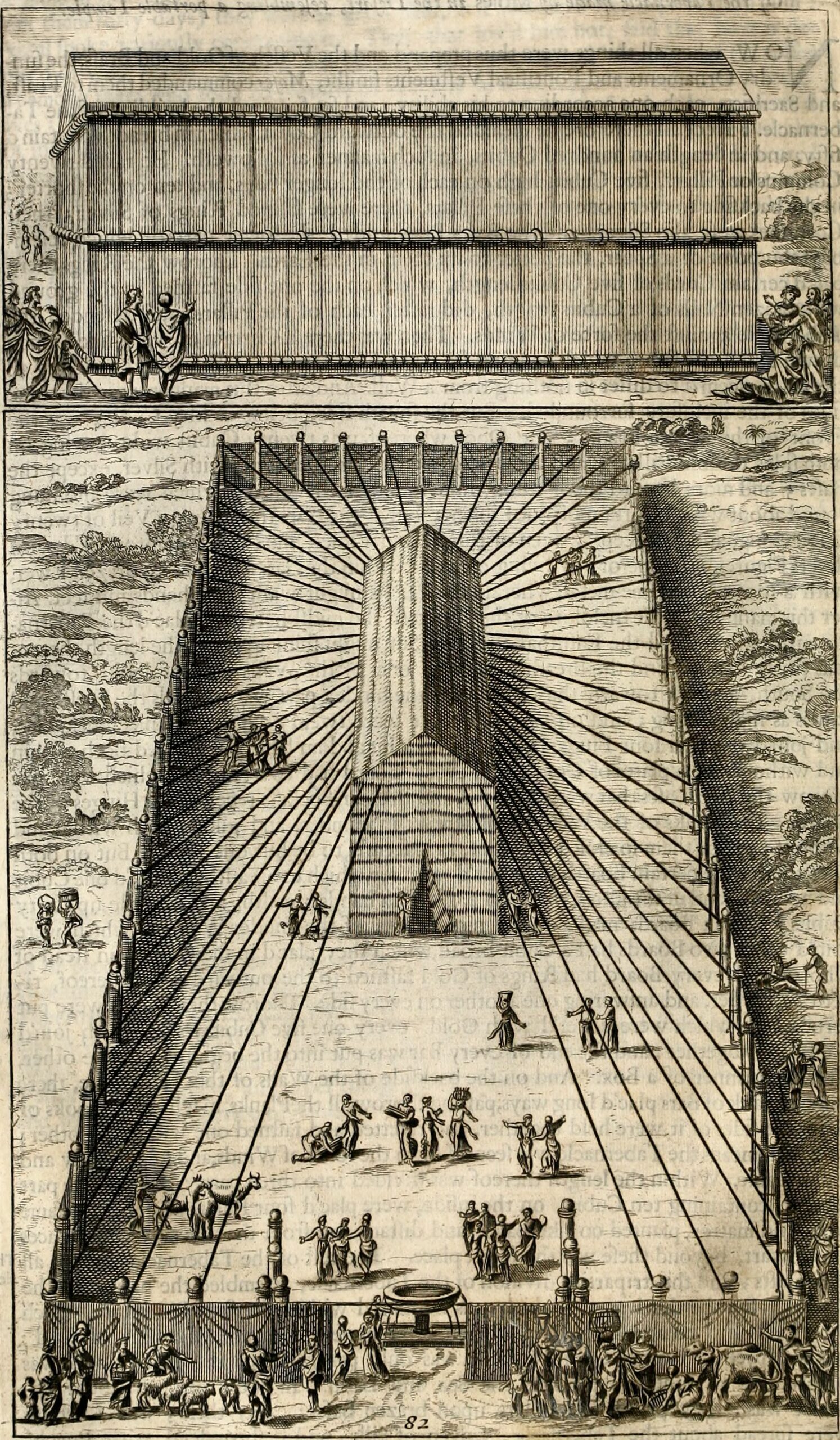
The one tribe excepted from the military census was the Levites; YHWH commanded Moses to appoint the Levites over the service and transportation of the Tabernacle and its furnishings (Numbers 1:47-53). This charge would be taken up and described in detail in Numbers 3:1-4:49.
The genealogy and experience of Aaron and his children are detailed in Numbers 3:1-4. In Leviticus 8:1-9:24, Aaron and his four sons, Nadab, Abihu, Eleazar, and Ithamar were consecrated to YHWH to serve as His high priests. Nadab and Abihu would die soon after when they offered unauthorized incense before YHWH (Leviticus 11:1-4); this event was mentioned again in Numbers 3:4 to explain why Aaron’s two younger sons will now be given positions of authority and responsibility.
For however long between the events of Leviticus 8:1-9:24 and Numbers 3:1, it would seem Aaron and his sons alone served before YHWH. In Numbers 3:5-4:49 YHWH charged Moses to bring the tribe of Levi and dedicate them to assisting Aaron and his sons in the service before YHWH: to help with the ministrations of the Tabernacle as well as its transport (Numbers 3:5-10).
Long beforehand, Levi had three sons: Gershon, Kohath, and Merari (Numbers 3:17). Each of these had their own sons, and from all of them would come the families of the Levites, and their roles in the service and transport of the Tabernacle would be determined by family (Numbers 3:18-20). YHWH commanded Moses to count every male over a month old among the Levites by these clans and families (Numbers 3:14-16); not for military purposes, as the census of Israel, but for dedication to serving YHWH in His Tabernacle.
The male Gershonites numbered 7,500 and would camp to the immediate west of the Tabernacle (Numbers 3:21-23). They would be responsible for the tent itself, the curtains, the courtyard around the altar, and their service (Numbers 3:24-26). The male Kohathites numbered 8,600 and would camp immediately south of the Tabernacle; they were responsible for the sanctuary and all its implements and their service (Numbers 3:27-31). Eleazar ben Aaron was responsible for the oversight of the Gershonites and Kohathites and their service (Numbers 3:32). The Merarites numbered 6,200 and would camp immediately to the north of the Tabernacle; they were responsible for the frames and pillars of the Tabernacle and their service (Numbers 3:33-37). Moses, Aaron, and Aaron’s sons would camp immediately to the east of the Tabernacle and maintained oversight over the whole system (Numbers 3:38). Moses and Aaron proved faithful to YHWH’s commands, and the number of Levites came out to 22,000 (Numbers 3:39).
In Exodus 13:1-2 YHWH had commanded Moses and the Israelites to reckon the firstborn male of the womb as dedicated to YHWH. Such a dedication would demand a sacrifice: the actual sacrifice of an animal, or dedication to YHWH’s service for male humans. In YHWH’s original desire, all Israel would have been holy and sanctified and able to serve before Him (Exodus 19:5-6); however, during the incident with the golden calf, only the Levites came to Moses as standing for YHWH (Exodus 32:26-29). Thus the Levites were consecrated before YHWH; and in Numbers 3:11-13, YHWH brought these matters together by declaring the Levites as being consecrated to YHWH as redemption for the firstborn males of all Israel. To this end YHWH commanded Moses to count the firstborn males of Israel; the total was 22,273 (Numbers 3:40-43). Such left 273 over; YHWH commanded Moses to obtain five shekels for each of them for redemption, for a total of 1,365 shekels given to Aaron and his sons for the service before YHWH, all as YHWH had commanded (Numbers 3:44-51).
YHWH then commissioned Moses and Aaron with a more specific census for each of the three clans of Levi of men between thirty and fifty who would be the ones in active service (Leviticus 4:1-49). YHWH would then describe the role of each clan in transporting the Tabernacle and its equipment. Aaron and his sons were charged with covering the Ark of the Testimony, the table of the Presence, the altar, and their implements, and to position the poles in place for their transport; it would then fall upon the Kohathites, numbering 2,750, to carry them (Numbers 4:1-16, 34-36). If any Kohathite watched the covering of the holy things or touched a holy thing itself, he would die (Numbers 4:15, 17-20). Eleazar was given oversight over all these matters as well as for the oil for lamplight, oil of anointing, incense, and the daily grain offering (Numbers 4:16). The Gershonites, numbering 2,630, would be responsible for carrying the curtains and coverings; Ithamar ben Aaron was to provide oversight over them (Numbers 4:21-28, 38-41). The Merarites, numbering 3,200, were responsible for all the poles and ropes and other supporting materials; Ithamar ben Aaron was to oversee them as well (Numbers 4:29-33, 42-44). Thus all the Levite men between thirty and fifty years old in active service numbered 8,580 (Numbers 4:45-48).
All things had thus been structured: Israel had been numbered for military service and organized for the march, and the Levites had been numbered and provisions had been made for the service, transport, and installation of the Tabernacle (Numbers 1:1-4:49). We do well to note how Moses, Aaron, and the Israelites had proven faithful to YHWH in all of these matters and were commended for that faithfulness (cf. Numbers 1:54, 2:34, 3:42, 51, 4:49). Israel would soon be on the march.
All seemed well and in order, and for the moment, it was. We know how it will all fall apart and yet put back together again. These preparations were detailed for us to understand how God organized His people and to what end, and their faithfulness in executing this organization. Organization and structure are not everything, nor are they even primary in terms of our faithfulness and service to God; nevertheless, they should exist as God intended so that we can most effectively work to His glory and honor according to the forms of organization He has set forth in Christ through the Spirit as put in place by His Apostles. May we honor God in our organizations and structures, and obtain eternal life in Him!
Ethan R. Longhenry


Leave a Reply